Sunday, 25 October 2026

Used Cars For Daily Commuting You Can Buy In 2026 Under Rs. 5 Lakh: Swift, Tiago, Grand i10 More

Buying a used car for daily commuting is not just about finding the lowest price. You need something that is easy to drive in traffic, reasonably economical to run and comfortable enough for your regular office trips. With a budget of Rs. 5 lakh, you can find several petrol hatchbacks and compact sedans that still have plenty of useful life left, depending on their age, condition and service history.


Your choice also depends on how you plan to use the car. A small hatchback makes parking easier, while a larger car can be more comfortable if you regularly travel with family. If you spend hours in bumper-to-bumper traffic, an automatic could make your daily drive less tiring. Here are nine used cars worth considering in 2026, along with their indicative prices and the things you should check before buying.

1. Maruti Suzuki Swift

Used Price: Rs. 3.60 lakh to Rs. 4.95 lakh
Model Years: 2016-2019
Suitable Variants: VXi, ZXi and VXi AGS

maruti suzuki swift 827x510 51516872729

The Maruti Suzuki Swift is a sensible choice if most of your driving happens in the city. Its compact size makes it easier to manoeuvre through narrow streets and crowded parking areas, while the 1.2-litre petrol engine provides enough performance for everyday commuting. The cabin is also easy to get familiar with, making it a practical option for first-time car buyers.

A well-maintained Swift can also be relatively economical to run, and its popularity means finding a mechanic or replacement parts is generally straightforward. Some examples in this price range come with an AMT gearbox, which can reduce the effort of driving through slow-moving traffic. However, check how smoothly it changes gears before making a decision.

Key Features:

  • 1.2-litre four-cylinder petrol engine
  • Manual and AMT gearbox options
  • Compact dimensions for city driving
  • Power steering
  • Wide availability of service centres and spare parts

What to check before buying: Listen for knocking sounds from the steering when driving over rough roads. On manual versions, check whether the clutch feels unusually hard or slips during acceleration. Also, inspect the service records and look for signs of accident repairs.

Who should buy it: First-time buyers and daily commuters who want an easy-to-drive hatchback with manageable running costs.

2. Tata Tiago

Used Price: Rs. 3.20 lakh to Rs. 4.95 lakh
Model Years: 2019-2022
Suitable Variants: XT, XZ+ and XZA

Tata Tiago EV and Tata Tiago CNG 42

The Tata Tiago is worth considering if safety and cabin feel are high on your list. Its 1.2-litre petrol engine works well for regular city driving, while the cabin offers enough room for small families. Depending on the variant, you may also get a touchscreen infotainment system with smartphone connectivity.

The Tiago received a four-star Global NCAP safety rating, which adds to peace of mind for families. Compared with some older hatchbacks at a similar price, a 2019-2022 Tiago may also get you a newer car. The final choice should still depend on its condition and maintenance history.

Key Features:

  • 1.2-litre Revotron petrol engine
  • Manual and AMT options
  • Touchscreen infotainment on selected variants
  • Apple CarPlay and Android Auto on compatible versions
  • Four-star Global NCAP rating for the tested configuration

What to check before buying: Some engine vibration at idle is normal, but excessive shaking through the steering wheel or pedals needs inspection. On AMT versions, check for harsh jerks or delayed gear changes during a slow test drive.

Who should buy it: Buyers who want a compact city car and place importance on safety, everyday comfort and useful features.

3. Hyundai Grand i10

Used Price: Rs. 3.20 lakh to Rs. 4.75 lakh
Model Years: 2016-2019
Suitable Variants: Sportz, Asta and selected automatic variants
hyundai grand i10 front shoot

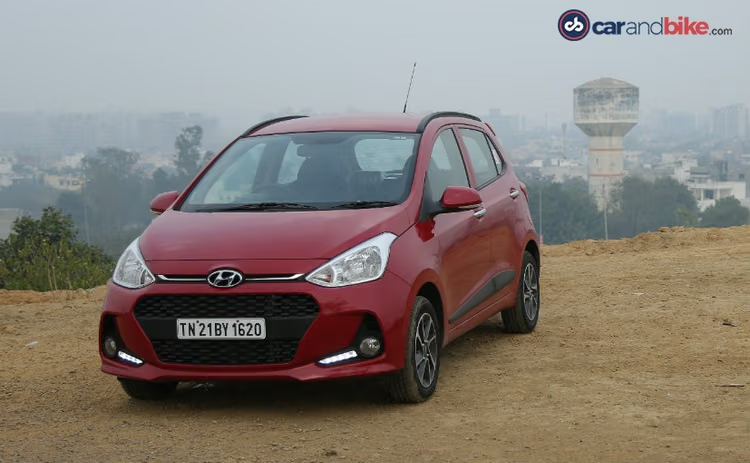
The Hyundai Grand i10 is a good option if you want a comfortable cabin without moving to a larger car. It has a light steering setup, a relatively easy clutch on manual versions and a cabin that works well for daily office runs. The rear seats are also useful for carrying family members or friends.

One of its biggest attractions in the used market is the four-speed torque-converter automatic available on selected versions. Unlike an AMT, this type of automatic generally delivers smoother gear changes in stop-and-go traffic. It may, however, use more fuel in heavy traffic than a manual version, so consider your daily distance before choosing one.

Key Features:

  • 1.2-litre Kappa petrol engine
  • Manual and four-speed torque-converter automatic options
  • Rear AC vents on selected variants
  • Comfortable cabin for everyday use
  • Light steering for city driving

What to check before buying: Run the air conditioner while the car is stationary and during a test drive. Check whether cooling remains consistent, and have any unusual noises or signs of leakage inspected. On automatic versions, make sure the gearbox shifts smoothly and review its service history.

Who should buy it: Commuters who spend a lot of time in traffic and want a comfortable hatchback, particularly those looking for a conventional automatic.

4. Maruti Suzuki Wagon R

Used Price: Rs. 3.40 lakh to Rs. 4.85 lakh
Model Years: 2018-2021
Suitable Variants: LXi, VXi, ZXi and selected S-CNG versions

wagonr cng web banner copy

The Wagon R is built around everyday practicality. Its tall roof and upright seating make getting in and out easy, while the large windows give the driver a good view of the road. Its compact footprint also helps when navigating narrow lanes or finding parking in crowded residential areas.

You can find both 1.0-litre and 1.2-litre petrol versions in this price range, along with factory-fitted CNG variants. The CNG option can reduce fuel expenses if you drive long distances regularly and have convenient access to CNG stations. However, check the condition of the CNG system and remember that boot space is reduced by the tank.

Key Features:

  • 1.0-litre and 1.2-litre petrol engine options
  • Factory-fitted CNG option on selected variants
  • Tall seating position
  • Good visibility through the windows
  • AMT option on selected variants

What to check before buying: Look for signs that the car was used commercially, including heavy wear on the seats, pedals and door hinges. On CNG versions, check the relevant documents and have the system inspected by a qualified technician. Also, listen for suspension noises over uneven roads.

Who should buy it: Drivers who prioritise easy entry and exit, good visibility and practical everyday city use.

5. Maruti Suzuki Ignis

Used Price: Rs. 3.75 lakh to Rs. 4.90 lakh
Model Years: 2017-2020
Suitable Variants: Delta and Zeta, with manual or AMT options
maruti suzuki ignis 827x510 81481856293

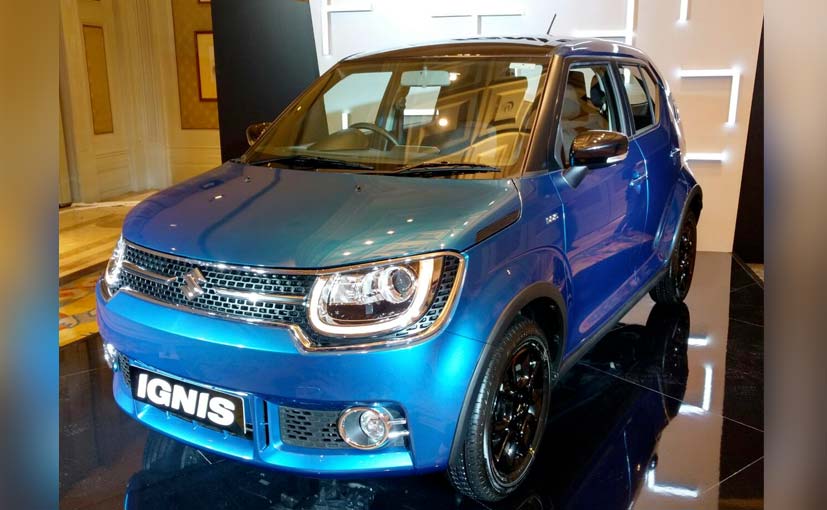
The Maruti Suzuki Ignis is a useful alternative to the Swift if you prefer a higher seating position and a different design. Its compact dimensions make it convenient for city driving, while its 1.2-litre petrol engine provides enough performance for everyday journeys. The relatively high ground clearance can also be helpful when dealing with uneven roads and steep parking ramps.

The Ignis shares its basic petrol engine family with the Swift, and selected variants were offered with an AMT gearbox. This makes it worth considering if you want a small car that is easy to manoeuvre without feeling too basic. Before buying, take it over a few rough patches, as the ride can feel firm at the rear.

Key Features:

  • 1.2-litre four-cylinder petrol engine
  • Manual and AMT gearbox options
  • 180mm ground clearance
  • Compact size for city driving
  • Higher seating position than many hatchbacks

What to check before buying: Drive over uneven roads to listen for suspension or steering noises. Check whether the steering returns smoothly after a turn, and look for uneven tyre wear that could point to alignment or suspension issues.

Who should buy it: Buyers who want a compact city car with a higher seating position and styling that stands out from more common hatchbacks.

6. Maruti Suzuki Baleno

Used Price: Rs. 3.90 lakh to Rs. 5 lakh
Model Years: 2016-2019
Suitable Variants: Delta and Zeta petrol manual
baleno

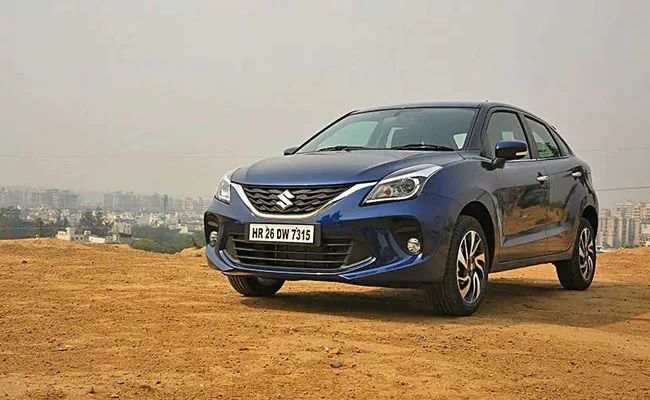
If you need more cabin space than a small hatchback can offer, the Maruti Suzuki Baleno is worth a look. It has good rear-seat space for its size and a 339-litre boot, making it useful for family errands, airport runs and weekend trips. Its 1.2-litre petrol engine is also well suited to regular commuting.

The Baleno is larger than the Swift, but it remains manageable in city traffic. A well-maintained manual version can make sense if you want one car for both daily office journeys and occasional highway drives. Some examples may sit close to the Rs. 5 lakh limit, so compare the asking price with the car's age, kilometres driven and service records.

Key Features:

  • 1.2-litre four-cylinder petrol engine
  • Spacious rear seat
  • 339-litre boot
  • Manual gearbox on the recommended variants
  • Practical cabin for family use

What to check before buying: Inspect the suspension for unusual noises, especially when driving with passengers. Check tyre wear and the car's accident history. If you consider an automatic version, pay close attention to its service records and gearbox condition rather than choosing it on price alone.

Who should buy it: Small families and commuters who want a roomy hatchback that can handle both daily traffic and longer journeys.

7. Maruti Suzuki Celerio

Used Price: Rs. 3 lakh to Rs. 4.60 lakh
Model Years: 2017-2021
Suitable Variants: VXi and ZXi, with manual or AMT options

Celerio old 2022 07 25 T08 17 42 279 Z

The Celerio is a practical choice if your main aim is to keep everyday driving simple and affordable. Its compact body makes parking easier, while the small petrol engine is suitable for routine city trips. It may not feel as spacious or substantial as the Baleno, but it can be easier to manage if you mostly travel alone or with one passenger.

Selected versions come with Maruti's AGS automated manual transmission, which removes the need to operate a clutch pedal. This can help in heavy traffic, although gear changes may feel more noticeable than in a conventional automatic. A manual version is worth considering if you prefer a more direct driving experience and want to keep the purchase price down.

Key Features:

  • 1.0-litre petrol engine on the listed model years
  • Manual and AMT options
  • Compact body for tight parking spaces
  • Light controls for city use
  • Low-speed manoeuvrability

What to check before buying: On AMT versions, check for clutch judder or hesitation when moving away from a standstill. Also inspect the clutch, tyres, brakes and service records, particularly if the car has spent most of its life in heavy traffic.

Who should buy it: Solo commuters, first-time buyers and drivers who want a small car that is easy to park and operate.

8. Honda Amaze

Used Price: Rs. 3.65 lakh to Rs. 4.95 lakh
Model Years: 2016-2019
Suitable Variants: S and V petrol, with manual or CVT options

Old Honda Amaze 2022 08 05 T13 40 06 991 Z

The Honda Amaze is worth considering if you prefer a sedan over a hatchback. Its 1.2-litre petrol engine is suited to regular city driving, while the 420-litre boot gives you room for shopping bags and family luggage. The rear seat is also useful if you regularly travel with passengers.

Selected versions of the Amaze were offered with a CVT automatic, which can make stop-and-go traffic less tiring than driving a manual. A used automatic can be appealing, but its condition and maintenance history matter more than the badge on the boot. If you plan to keep the car for several years, choose one with clear service records and a smooth test drive.

Key Features:

  • 1.2-litre i-VTEC petrol engine
  • Manual and CVT automatic options on selected versions
  • 420-litre boot
  • Sedan body with a separate luggage compartment
  • Practical cabin for small families

What to check before buying: Inspect the underside and front bumper area for scrapes from speed breakers. On CVT versions, ask for transmission service records and check for unusual noises, shuddering or inconsistent acceleration during the test drive.

Who should buy it: Commuters who want a sedan with a useful boot and the option of a smooth automatic gearbox.

What Should You Check Before Buying a Used Car Under Rs. 5 Lakh?

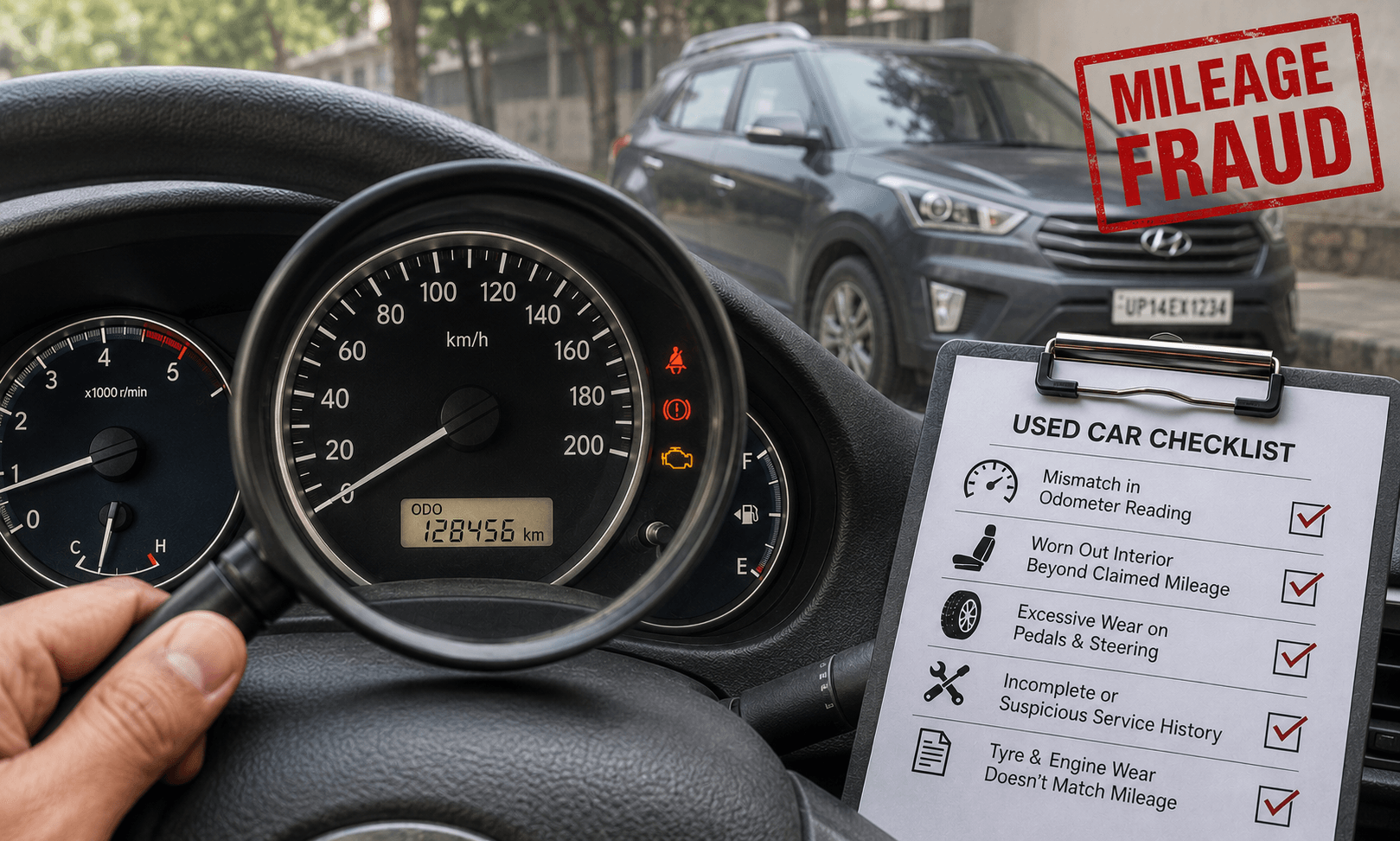
The model is only half the decision. Two cars of the same age can be in very different condition depending on how they were driven, serviced and stored. Before paying a token amount, arrange a proper test drive and have the car inspected by a trusted mechanic.
Odometer tampering in used car

Keep these checks in mind:

  • Service history: Look for regular servicing and check whether the recorded kilometres make sense for the car's age and condition.
  • Accident and flood damage: Inspect the body panels, paint, boot floor and cabin for signs of repairs, water damage or corrosion.
  • Engine, clutch and gearbox: Start the car from cold, check for unusual noises and test the clutch or automatic transmission in traffic-like conditions.
  • Tyres, brakes and suspension: Uneven tyre wear, knocking sounds and poor braking can mean extra repair costs after purchase.
  • Air conditioning: Run the AC while stationary and during the drive. A weak system can be expensive to repair.
  • Documents and ownership: Check the registration certificate, insurance, pollution certificate, loan status and any outstanding challans. Confirm that the seller can legally transfer ownership.
  • Fuel type and registration rules: If you are considering an older diesel or a BS4 petrol car, check the rules that apply in your city before buying. Restrictions can vary by location and may change over time.

Keep Some Money Aside for Repairs

If Rs. 5 lakh is your total budget, avoid spending the entire amount on the car itself. Set aside money for an initial service and any repairs identified during the inspection. Depending on the car's condition, you may need to replace worn tyres, the battery, brake components or fluids soon after purchase.

Which Used Car Should You Choose for Daily Commuting?

If most of your driving involves office runs and crowded city roads, the Maruti Suzuki Swift, Wagon R and Celerio are practical places to start. The Swift feels more involving to drive, the Wagon R offers an upright seating position and good visibility, while the Celerio is compact and easy to park.


If comfort, cabin space or safety are higher priorities, consider the Tata Tiago, Hyundai Grand i10 and Maruti Suzuki Baleno. The Tiago is worth looking at for its crash-test result, the Grand i10 is a good option if you want a comfortable automatic, and the Baleno has more room for rear passengers and luggage. For sedan buyers, the Honda Amaze offers a large boot and a CVT option on selected versions. 


Whichever car you shortlist, compare its condition, service history and expected repair costs rather than choosing by model year or asking price alone. A well-maintained car with a clear history is usually a safer purchase than a newer example that has been poorly looked after.


from carandbike - News https://ift.tt/dSWFZvn
via IFTTT

Hyundai Bayon Launch Tomorrow: What To Expect?

Hyundai’s all-new Bayon is set to launch tomorrow. The SUV is positioned to fill the gap between the Hyundai Venue and the Hyundai Creta. It borrows some features from the Venue and gets its powertrain from the Creta. Here is what to expect from the SUV ahead of its launch.

Design

On the exterior, the Hyundai logo is positioned on the bonnet rather than the grille, while the overall design closely resembles the images officially released by the brand. It features muscular body cladding, an upright bonnet and a prominent stance.


The body cladding extends around the sides, complemented by 17-inch alloy wheels and blacked-out ORVMs that contrast with the red body colour. At the rear, the SUV gets a sharper and more muscular design that follows the same design language as the front, with thick black body cladding adding to its rugged appearance.

Also Read: Hyundai Bayon Arrives At Dealerships, Key Details Revealed

hyundai bayon revealed ahead of october 26 launch carandbike 3

In terms of dimensions, the carmaker has revealed that the Bayon is 4.2 metres long. This makes it notably longer than the Hyundai Venue, which is a sub-compact SUV, but shorter than the Hyundai Creta, which measures over 4.3 metres in length. Based on length alone, the Bayon is positioned closer to the Skoda Kushaq and Volkswagen Taigun.


As far as aesthetics are concerned, the SUV will be offered in 10 exterior colour options across monotone, matte and dual-tone finishes. The monotone options include Titanium Black, Classy Blue, Atlas White, Fiery Red, Golden Bronze and Ecotronic Grey. The dual-tone options include Atlas White with a black roof and Fiery Red with a black roof. The matte finishes will be offered in Titanium Black and Classy Blue.

Powertrain And Gearbox

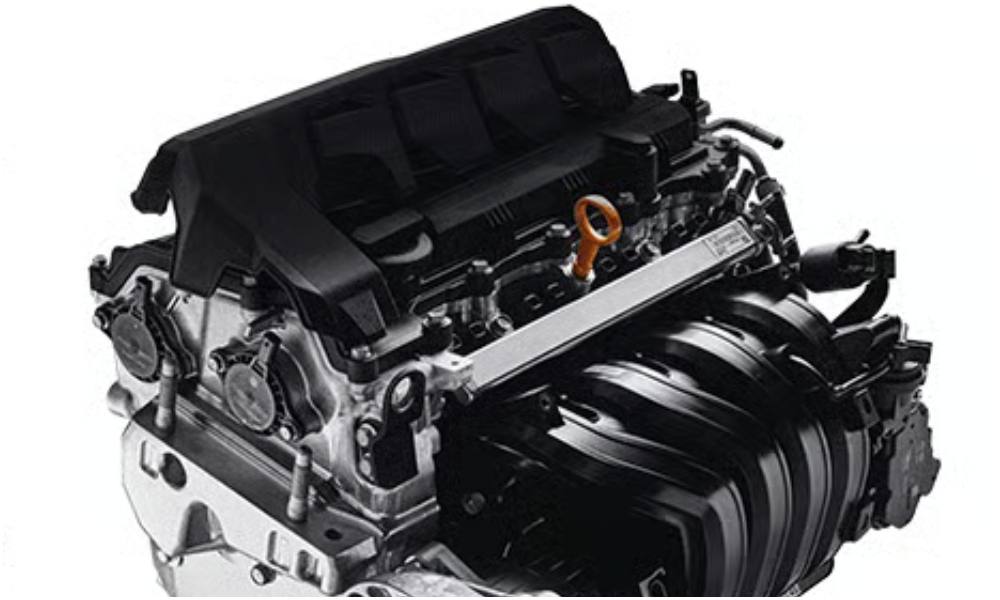
Powering the SUV will be a 1.5-litre naturally aspirated petrol engine producing 113.4 bhp and 144 Nm of torque. The engine will be available with two transmission options: a manual gearbox and an IVT (CVT). This is the same engine configuration as the one offered in the Hyundai Creta.


hyundai bayon petrol engine

The carmaker has also revealed key details about the automatic variant. It will get driving features such as Dash Boost Mode and what the company calls Sporty Drive Tech. These are separate features, with Sporty Drive Tech not to be confused with a conventional Sport drive mode. Additionally, the CVT will offer three driving modes: Eco, Normal and Sport.

Interior And Features

Inside, the cabin features two 12.3-inch screens positioned side by side, along with a centre console featuring touch-sensitive air-conditioning controls flanked by vertically oriented AC vents. Features expected in the fully loaded variant include Level 2 ADAS, ventilated front seats, a panoramic sunroof, a powered driver’s seat and a Bose audio system.

Also Read: Hyundai Bayon Rear Seat, Panoramic Sunroof Revealed In New Image

hyundai bayon rear seat space panoramic sunroof revealed in latest image carandbike 1

The Level 2 ADAS suite is supported by three radars and 12 parking sensors. It includes Forward Collision Warning, Forward Collision-Avoidance Assist for cars, pedestrians and cyclists, Blind-spot Collision-Avoidance Assist, Lane Keeping Assist and Lane Departure Warning.


Other features include Blind-spot Collision Warning, Rear Cross-Traffic Collision Warning, Rear Cross-Traffic Collision-Avoidance Assist, Driver Attention Warning and Safe Exit Warning.

Also Read: Hyundai Bayon Safety Features Revealed: To Get Level 2 ADAS

The Bayon will also get cruise control with Stop and Go, Lane Following Assist, Highway Driving Assist, High Beam Assist and Leading Vehicle Departure Alert. Navigation-based Smart Cruise Control functions for curves and designated zones are also part of the package.

Hyundai Bayon Safety 2

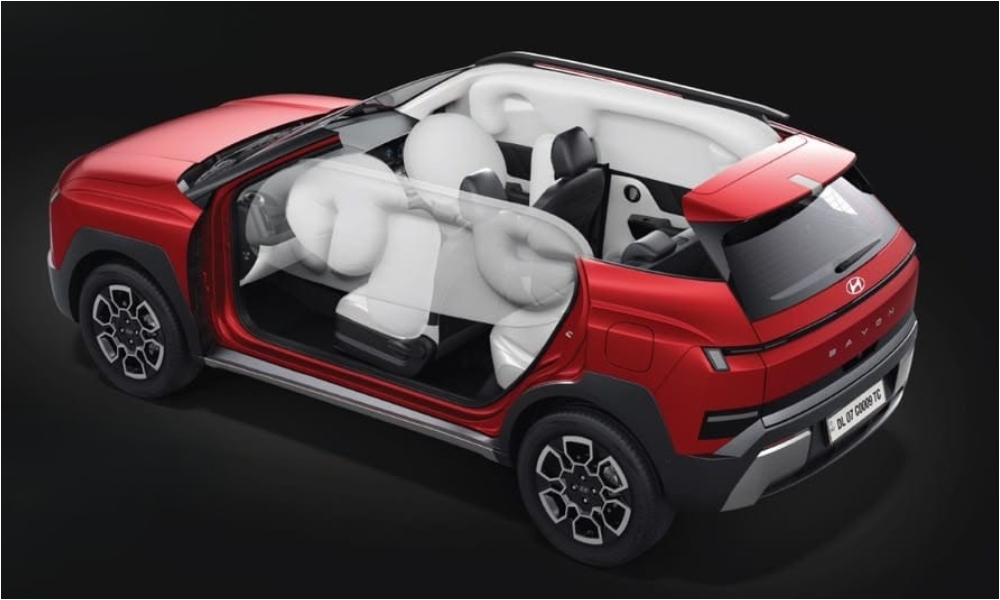
On the safety front, the SUV will get six airbags as standard across all variants. Other standard safety features include Electronic Stability Control (ESC), Hill-Start Assist Control (HAC), a Tyre Pressure Monitoring System (TPMS), three-point seatbelts with reminders, ISOFIX child-seat mounts, rear parking sensors and an Emergency Stop Signal (ESS).

Hyundai claims that the Bayon offers more than 80 advanced safety features overall, with over 35 available as standard across the range.

Hyundai Bayon Price

The Bayon is expected to fill the gap between the Hyundai Venue 1.2, priced between Rs 8 lakh and Rs 11.2 lakh, and the Hyundai Creta 1.5, priced between Rs 11 lakh and Rs 19 lakh. Prices for the Bayon are expected to range from Rs 9.5 lakh to Rs 14 lakh (all prices, ex-showroom).


from carandbike - News https://ift.tt/XPI0pqd
via IFTTT

Saturday, 24 October 2026

Top 5 Bikes In India With The Most Comfortable Pillion Seats For Elderly Parents And Family Members

Taking your parents or elderly family members along on a motorcycle ride calls for a little more thought than simply picking a bike you like riding. A seat that feels comfortable for the rider may not offer the same support to the person sitting behind, especially on  a bit of a longer ride or roads full of potholes and speed breakers. Getting on and off the bike can also be difficult if the seat is too high or the motorcycle is bulky. 
 

If pillion comfort is the priority, look for a long, well-cushioned seat, an accessible seat height, an easy-to-reach grab rail and suspension that can handle rough roads without sending every bump through the passenger's back. Tall, stepped seats and aggressive riding positions aren't ideal either. With that in mind, here are five motorcycles worth considering for rides with your parents and other family members.


1. Honda Unicorn

Price: Rs 1.15 lakh (ex-showroom)

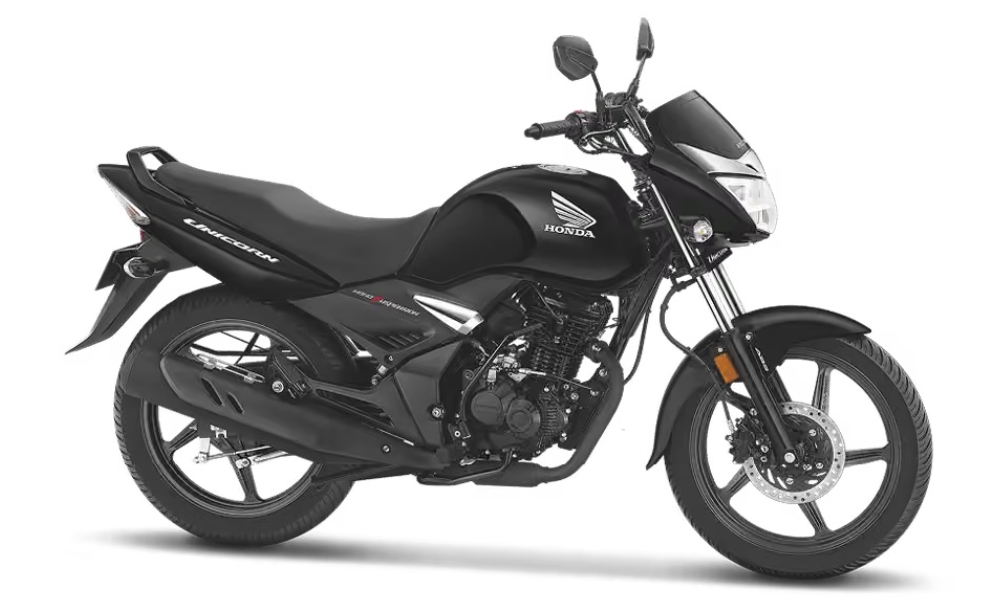
Honda Unicorn Static

The Honda Unicorn is one of the sensible choices if most of your rides are around town. It has a long, flat, single-piece seat with generous cushioning, giving both the rider and pillion enough room to settle in comfortably. The grab rail is easy to reach, while the neutral footpeg position helps the pillion sit in a comfortable position. 


Its suspension is another reason to consider it. The Unicorn deals well with everyday road imperfections, including potholes and uneven patches, helping keep the ride smooth for the person sitting behind. It doesn't try to be sporty, and that's precisely the point here.


2. TVS Ronin

Price: From Rs 1.30 lakh (ex-showroom)

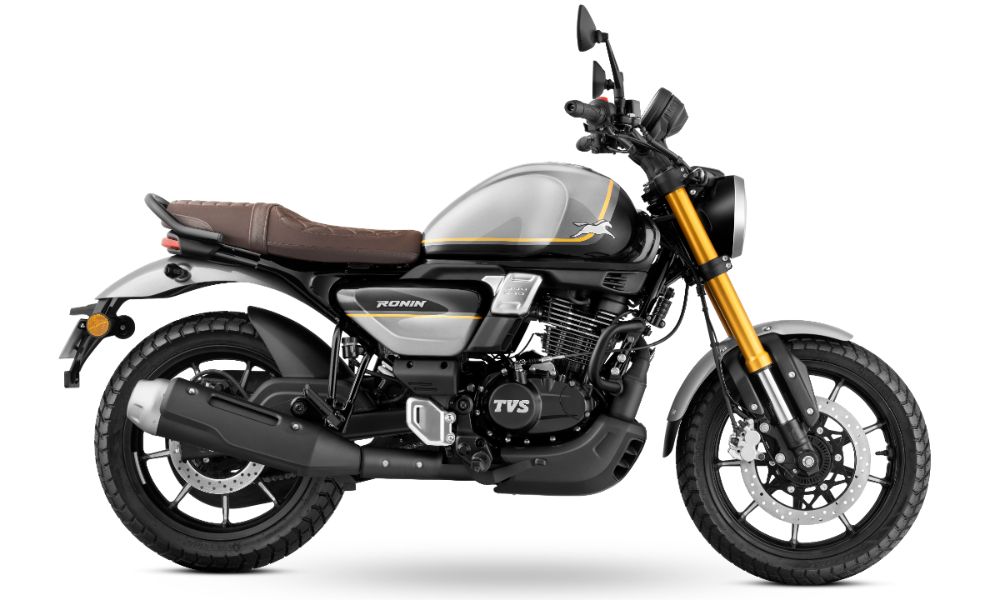
Ronin 1

The TVS Ronin brings a slightly different flavour to the list. It has a refined engine, good low-speed pulling power and comfortable ergonomics, making it an easy motorcycle to live with. Its ride and handling balance also means it doesn't feel out of its depth when the road gets twisty or uneven.


Pillion comfort is one of its strengths, too. The seating position is relaxed, and the overall ride quality works well for both occupants. That makes the Ronin worth considering if you want something with a bit more character than a commuter.


TVS also offers a backrest as an additional accessory. For elderly passengers who prefer some support behind their back, this is worth looking into.


3. Royal Enfield Bullet 350

Price: From Rs 1.67 lakh (ex-showroom)

Bullet 350 Military Silver Black Front 3 4 Right View

The Royal Enfield Bullet 350 has a familiar, upright riding position and a seat that works well for both rider and pillion. Its accessible seat height also makes getting on and off relatively easier for both the rider and pillion.


The Bullet's ride quality is a big part of its appeal. It feels planted on the road and deals with broken or uneven surfaces in a reassuring manner, which can make a difference when you're carrying a passenger.


There is one important thing to keep in mind, though: the Bullet 350 is a heavy motorcycle. Managing it at low speeds, manoeuvring it in tight spaces or balancing it with a pillion can be demanding. It's worth considering only if you're comfortable handling the extra weight.


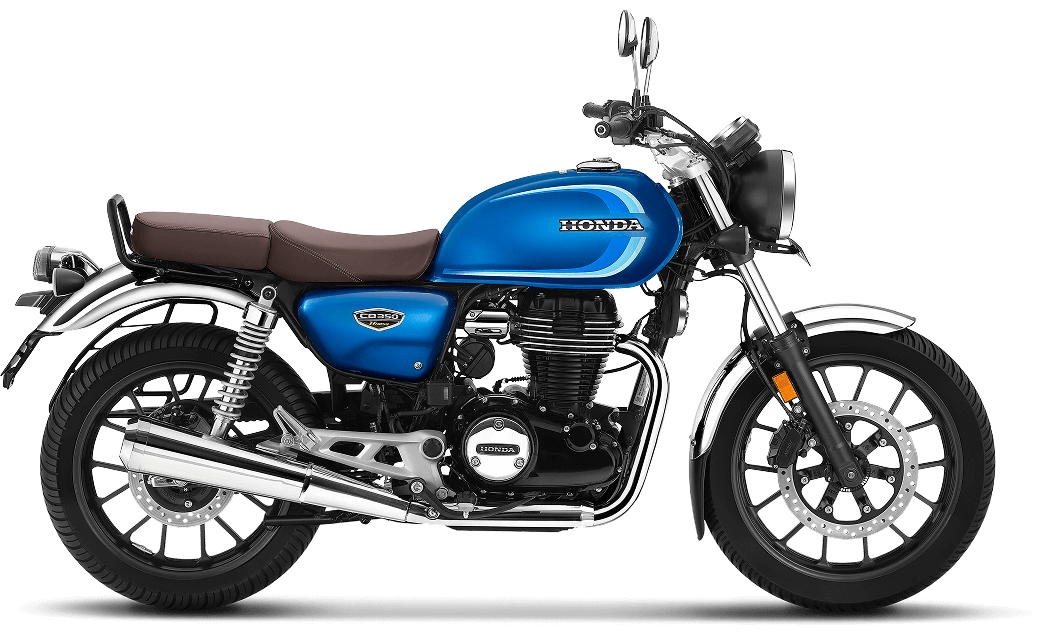
4. Honda H’ness CB350

Price: From Rs 1.93 lakh (ex-showroom)

EMI Calculator 1

If your parents are particularly sensitive to vibrations and sudden jolts, the Honda H’ness CB350 deserves a place on your shortlist. Its engine has a relaxed character, and the overall riding experience is smooth rather than hurried. That helps when you have a passenger on board and want to avoid a ride that feels tiring or jerky.


The suspension also handles potholes, speed breakers and broken tarmac well, making the H’ness a comfortable option. Its spacious seating and laid-back nature suit riders who prefer to take their time rather than rush from one place to another.


5. Jawa 42 FJ

Price: Rs 2.15 lakh (ex-showroom)

Jawa 42 FJ

The Jawa 42 FJ has a comfortable, upright riding position that works well on longer rides. For riders who enjoy a modern-retro motorcycle, it can be a comfortable option for both occupants.


However, there are a couple of things worth addressing if you're buying it with pillion comfort in mind. A backrest is a recommended addition if you regularly carry an elderly passenger, as it can provide extra support. The rear suspension can also feel stiff in its standard setup, so adjusting the preload to a softer setting may help it absorb bumps better when carrying a pillion.


What Should You Check Before Taking Your Parents For A Ride?


The motorcycle is only part of the equation. Before buying, take your parent along for a test ride, if possible, and pay attention to a few practical details.


Getting on and off: A manageable seat height and an easy step-through movement can make a big difference.


Seat comfort: Check whether the seat is wide and cushioned enough, and whether the pillion has sufficient room without being pushed into an awkward position.


Grab rail and backrest: The passenger should be able to hold on comfortably. A compatible backrest can be useful for those who need additional support.


Suspension: Ride over a familiar stretch of uneven road and ask how the pillion feels. A setup that is comfortable for the rider may feel different to the person behind.


Weight and balance: A heavy motorcycle can be harder to handle with a passenger, especially when moving slowly in traffic.


Protective gear: A properly fitted helmet is essential for the pillion, regardless of how short the journey is. 


from carandbike - News https://ift.tt/dV09IXC
via IFTTT

Maruti Victoris Gets An Aurum Edition Accessory Kit: Priced At Rs 22,990

Maruti Suzuki has added a new accessory package to the Victoris, called the Aurum Edition. Priced at Rs 22,990, it gets some cosmetic additions to the compact SUV, which celebrates its first anniversary in India. The kit is available only on the strong-hybrid versions of the Victoris, priced between Rs 16.43 lakh and Rs 19.99 lakh (ex-showroom).


Also Read: 2026 Maruti Suzuki Baleno Facelift: Variants, Features, Prices Explained


Maruti Victoris Aurum Edition: What's Included?


The Aurum Edition gets copper-coloured inserts on the front, side and rear skid plates, along with matching detailing around the wheel arches. Chrome elements have been added to the grille, fenders, bumpers, body-side mouldings and door visors.


The changes continue inside, with all-weather 3D cabin mats and a 3D boot mat. A rear trunk sill guard is also part of the package.


There are no changes to the Victoris's design beyond these add-ons, and the Aurum Edition doesn't bring any new features or equipment apart from the accessories mentioned above.


Also Read: Maruti Suzuki Victoris Review: Fitting Package, Timed Right


Maruti Victoris Aurum Edition: Engine

Maruti Suzuki Victoris Web 23

The package is limited to the strong-hybrid variants, which run on a 1.5-litre petrol engine paired with an electric motor and battery. The petrol engine makes 91.7 bhp and 122 Nm, while the electric motor produces 79 bhp and 141 Nm. A CVT gearbox is standard.


from carandbike - News https://ift.tt/cezWVCZ
via IFTTT

Need A Family 7-Seater Under Rs 7 Lakh? 5 Dependable Second-Hand MPVs And SUVs: Ertiga, Triber, Mobilio More

Buying a used seven-seater needs more thought than buying a regular hatchback. You need enough room for your family, seats that people can use comfortably and an engine that can handle the extra weight. You also need to consider repair costs, since an older car can become expensive to maintain if it has not been looked after properly.


With Rs. 7 lakh to spend in 2026, you can choose from family MPVs, compact seven-seaters and rugged utility vehicles. The right choice depends on whether you use all seven seats regularly or only need them occasionally. Here are five options worth considering, along with two more that suit specific needs.


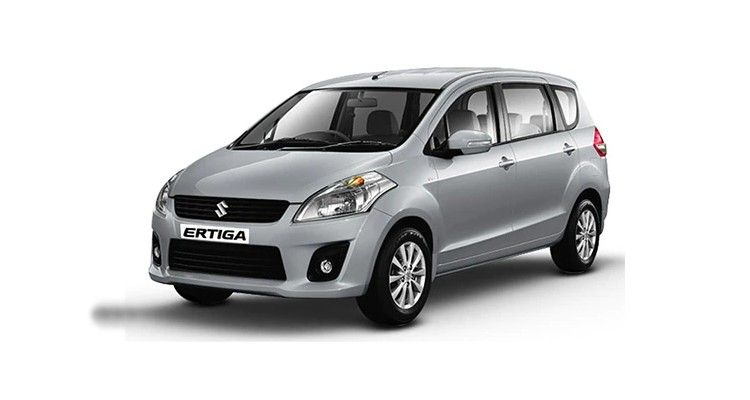
1. Maruti Suzuki Ertiga

Used Price: Rs. 4.50 lakh to Rs. 6.80 lakh
Model Years: 2013-2018
Variants to Consider: VXi, ZXi and selected diesel variants

2012 Maruti Suzuki Ertiga 2022 08 19 T11 11 12 201 Z

The Maruti Suzuki Ertiga is a good starting point if you need a seven-seater for regular family use. It has three rows of seats, a practical cabin and a driving experience that is easy to get used to. The petrol version is worth considering if you mainly drive in the city and want to avoid some of the extra maintenance concerns that come with an older diesel.


The third row is more useful than the small rear seats found in some compact seven-seaters, although adults may still find it tight on long journeys. Rear AC vents on selected variants also help keep passengers comfortable in hot weather. Maruti's wide service network makes it easier to find mechanics and replacement parts.


Key Features:

  • Three rows of seating
  • Petrol and diesel engine options
  • Manual gearbox options
  • Rear AC vents on selected variants
  • Wide service and spare-parts network


What to check before buying: The Ertiga has been used both as a family car and a commercial cab, so check its ownership and service history carefully. Look for suspension noises, uneven tyre wear and signs of accident repairs. On diesel versions, have the clutch, turbo and engine checked by a mechanic.


Who should buy it: Families who need a practical seven-seater for regular use and want a car that is relatively easy to maintain.


2. Renault Triber

Used Price: Rs. 4.50 lakh to Rs. 6.70 lakh
Model Years: 2020-2023
Variants to Consider: RXT and RXZ, manual or AMT

Renault Triber 1 2022 08 24 T14 57 06 632 Z

The Renault Triber is worth considering if you want a newer seven-seater without spending the full Rs. 7 lakh budget. Its compact size makes it easier to drive and park in the city, while the cabin can be changed to suit your needs.


Its biggest advantage is the removable third row. When you do not need all seven seats, you can take out the rear seats to make more room for luggage. The 1.0-litre petrol engine works well for routine city trips, but it can feel short of power when all seven seats are occupied and the AC is running. Take a test drive before deciding, particularly if you often travel with a full car.


Key Features:

  • Removable third-row seats
  • Compact size for city driving
  • 1.0-litre petrol engine
  • Manual and AMT options
  • Touchscreen on selected variants


What to check before buying: On AMT versions, check for strong jerks or hesitation during slow driving. Test the engine with the AC switched on, and make sure the rear seats lock securely into place.


Who should buy it: Families who need seven seats occasionally, want a newer car and value flexibility over strong performance with a full load.


3. Honda Mobilio

Used Price: Rs. 3.60 lakh to Rs. 4.50 lakh
Model Years: 2014-2017
Variants to Consider: V petrol and selected diesel variants

Honda Mobilio 2022 08 30 T11 35 36 411 Z

The Honda Mobilio is an older option, but it offers a good amount of space for the money. Its long body and three-row layout make it useful for carrying several passengers, while the cabin is designed to make access to the rear rows reasonably easy.


The Mobilio was sold with a 1.5-litre petrol engine and a diesel option. If most of your driving involves short city trips, the petrol version is worth considering because an ageing diesel can bring extra maintenance costs. Honda has discontinued the Mobilio in India, so the condition of the car and the availability of replacement parts matter more than finding the lowest asking price.


Key Features:

  • Three rows of seating
  • 1.5-litre petrol engine option
  • Diesel option on selected variants
  • Spacious cabin for family use
  • Large luggage area when fewer seats are used


What to check before buying: Look underneath the car and around the front bumper for damage from speed breakers. Check the AC, suspension, engine and gearbox, and look for signs of accident repairs. Ask a Honda service centre about parts availability if any major repairs are needed.


Who should buy it: Families who want a spacious MPV at a lower price and are comfortable buying an older, discontinued car.


4. Mahindra TUV300

Used Price: Rs. 4.80 lakh to Rs. 5.90 lakh
Model Years: 2016-2019

Variants to Consider: T8 and T10, subject to condition

TUV 300 827 2022 08 11 T08 29 42 976 Z

The Mahindra TUV300 is different from the Ertiga and Triber. It has a tall, rugged body, a high driving position and a diesel engine suited to buyers who often travel on rough roads. Its steering and ride can feel heavier than those of a family MPV, but some buyers may prefer its more traditional SUV feel.


The main drawback is the third row. The TUV300 uses side-facing rear seats, which are less comfortable than forward-facing seats and are not ideal for regular family trips. This makes it a more specialised choice rather than the first option for families who need all seven seats every day.


Key Features:

  • 1.5-litre mHawk100 diesel engine
  • High driving position
  • Rugged body-on-frame construction
  • Manual and AMT options on selected versions
  • Compact size for a utility vehicle


What to check before buying: Have the clutch, steering, suspension and engine inspected, especially if the car has covered a lot of kilometres. Check the rear seating arrangement carefully. Before buying an older diesel, confirm the rules that apply to it in your city.


Who should buy it: Buyers who want a rugged vehicle for rough roads and only need the extra seats occasionally.


5. Maruti Suzuki Eeco

Used Price: Around Rs. 3.50 lakh to Rs. 5 lakh, depending on year and condition
Model Years: 2016-2020

Variants to Consider: 7-str

Maruti Suzuki Eeco Now Offered With Six Airbags As Standard 1

The Maruti Suzuki Eeco is worth considering if you need to carry people and want to keep running costs manageable. Its boxy shape provides good cabin space for its price, making it useful for family transport and regular short trips. It mainly suits rural needs and commercial purposes.


However, the Eeco is much more basic than the Ertiga or Triber. Its ride and cabin comfort are not on the same level as a conventional family MPV. Seating options also vary, so do not assume every used Eeco is a seven-seater. Check the registration certificate and original seating layout before buying.


Key Features:

  • Boxy cabin with practical space
  • Petrol and factory-fitted CNG options on selected versions
  • Simple interior and controls
  • Sliding rear doors
  • Useful space for the price


What to check before buying: Confirm the seating capacity in the vehicle documents. Check the seats, seatbelts, tyres, brakes and suspension for wear. Look for signs of commercial use or overloading. On CNG versions, have the system and its paperwork checked by a qualified technician.


Who should buy it: Buyers who need a basic people carrier and value space and utility more than comfort or features.


Two More Used 7-Seaters Worth Considering


These options may suit some buyers, but both need careful checks before purchase.


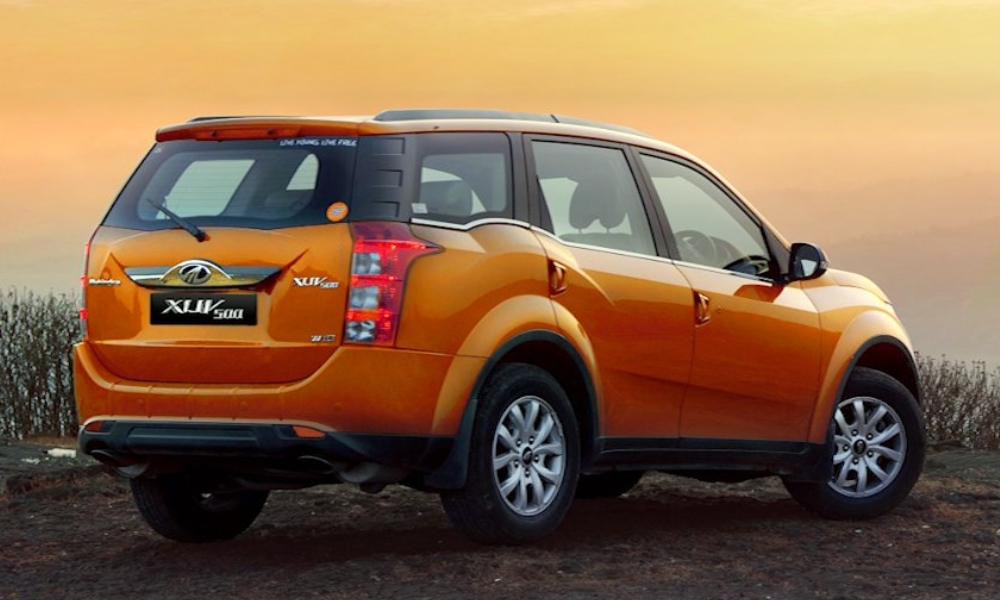
Mahindra XUV500

XUV 500 4

An older XUV500 gives you a larger cabin, strong highway performance and the feel of a full-size SUV. However, examples under Rs. 7 lakh are likely to be older and may have covered a lot of kilometres. Repairs to the suspension, electrical systems or diesel engine can become expensive. 


Consider one only if you genuinely need a larger SUV, have money set aside for repairs and find a car with a clear service history. It should not be your first choice if your main aim is affordable daily family travel.


Datsun GO+

datsun go plus 1 678x352 51418998687

The Datsun GO+ is compact and easy to drive in the city. Its small petrol engine suits everyday trips, but the two rear jump seats are best kept for smaller passengers on short journeys rather than regular long-distance travel.


Datsun has discontinued its cars in India, so check parts availability before buying. It may suit someone who needs extra seats on a tight budget, but compare it with the Renault Triber before making a decision.


What Should You Check Before Buying a Used 7-Seater Under Rs. 7 Lakh?


A used seven-seater may have carried more passengers and luggage than a regular hatchback. Take a proper test drive, check the paperwork and, if possible, get a mechanic to inspect the car before paying a deposit.


  • Check all three rows: Sit in the rear seats and check legroom, headroom, seatbelts and ease of entry.
  • Test the AC: Run it while parked and during the drive. Check the cooling for rear passengers if the car has rear vents.
  • Inspect the tyres and suspension: Listen for knocks over rough roads and look for uneven tyre wear.
  • Check the service history: Find out if the car was privately owned or used as a taxi. Look for accident or flood damage.
  • Test the engine and gearbox: Check for unusual noises, clutch problems and rough gear changes.
  • Verify the documents: Check the registration certificate, insurance, outstanding challans, loan status and ownership-transfer requirements.
  • Check local diesel rules: Restrictions differ by location. Delhi-NCR, for example, has restrictions on diesel vehicles older than 10 years. Confirm the current rules that apply to the car before buying it.


Keep some money aside for servicing and repairs after purchase. A car priced at Rs. 6.8 lakh may not be a good deal if it immediately needs new tyres, suspension work or major engine repairs.


Which Used 7-Seater Should You Buy for Your Family?


For most families, the Maruti Suzuki Ertiga is the most practical all-round choice. It has a useful three-row layout, a wide service network and an easy-to-understand ownership experience. If you want a newer car that is easier to park and need the third row only occasionally, the Renault Triber is a strong alternative.


The Honda Mobilio is worth considering if you want more space for less money and find a well-maintained example. The Mahindra TUV300 suits buyers who need a rugged vehicle for rough roads, but its side-facing rear seats are less suitable for regular family trips. The Maruti Suzuki Eeco is the basic, space-focused option, provided you are comfortable with its limited comfort and features.


The XUV500 is tempting if you want a larger SUV, but an old diesel can bring higher repair costs and restrictions in some places. Before choosing any car, think about how often you will use all seven seats, take your family along for a test drive and choose the car that is in the best condition within your budget.


from carandbike - News https://ift.tt/1lPQ6Np
via IFTTT

Friday, 23 October 2026

Ultraviolette X47 Venom: Top Highlights

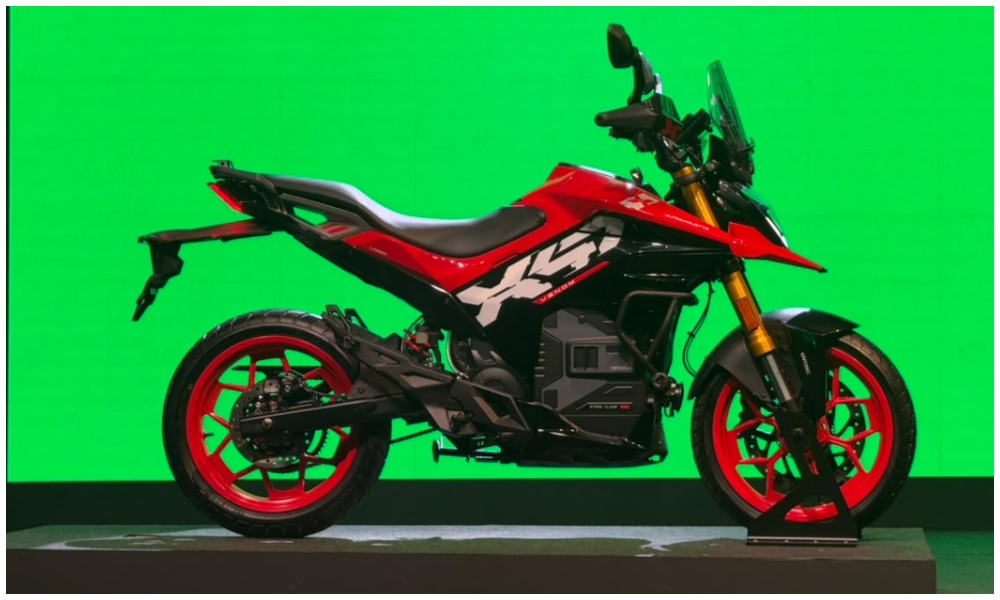
Ultraviolette launched the X47 Venom in India at an introductory price of Rs 2.65 lakh. The company has introduced several updates to the electric motorcycle, including a new platform, battery system and connected features. It also gets radar-based rider assistance and supports DC fast charging. Here are the top highlights of the X47 Venom.

Variant And Battery Pack

The X47 Venom is available in four variants: Venom, Venom+, Recon and Recon+. The lower variants, Venom and Venom+, get a 7.5kWh battery pack with a claimed IDC range of 227km. The higher-spec Recon and Recon+ variants get an 11kWh battery pack with a claimed IDC range of 343km.
Also Read: Ultraviolette X47 Venom Launched At Rs 2.65 Lakh

Powertrain

The X47 Venom features a 30kW electric motor that produces approximately 40bhp and 550Nm of peak wheel torque. It has a claimed top speed of 155kmph and can accelerate from 0 to 100kmph in 5.9 seconds.

X47 Venom 1

The motorcycle gets three riding modes: Glide, Combat and Ballistic, along with 10 levels of regenerative braking. For charging, it supports up to 12kW DC fast charging. The company claims this is the highest DC fast-charging capacity offered on an electric two-wheeler in India.

Rider Assistance Features


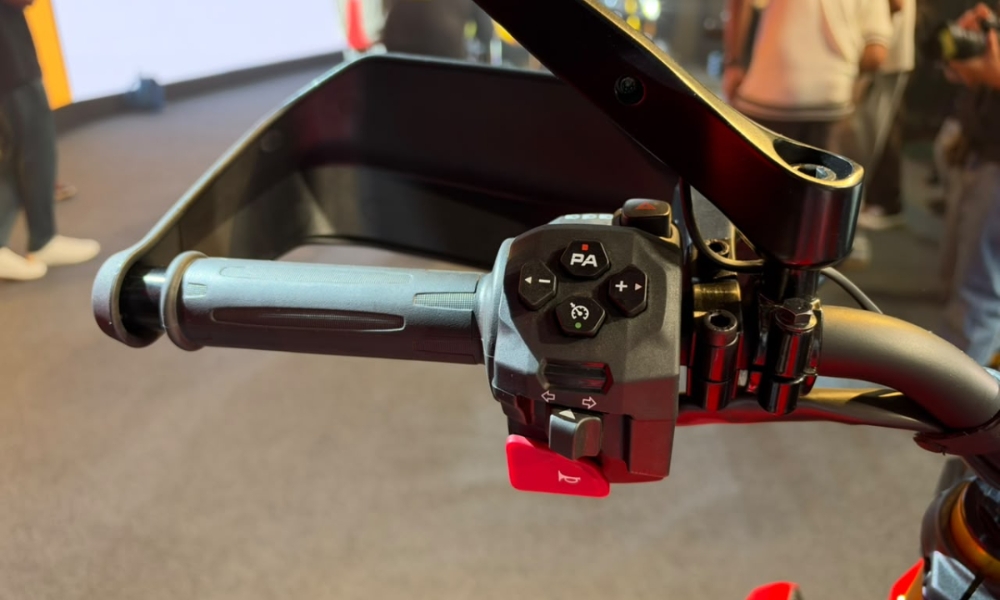
The Ultraviolette X47 Venom gets the company's UV Hypersense system, which includes radar-based rider assistance features. These include rear-collision warning, lane-change assist, overtake alert and blind-spot detection.

X47 Venom 2

The motorcycle also gets front and rear cameras, which support its camera-based features, including park assist on compatible variants.

New VX-100 Platform

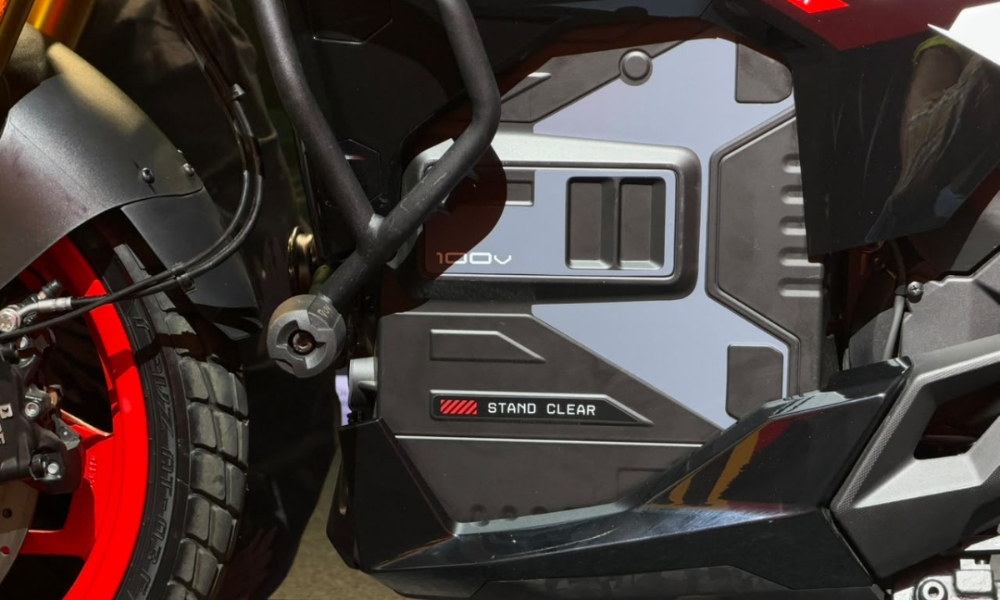
Ultraviolette has introduced its new VX-100 100V platform, with the X47 Venom being the first motorcycle to use it. The new platform incorporates updates to the battery, motor and motor controller to reduce weight and improve thermal performance.

Ultraviolette X47 Venom 1

The 7.5kWh variants weigh 180kg, while the 11kWh variants weigh 195kg. The company claims weight savings of up to 20kg compared with the previous-generation X47, depending on the variant.

SRB-11 Battery System

The X47 Venom's higher variants get the new SRB-11 battery system with an 11kWh capacity. It is paired with an updated motor control unit, which is claimed to be twice as compact as the previous unit while offering three times the power density.

The company also claims improved battery cooling and energy density. The motorcycle supports DC fast charging at up to 12kW, while a 1.6kW onboard charger is available on select variants.

7-Inch TFT Display And Connected Technology

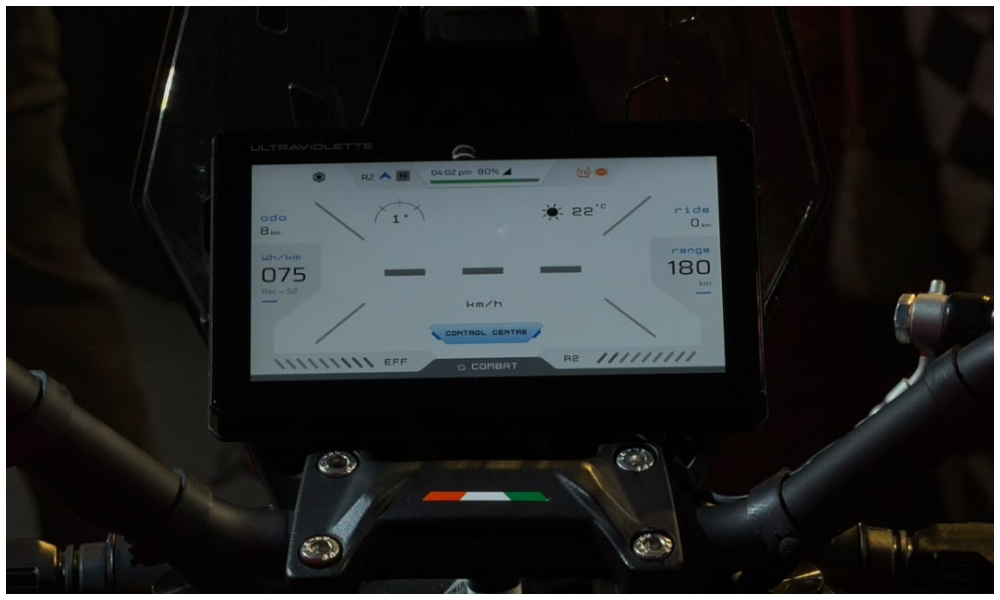
The electric motorcycle gets a 7-inch TFT touchscreen display with the VIOLETTE A.I. connected technology package. The features include movement, fall and towing alerts, remote lockdown and crash alerts, along with Delta Watch and an anti-collision warning system.

X47 Venom

The display also integrates Mappls navigation. The motorcycle gets park assist to help riders manoeuvre in tight parking spaces, along with a tyre pressure monitoring system (TPMS) and Find My X47 functionality.


It also gets cruise control, which allows riders to maintain a set speed without continuously operating the throttle. Other features include hill-hold assist, traction control and dual-channel ABS, with equipment availability varying by variant.

Colour Options

The Ultraviolette X47 Venom is available in four colour options: Afterburner Yellow, Turbo Red, Cosmic Black and Stellar White. Stellar White is available on the higher-spec Recon variants, while colour choice may affect the final price.


Price

The Ultraviolette X47 Venom is priced from Rs 2.65 lakh, ex-showroom. The introductory prices apply to the first 5,000 customers, with prices varying by variant, charger configuration and colour.

VariantIntroductory priceBattery packClaimed IDC range
X47 VenomRs 2,65,0007.5kWh227km
X47 Venom+Rs 3,15,0007.5kWh227km
X47 Venom ReconRs 3,75,00011kWh343km
X47 Venom Recon+Rs 3,99,90011kWh343km

Bookings for the Ultraviolette X47 Venom are open, with deliveries scheduled to begin in November 2026.


from carandbike - News https://ift.tt/DslvNXn
via IFTTT
Hyundai Bayon Automatic To Feature 'Boost Dash' Mode

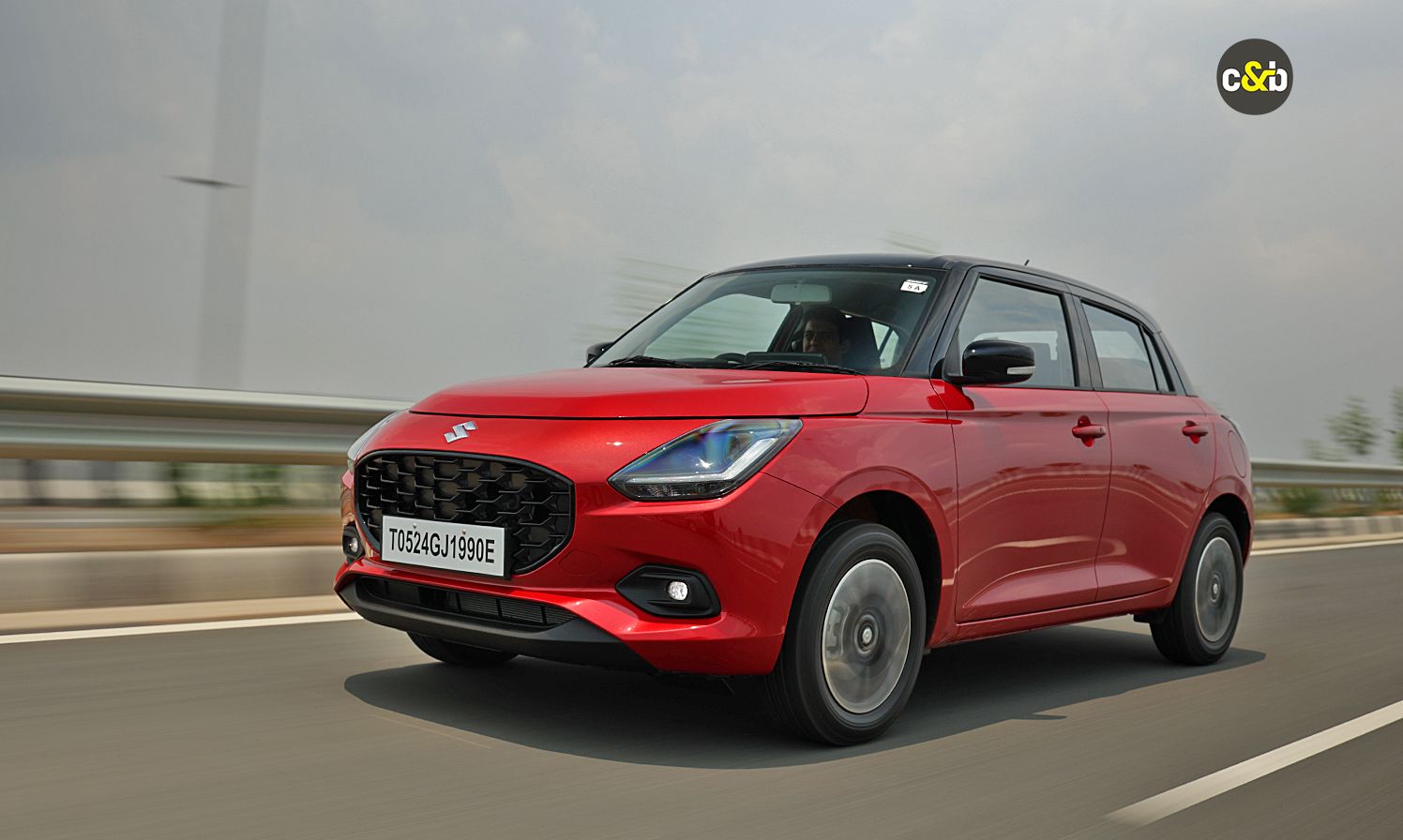
With the new Hyundai Bayon launch just around the corner, the Korean carmaker has revealed more details about the SUV. As we’ve previously known, the Bayon will arrive with only a 1.5-litre petrol engine, with manual and CVT gearbox options, a tried-and-tested powertrain combination shared with the Creta. What is new here is what Hyundai calls a ‘Dash Boost Mode’ and what it calls ‘Sporty Drive Tech’, not to be confused with a Sport drive mode, which the company says is a separate feature.
 

Also read: Hyundai Bayon Safety Features Revealed: To Get Level 2 ADAS
 

hyundai bayon revealed ahead of october 26 launch carandbike 2

On paper, the 1.5-petrol engine gets no changes to its tune over the Creta - it still outputs 113 bhp and 144 Nm and comes with a 6-speed manual and a CVT. The new ‘Dash Boost Mode’ and ‘Sporty Drive Tech’ are unique to the CVT and look to be an attempt by Hyundai to make the petrol-CVT SUV more fun to drive.
 

Also read: Hyundai Bayon Arrives At Dealerships, Key Details Revealed
 

The ‘Dash Boost Mode’ looks to try and cater to any lag in power delivery or rubber band effect - an inherent shortcoming of CVT gearboxes. Hyundai says that the feature ‘delivers an instant power boost and enhanced responsiveness' on demand to make overtakes easier. ‘Sporty Drive Tech’ meanwhile is described as providing ‘a sportier, more engaging and connected acceleration experience’. In addition to this, the CVT also comes with three drive modes - Eco, Normal and Sport and steering-mounted paddle shifters.
 

hyundai bayon interior revealed ahead of october 26 launch carandbike 2

Over the past weeks, Hyundai has continued to reveal new details of the Bayon ahead of its launch, including revealing the SUV’s exterior and interior designs and confirming some of the tech on board. Set to slot in between the Creta and Venue, the Bayon features Hyundai’s latest design language with a boxy and edgy look accentuated by prominent creases.
 

Also read: Hyundai Bayon Rear Seat, Panoramic Sunroof Revealed In New Image
 

hyundai bayon rear seat space panoramic sunroof revealed in latest image carandbike 2

Also read: Hyundai Bayon SUV Revealed Ahead Of October 26 Launch
 

Inside, the cabin looks reminiscent of the all-new i20 unveiled in Brazil recently, with twin 12.3-inch screens up top and a centre console layout featuring touch-sensitive air-con controls flanked by vertically oriented AC vents. Features on offer in the fully loaded spec are set to include Level 2 ADAS, ventilated front seats, a panoramic sunroof, a powered driver’s seat and a Bose audio system.
 

Bookings for the Bayon are currently open.


from carandbike - News https://ift.tt/sECvmJz
via IFTTT

Thursday, 22 October 2026

Pirelli, BKT Sign Agreement to Produce 800,000 Premium Car Tyres in India by 2030

Pirelli and Balkrishna Industries Ltd. (BKT) have signed a strategic agreement to manufacture premium car tyres in India, with plans to produce up to 800,000 Pirelli-branded tyres by 2030.

Under the first phase of the agreement, BKT will manufacture the tyres at a newly constructed plant equipped with advanced technology, adhering to Pirelli's technological and quality standards. The partnership is aimed at capitalising on India's growing automotive market and rising demand for premium tyres.

The agreement also envisages a second phase, subject to certain conditions, involving the establishment of a 50:50 joint venture between the two companies. The proposed venture would set up a dedicated manufacturing facility for high-value car tyres under both Pirelli and BKT brands, catering to India and international markets.

Pirelli currently has a commercial presence in India, and the partnership marks a significant step towards strengthening its position in the country. For BKT, the agreement represents an opportunity to expand beyond its established tyre business into the passenger car tyre segment.

The companies expect India's car registrations to grow by 5-7 per cent annually between 2025 and 2030, while the premium car tyre market is projected to grow almost fivefold over the same period.

Pirelli Executive Chairman Marco Tronchetti Provera said India would play an increasingly important role in the global automotive industry's evolution, making the partnership a strategic move for the Italian tyre manufacturer. BKT Joint Managing Director Rajiv Poddar said the agreement recognised the company's manufacturing capabilities, quality standards and industrial expertise.


from carandbike - News https://ift.tt/38IgDBT
via IFTTT

2026 Ducati Hypermotard V2, V2 SP Launched in India

Ducati India has launched the all-new Hypermotard V2 and Hypermotard V2 SP in India, featuring the new 890 cc, v-twin engine, redesigned styling, a monocoque chassis and advanced electronics. The base Hypermotard V2 is priced at Rs. 16.53 lakh (Ex-showroom), while the top-spec Hypermotard V2 SP is priced at Rs. 20.78 lakh (Ex-showroom). Bookings are open across all Ducati dealerships in India.


Also Read: 2027 Ducati Panigale V4 Revealed

2027 Ducati Hypermotard V2 m4

New 890 cc Engine


Powering the Hypermotard V2 is the new 890 cc v-twin engine, the lightest twin-cylinder ever produced by Ducati, which weighs just 54.4 kg. The engine produces 118.35 bhp at 10,750 rpm and a peak torque of 94 Nm at 8,250 rpm. The engine uses the IVT variable intake valve timing system which is said to ensure prompt and generous response across the rev range. 


As much as 70 per cent of maximum torque is available at just 3,000 rpm, and Ducati says this results in explosive acceleration out of corners. When paired with a racing exhaust, power increases by 3.5 bhp and weight is reduced by a further 4 kg.


Also Read: 2026 Ducati Monster V2 Review

2027 Ducati Hypermotard V2 m1

New Chassis


The new Hypermotard V2 uses a monocoque frame along with a new double-sided aluminium swingarm which results in a weight reduction of 13 kg for the standard V2 and 14 kg for the SP version, compared to the previous generation model. Wet weight (without fuel) for the standard Hypermotard V2 is 180 kg, while the SP version’s is claimed at 177 kg.


Differences in V2 & V2 SP


The standard V2 gets a fully adjustable 46 mm Kayaba front fork paired with a preload and rebound adjustable Kayaba rear shock. Wheels are 17-inch cast alloys shod with Pirelli Diablo Rosso IV tyres. On the V2 SP, front suspension is 48 mm fully adjustable Ohlins fork, as well as a fully adjustable Ohlins shock at the rear. Wheels are 17-inch forged aluminium, shod with Pirelli Diablo Rosso IV Corsa tyres. 


Also Read: Ducati DesertX V2 Teased for India Launch

2027 Ducati Hypermotard V2 m3

Braking hardware is different on the two variants as well. The standard V2 uses Brembo Monobloc M4.32 four-piston calipers gripping 320 mm semi-floating discs up front and a 245 mm rear disc at the rear with cornering function. The V2 SP gets Brembo Monobloc M50 four-piston calipers up front. 


On the features list, both bikes come with a 5-inch TFT display with six-axis IMU-powered electronics which power the cornering ABS. The standard V2 gets Ducati Quick Shift (up/down), riding modes, power modes, traction control, wheelie control, engine brake control and so on. The V2 SP gets an advanced quickshifter system along with a Sachs steering damper, Ducati Power Launch, pit limiter and carbon fibre front mudguard.


from carandbike - News https://ift.tt/0iKVMvb
via IFTTT

New Maruti Swift vs 2-Year-Old Swift: Is Buying Used Actually Cheaper?

For nearly two decades, the Maruti Suzuki Swift has kept its market value high in India because of its ability to park easily, remain inexpensive to service, and offer the kind of fuel efficiency that keeps every owner’s monthly expenses predictable. On one hand, you can walk into a Maruti Suzuki showroom, pick up the keys to a brand-new Swift, and enjoy the peace of mind that comes with a fresh three-year factory warranty. On the other hand, the pre-owned market seems to offer an obvious shortcut: why pay full price when you can buy a clean, two-year-old Swift and save cash upfront?

2024 Maruti Suzuki Swift

In the case of the Swift, the used car market has its own peculiar set of rules. Because demand for pre-owned Marutis remains high, used Swifts hold onto their value with remarkable tenacity. At the same time, when you start considering other factors like bank loan interest rates, consumable replacements, real-world fuel economy differences and the second-owner resale penalty, you may find that there isn’t much of a price gap between a showroom Swift and a used one. Here’s an honest, real-world financial and practical comparison from our side to help you decide better.


Understanding Used Hatchback Valuation in India


In most vehicle segments, a car loses 20 to 25 per cent of its value the second its front wheels roll off the showroom floor. By the end of year two, standard hatchbacks drop about 30 to 35 per cent of their original ex-showroom price.

The Maruti Suzuki Swift doesn’t follow that trend. In the Indian pre-owned market, this phenomenon is widely known as the "Swift Tax". Because every mechanic knows how to work on a Swift, replacement parts are sold at every neighbourhood corner shop, and fuel economy is universally trusted, buyers flock to used car platforms to search for this nameplate every day.

swift

Let’s take the popular, well-equipped ZXi manual variant as a benchmark. In late 2026, a brand-new Swift ZXi costs roughly Rs. 7.62 lakh ex-showroom, which could mean an on-road price of around Rs. 8.60 lakh in major cities (with registration, road tax and comprehensive insurance).


If you go through organised used car platforms or Maruti Suzuki True Value for a clean, two-year-old Swift ZXi with around 25,000 kilometres on the clock, sellers rarely ask less than Rs. 6.80 lakh to Rs. 7.10 lakh. Even after hard bargaining, getting a well-maintained, accident-free car below Rs. 6.85 lakh is quite difficult. So, you are only saving roughly Rs. 1.60 lakh to Rs. 1.75 lakh in pure sticker price.


Financing and Interest: Where the Used Car Savings Vanish


Most Indian car buyers may also not pay for their vehicles in hard cash; they finance them through four-year or five-year bank loans.


When you purchase a brand-new car, banks and non-banking financial companies (NBFCs) consider the vehicle a low-risk, easily recoverable asset. In 2026, new car loan interest rates from nationalised and private banks typically are between 8.75 per cent and 9.50 per cent, which is roughly 9.25 per cent for borrowers with a healthy credit score.


Used car loans, however, are treated as unsecured, high-risk lending. Finance companies have to deal with the risk of undisclosed mechanical damage, odometer tampering and rapid future depreciation. So naturally, interest rates for pre-owned car loans are much higher, usually between 13.50 per cent and 16.00 per cent, with 14.50 per cent as the industry standard.


Let us look at the real mathematical outcome:


  • Brand-New Swift ZXi: Considering an on-road cost of Rs. 8.60 lakh, an 80 per cent loan means you will have to borrow Rs. 6.88 lakh. At 9.25 per cent interest over a five-year tenure (60 months), your monthly EMI will be Rs. 14,374. And over five years, you will pay Rs. 1.74 lakh in total interest.


  • Two-Year-Old Swift ZXi: Assuming the older car has a price of Rs. 7.00 lakh, an 80 per cent loan means borrowing Rs. 5.60 lakh. At 14.50 per cent interest over the same 60-month tenure, your monthly EMI will be Rs. 13,176. Over five years, you’ll end up paying Rs. 2.30 lakh in interest.
Swift 2022 07 15 T14 51 24 878 Z

Despite borrowing Rs. 1.28 lakh less on the used car, you actually pay Rs. 56,120 more in bank interest charges alone. And the difference between your monthly EMIs? Only Rs. 1,198. That’s roughly Rs. 40 per day - the cost of a cup of coffee.


Z-Series Three-Cylinder vs K-Series Four-Cylinder


Beyond the financial ledgers, there’s also the driving factor involved. A two-year-old feels quite different from a new Swift for drivers, given what actually sits beneath the bonnet of both models.


A two-year-old Swift (from the 2024 model year) typically houses the K12N DualJet 1.2-Litre four-cylinder petrol engine. This motor produces 89 bhp and 113 Nm of torque. It is celebrated for its mechanical smoothness. At idle, the steering wheel and pedals remain completely motionless, and when you press the accelerator, the engine revs freely with a pleasing, linear mechanical hum.


The newer fourth-generation Swift, however, uses the modern Z12E 1.2-Litre three-cylinder petrol engine, which puts out 81 bhp and 112 Nm of torque. Being a three-cylinder unit, it has a subtle vibration at idle that you can feel through the seat base when the air conditioning kicks on. However, Maruti tuned this engine mostly for real-world Indian commuting. It produces strong pulling power from as low as 1,500 rpm, meaning you do not have to downshift to first gear when crawling over speed breakers or navigating crowded roundabouts.


But overall, it doesn’t have the high-revving top-end excitement of the old four-cylinder motor.


Real-World Fuel Economy and Commuting Costs


There’s also fuel efficiency that plays a huge role in helping you decide whether you should get a new Swift or a used one. Note that Maruti Suzuki developed the new three-cylinder Z-Series engine particularly to focus on more mileage.


In everyday city driving with the climate control running, the newer Swift returns roughly 17 to 18.5 kmpl, and goes up to 22 to 24 kmpl on the open highway at steady speeds of 85 to 90 kmph. In mixed conditions, you can get a realistic average of 18 kmpl.


While the older four-cylinder DualJet engine is frugal in its own right, it generally returns between 14.5 and 16 kmpl in congested urban conditions, and has a mixed-cycle average of roughly 15.5 kmpl.

Maruti Swift engine

If you drive an average of 10,000 kilometres each year (up to 50,000 kilometres over a five-year ownership stretch) with petrol priced at Rs. 100 per litre:


  • Brand-New Swift (18 kmpl): Requires roughly 2,778 litres of petrol, costing Rs. 2.77 lakh.
  • Two-Year-Old Swift (15.5 kmpl): Consumes 3,226 litres of petrol, costing Rs. 3.22 lakh.


Over five years, the new model's engine saves you roughly Rs. 44,800 in fuel bills.


Maintenance, Consumables and Factory Warranty Coverage


Maintenance is another area where buyers often fail to budget accurately for an older vehicle.


When you get a brand-new Swift, it begins the first five years of its life. Your first three services contain free labour; that means you only pay for engine oil and the usual fluid top-ups. Also, every mechanical and electrical component is covered under Maruti's manufacturer warranty, which you can increase to five or six years for a little extra. If an alternator fails, a power-window motor stops working, or an air conditioning sensor malfunctions, you pay nothing.


A two-year-old Swift, however, enters years three through seven of its life. Its free services are already over, meaning every single workshop visit will ask for full labour charges. And around the 35,000 to 45,000-kilometre mark, consumable items start nearing their operational lifespan:


  • Tyre Replacement: The factory-fitted tyres will likely need replacing within your first two years of ownership. A fresh set of four 15-inch tyres from a reputable brand costs roughly Rs. 18,000 to Rs. 20,000.
  • Battery Replacement: Automotive lead-acid batteries rarely survive beyond four years in Indian weather. Expect to replace the 12V battery for roughly Rs. 5,000 to Rs. 6,000.
  • Braking Components: Front brake pads will need renewal, and the brake discs may need skimming, adding roughly Rs. 4,500.


Over five years of driving 50,000 kilometres, routine servicing and unavoidable consumable replacements for the used car will total nearly Rs. 74,000. On the other hand, the new car, benefiting from factory-fresh tyres, a brand-new battery, and warranty protection, will demand roughly Rs. 38,000 for the usual scheduled services.


Safety Equipment and In-Cabin Technology


The fourth-generation Swift has six airbags, Electronic Stability Program (ESP), hill-hold assist, ABS with EBD and three-point seatbelts for all five seating positions across every trim. The body shell also gets some higher tensile steel reinforcements to disperse crash energy more effectively.

Maruti Suzuki Swift 30

On a two-year-old Swift, safety was not that standardised. Most variants came with only two front airbags. Side and curtain airbags were not available even for the most expensive top-end variants. Electronic stability control was often kept for the automatic trims, leaving manual variants with basic ABS.


The cabin layout also shows its age. The newer car has an updated dashboard with a high-set seven-inch SmartPlay Pro touchscreen display that sits directly in your natural sightline, with wireless Apple CarPlay and Android Auto. You also get rear air conditioning vents and fast-charging USB Type-C ports to keep rear passengers comfortable. Older models use an older, lower-mounted seven-inch display and lack rear ventilation completely.


Resale Value and the Second-Owner Depreciation Trap


When you decide it’s time to sell your car, here’s the reality you’ll have to face.

  • The brand-new Swift will be five years old, have 50,000 kilometres on the odometer and have a registration certificate listing you as the first owner.
  • The two-year-old Swift will be seven years old, have roughly 75,000 kilometres on the clock and have paperwork showing you as the second owner.


In the Indian used car market, buyer psychology places a huge premium on single-owner documentation. A clean, five-year-old, first-owner Swift ZXi in 2031 can easily command around Rs. 4.80 lakh. Buyers are willing to pay top money because they know the car's complete history from day one.


But a seven-year-old, second-owner Swift with 75,000 kilometres will struggle to fetch more than Rs. 3.60 lakh. Prospective buyers will discount their offers because buying the car makes them the third owner on paper, which makes future resale very difficult. That Rs. 1.20 lakh difference in future resale value completely removes any lingering financial advantage the used car held.


New or Used: Which Maruti Swift Should You Actually Buy?


Buying a two-year-old car is usually a sensible financial move if we’re talking about luxury nameplates the most. But the Maruti Suzuki Swift does not fit that bracket at all.


You should buy a two-year-old Swift only if:

  • You are paying the entire purchase price upfront in cash, without any loans involved.
  • You are buying directly from an individual family member or close friend.
  • You are a driving enthusiast who specifically wants the refinement of the older engine.
  • Your annual running is very low, so you don’t care about fuel efficiency.


Always go for a brand-new Swift if:

  • You are funding your purchase through a bank loan.
  • You commute daily through congested city traffic and want superior fuel efficiency.
  • You want six airbags and electronic stability control to protect your family.
  • You value complete peace of mind, knowing that your tyres, battery, and mechanical parts are backed by a factory warranty.


Unless you can get a clean pre-owned Swift at a massive, non-market discount with cash in hand, walk straight into the showroom. A brand-new Swift has higher modern safety, higher fuel economy, and lower borrowing costs, which means it will cost you less over the full course of your ownership.


from carandbike - News https://ift.tt/poMDCVP
via IFTTT

Wednesday, 21 October 2026

Delhi Government To Restrict Non-BS6 Vehicles From November 1

The Delhi government has outlined a series of measures to curb air pollution during the upcoming winter season. These include restrictions on vehicles registered outside the national capital that do not comply with BS6 emission standards.


The discussion took place at a high-level meeting chaired by Union Environment Minister Bhupender Yadav and Delhi Chief Minister Rekha Gupta on September 28, 2026, to review the city's air pollution mitigation plan.


Under the proposal, the entry of vehicles registered outside Delhi that do not meet BS6 emission standards will be restricted from November 1, 2026, to February 28, 2027. CNG and electric vehicles will be exempt from this restriction. The plan also includes doubling parking charges, introducing staggered office timings and implementing 50% work-from-home arrangements.

r89ic8c8 delhi pollution delhi air pollution delhi smog pti photo 625x300 24 November 21 2022 07 16 T05 15 31 375 Z 4e79afa654

With this proposal, the government aims to limit the entry of older, more polluting vehicles into the city. However, the announcement does not specify the categories of vehicles covered beyond the stated registration and emission-standard criteria.


The Delhi government aims to reduce vehicular emissions and manage pollution levels during the winter months, when air quality in the capital typically deteriorates. The meeting also called for coordinated enforcement across agencies and continuous monitoring of pollution control measures.


The government also plans to double parking charges as part of the winter protocol. The measure is intended to discourage private vehicle use, although further details regarding its implementation and the duration of the increased charges were not specified in the announcement.


from carandbike - News https://ift.tt/sZoDnej
via IFTTT
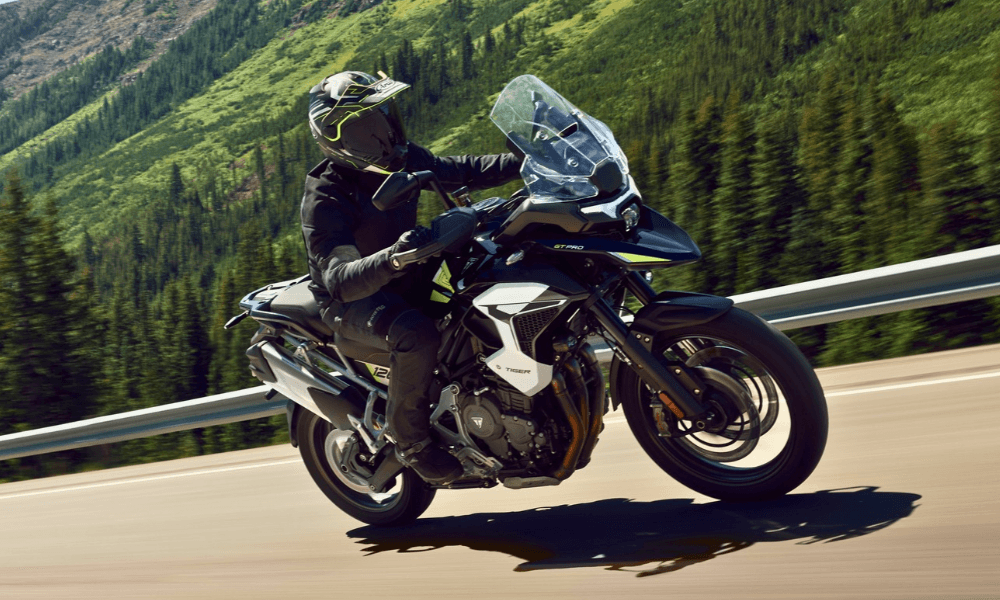
2027 Triumph Tiger 1200 Priced From Rs 20.99 Lakh

Triumph has revealed the prices for extensively updated Tiger 1200 in India, with the flagship adventure bike getting more power, revised ...