Tuesday, 2 December 2025

Maruti Suzuki e Vitara Today: All You Need To Know

Maruti Suzuki is preparing to launch its first all-electric offering, the e Vitara, in India on December 2, 2025. Production for the model began in August 2025 at the company’s Hansalpur facility in Gujarat, and the first batch was exported in September 2025. With the India launch approaching, here is what we know so far about it.


Also Read: Maruti Suzuki Recalls Over 30,000 Units Of Grand Vitara Over Faulty Fuel Gauge
Maruti Suzuki e Vitara India Launch Specifications Details 1

Maruti Suzuki e Vitara: Exterior


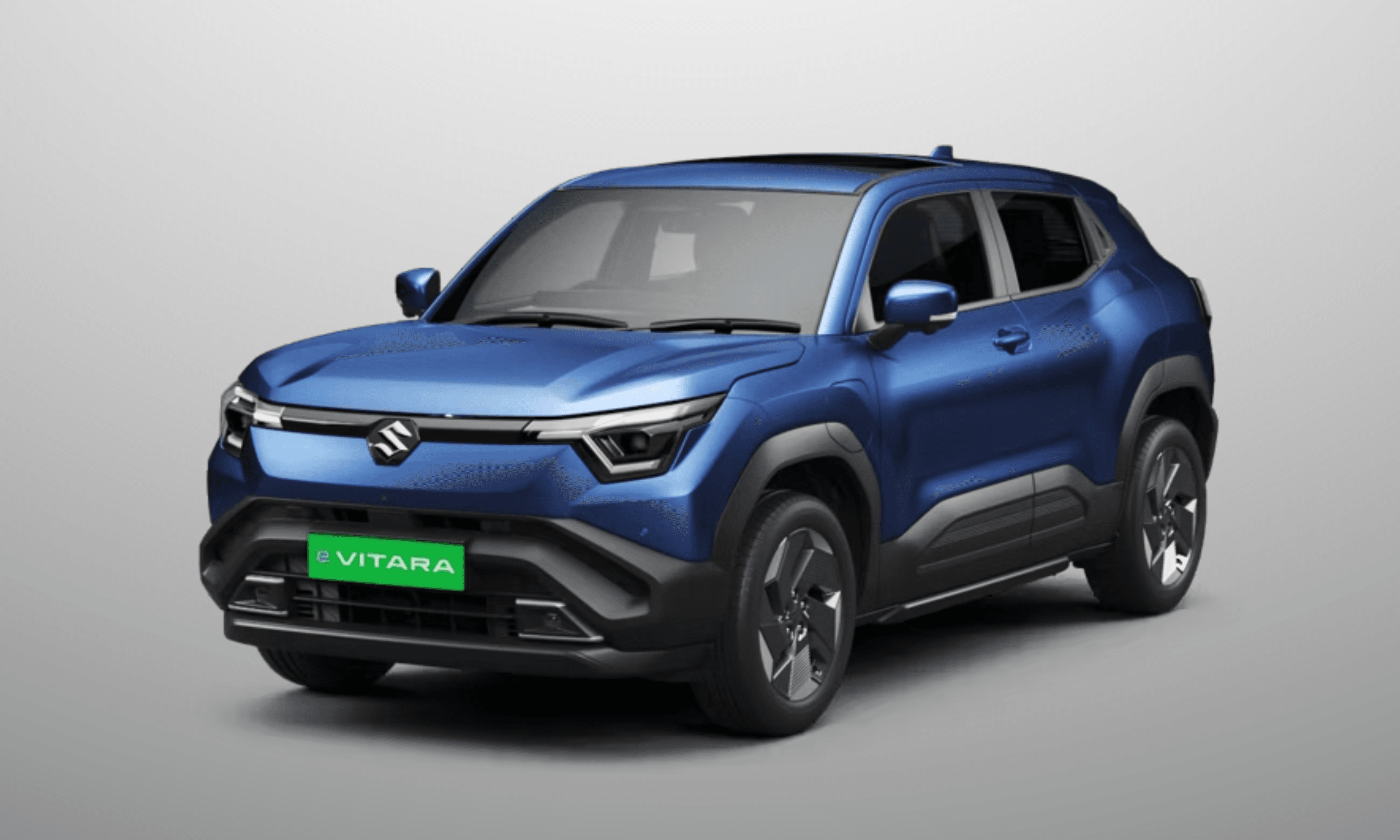
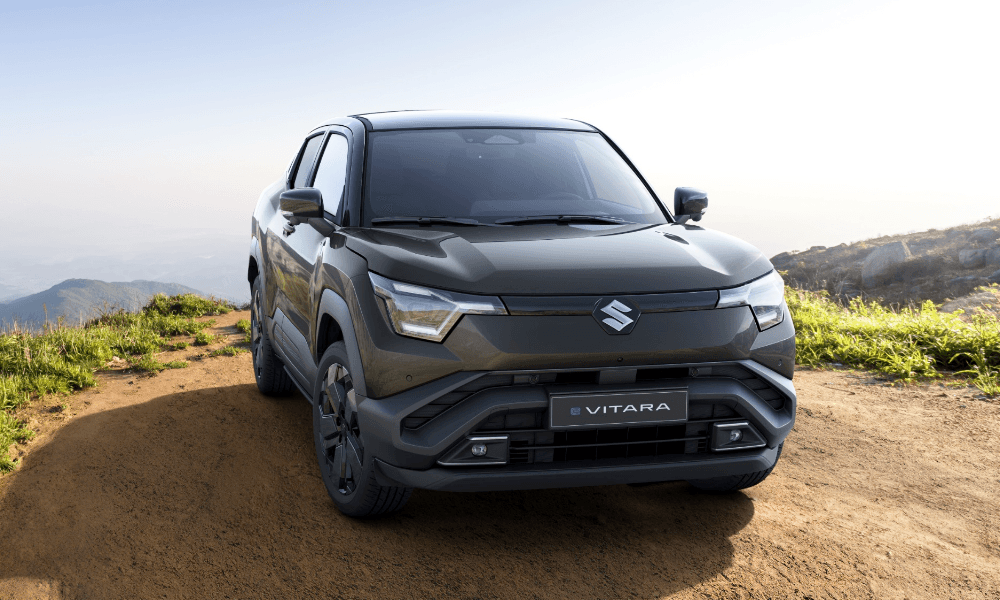
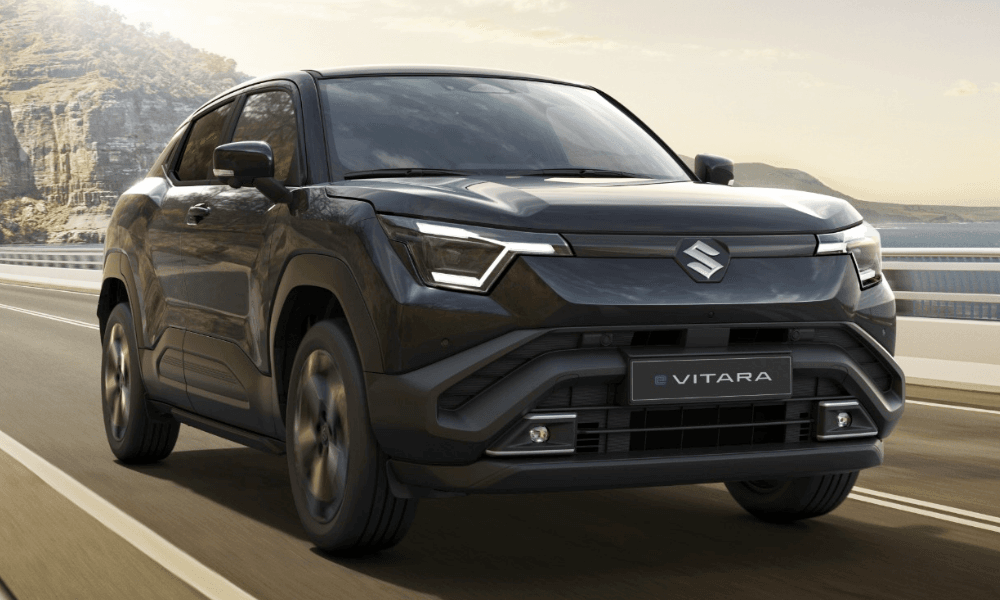
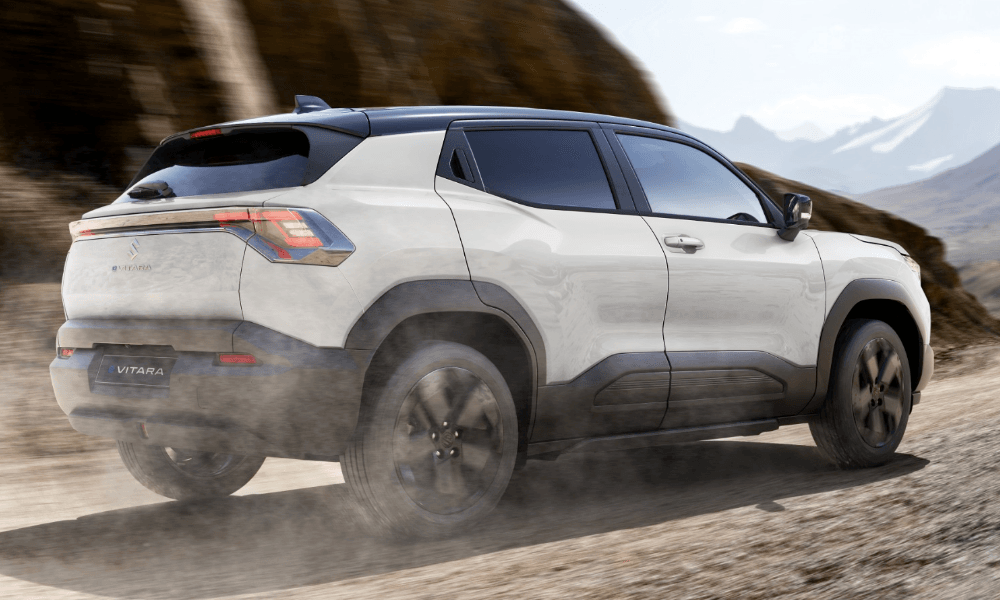
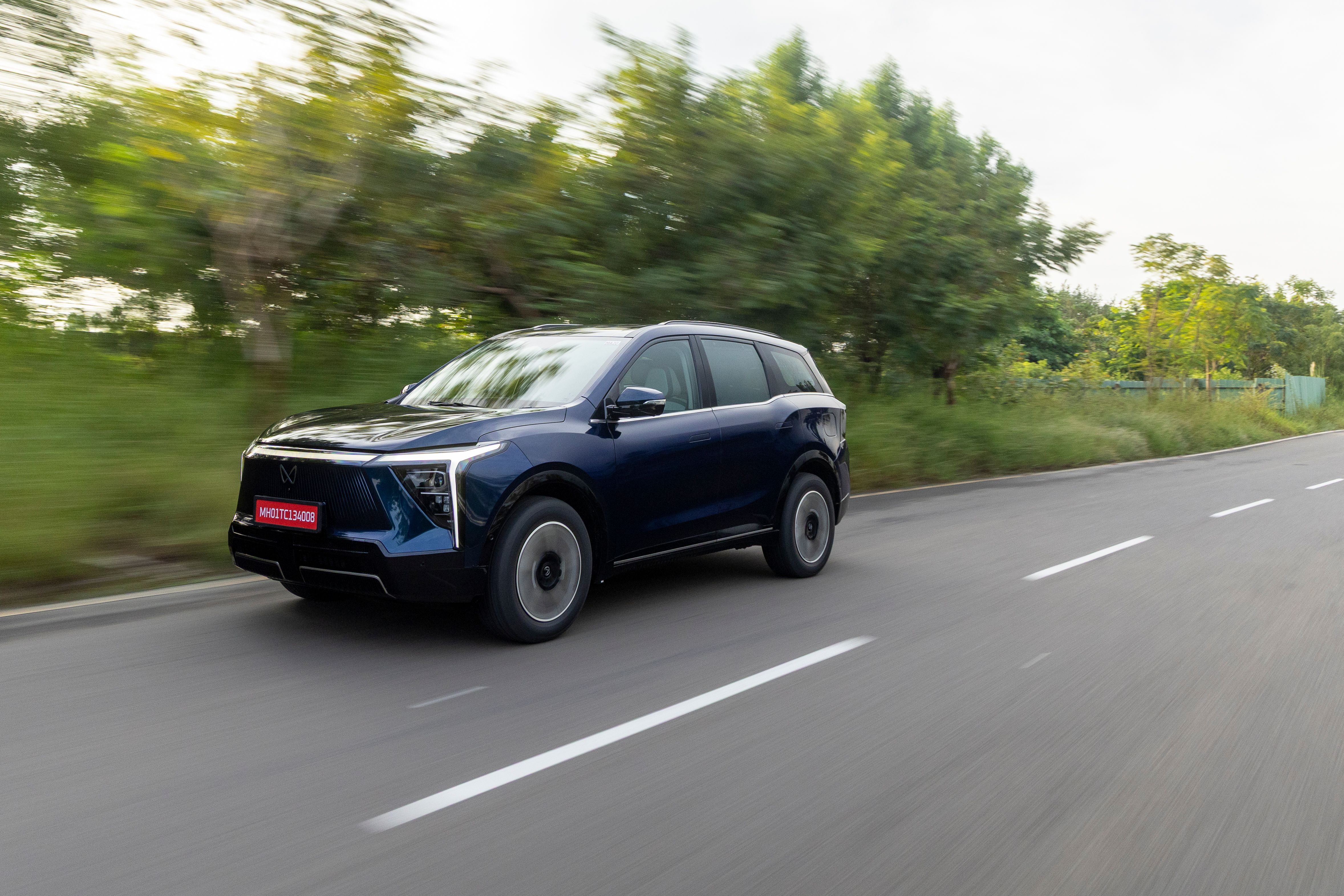
The e Vitara takes its styling cues from the Maruti Suzuki EVX concept. The production model features angular headlamp units paired with Y-shaped DRLs and extensive cladding around the wheel arches, bumpers, and lower doors. A connected tail-lamp design has also been incorporated, closely resembling what was showcased on the EVX concept.


Also Read: Maruti Suzuki Achieves 80% Battery Localisation For Grand Vitara Hybrid

maruti suzuki e vitara unveiled production version of evx concept maruti first ev carandbike 3

Maruti Suzuki e Vitara: Interior


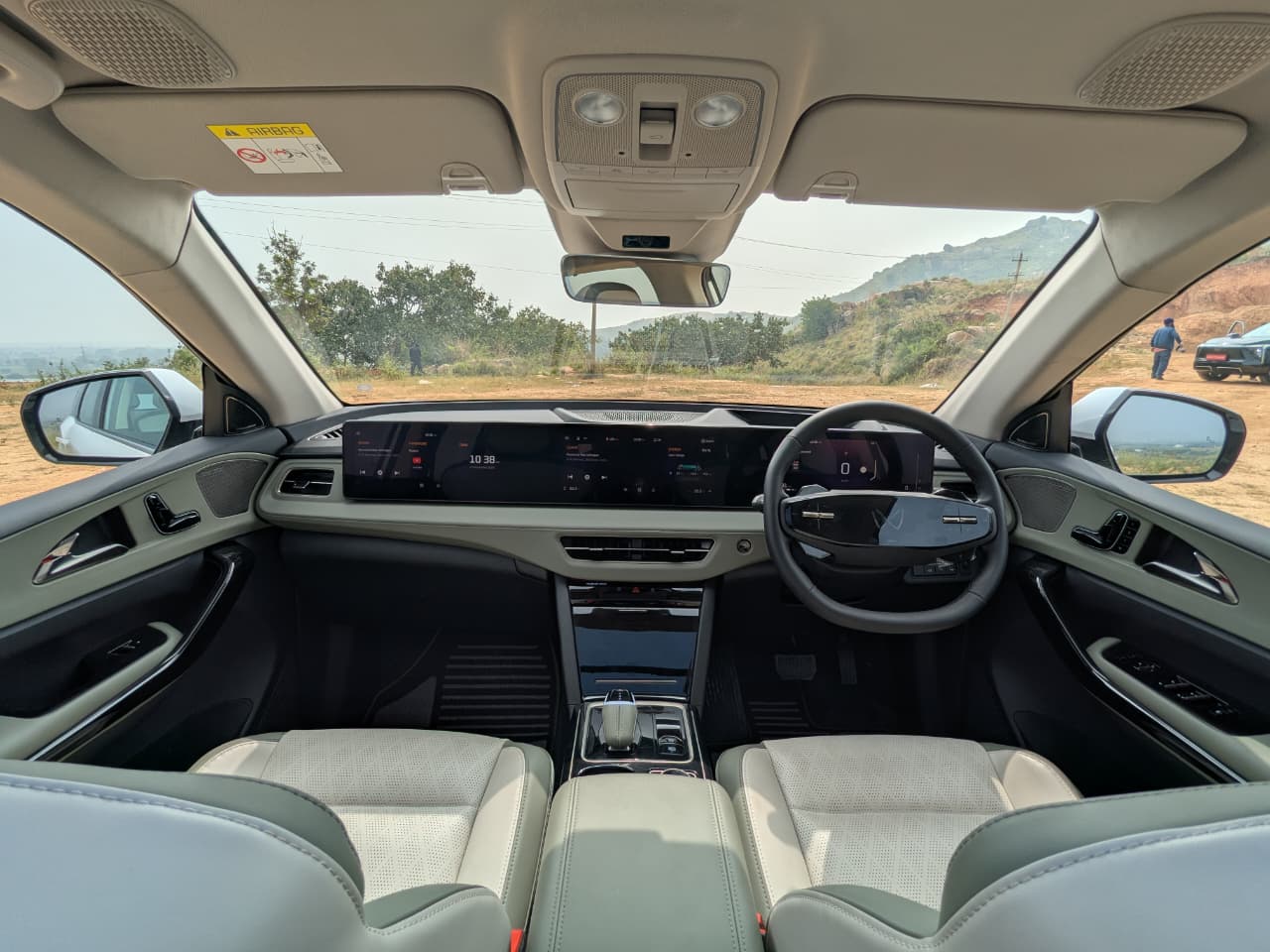
As for the interior, the e Vitara adopts a dashboard layout not shared with any other Maruti Suzuki model currently on sale. A pair of free-standing displays, positioned within a single housing, sits at the top of the dashboard, along with a wide, soft-touch panel across the fascia. Below the central air-conditioning vents is a small set of physical controls. The gear selector has been replaced with a rotary dial.


Also Read: Maruti Suzuki Victoris Review: Fitting Package, Timed Right

maruti suzuki e vitara unveiled production version of evx concept maruti first ev carandbike 4

Maruti Suzuki e Vitara: Features Offered Globally


Globally, the e Vitara is equipped with features such as ADAS, a 10.25-inch digital instrument cluster, a 10.1-inch infotainment display, ambient lighting, a telescopic steering wheel, keyless entry and start, four speakers, and an auto-dimming interior rear-view mirror. Higher variants include additions such as 19-inch alloy wheels, ventilated front seats, a 10-way power-adjustable driver’s seat, an Infinity audio system, wireless charging, fog lamps, and a 360-degree camera.


The feature set for the India-spec model has not been confirmed yet, although several of these features are expected, depending on the variants.


Also Read: Maruti Suzuki Victoris Fuel Efficiency Figures Revealed

Suzuki E Vitara India Launch Specs Price Details

Maruti Suzuki e Vitara: Battery Packs, Motor Outputs, and Range


For India, the e Vitara is likely to be offered with both of its global battery options, 49 kWh and 61 kWh, with the larger pack expected to be reserved for higher trims. Lower variants use a front-mounted motor producing 142 bhp and 192.5 Nm, while the more powerful configuration delivers 172 bhp. An AWD version is offered in international markets but has not been confirmed for India. Depending on the variant, the e Vitara has a WLTP-certified range of up to 428 km.


Maruti Suzuki e Vitara: Rivals 


Once launched, the e Vitara will compete with the Hyundai Creta Electric, Tata Curvv EV, MG ZS EV, and the Mahindra BE 6. Sales in India will take place through Maruti Suzuki’s Nexa dealership network. 


Also Read: Maruti Suzuki Victoris Launched At Rs 10.50 Lakh
Maruti Suzuki e Vitara India Launch Specifications Details

Maruti Suzuki e Vitara: Production and Export


The e Vitara is manufactured exclusively at the Hansalpur plant. Mass production began on August 25, 2025, in the presence of Prime Minister Narendra Modi and Suzuki Motor Corporation President Toshihiro Suzuki. Maruti Suzuki has stated that the India-built e Vitara will be exported to over 100 countries over time.


The first export shipment consisted of 2,900 units dispatched from Pipavav Port in Gujarat to 12 European countries: the United Kingdom, Germany, Norway, France, Denmark, Switzerland, the Netherlands, Sweden, Hungary, Iceland, Austria, and Belgium.


Maruti Suzuki e Vitara: UK Launch Price


In June 2025, Suzuki introduced the E Vitara to the UK market, where the entry-level Motion trim, paired with the 49 kWh battery, went on sale at £29,999 (roughly Rs 35 lakh). The range-topping Ultra AllGrip-e version, which comes with the larger 61 kWh pack and an all-wheel-drive setup, was listed at £37,799 (about Rs 44 lakh).
Maruti Suzuki e Vitara India Launch Specifications Details 3

Maruti Suzuki e Vitara: Price Expectation


Although the UK pricing sits on the higher side, the model is expected to be more affordable in India since production is carried out at Suzuki Motor Gujarat’s Hansalpur facility. As for its prices, we expect it to start at around Rs 17 lakh and top out at Rs 23 lakh (ex-showroom).  


from carandbike - News https://ift.tt/yJluz9a
via IFTTT
Monday, 1 December 2025

Adi Kailash Yatra On Four Wheels And A Battery!

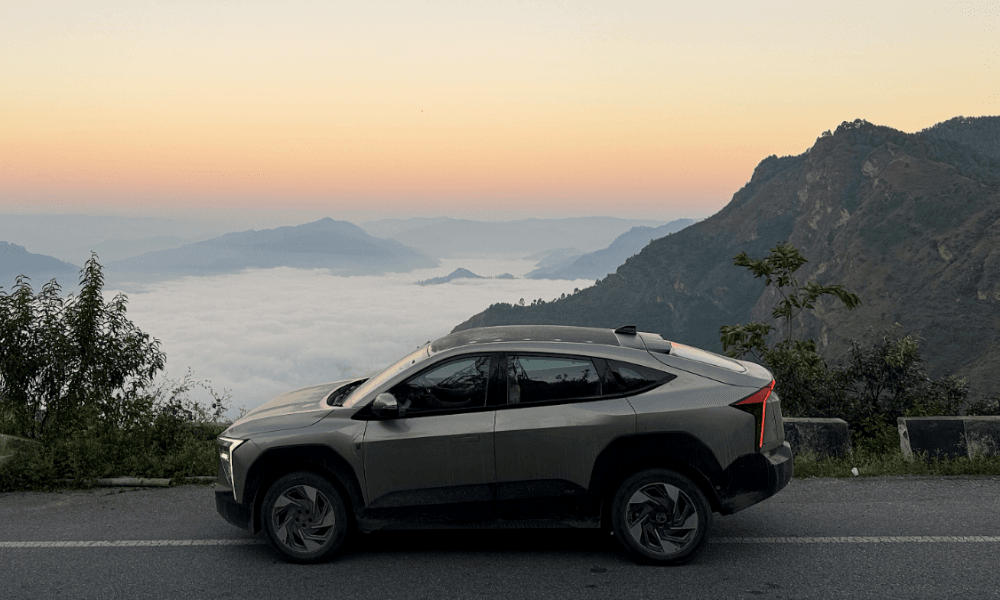
I have been to Uttarakhand several times before, and still come back with unique memories every time I visit it. The region is blessed with natural beauty, with pristine glacial streams giving birth to many a holy river, and is home to magnificent peaks that hold special reverence for devout followers of the Hindu dharma.

Adi Kailash Yatra Mahindra BE 6 4

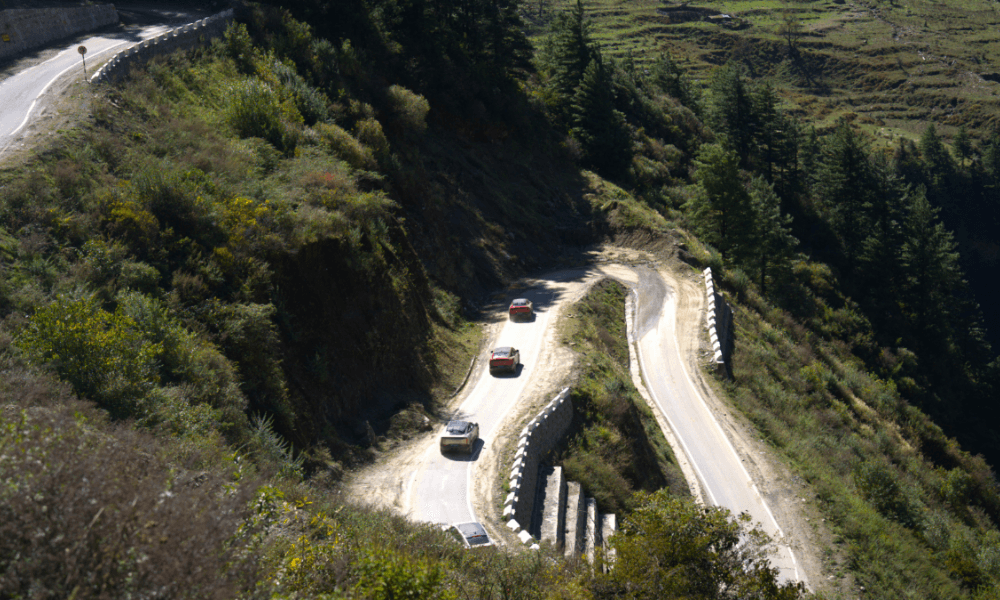
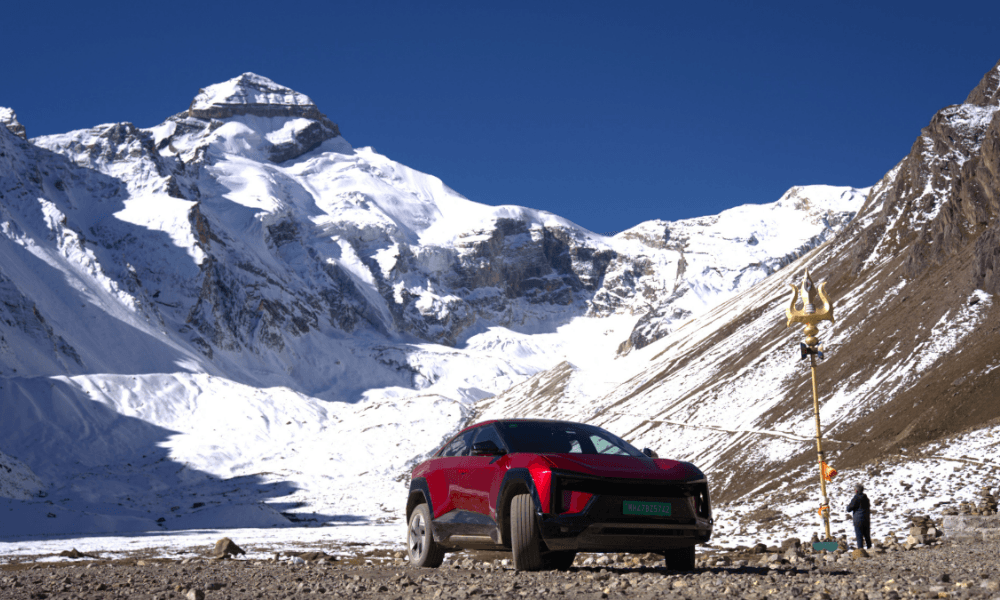
Before you assume it to be a pilgrimage trip blog, let me just clarify why we went into one of the remotest regions of our country, and that too on a fleet of electric cars. Yes, you read it right – we drove electric cars into a region where the road infrastructure, being constantly challenged by extremely harsh climatic conditions and frequent landslides, was always at risk. The road journey into this part of the country is not just arduous and full of adventure, but is also unthinkable for an EV road trip, as for hundreds of kilometres there’s no sign of an EV charging station. We drove parallel to the Nepal border for over 350 km to reach our final destination, just short of Lipulekh Pass bordering Tibet.


This drive was an endurance test for our electric cars, and had it not been for the long-range, heavy-duty batteries and powerful motors spinning the rear wheels, it would have been unthinkable to reach these places.


THE BIGGEST CHALLENGE:


We started our journey from Bareilly Cantonment, and were flagged off by senior army officials from the regiment deployed in the Kumaon region of Uttarakhand we planned to visit. While the distance from Bareilly to Adi Kailash and Om Parvat is barely around 500 km, the hilly terrain and plenty of unfavourable road patches on the way made the journey pretty demanding. The hunt for compatible charging points was enough to pace us down, considering electric cars usually need more frequent halts for recharging when compared with their ICE counterparts.

Adi Kailash Yatra Mahindra BE 6 2

Talking about charging, it’s important to note that once you cross Pilibhit after Bareilly, or Kiccha if you are going by the Nanakmatta route, there’s no fast-charging station available for the next 400 kilometres till Adi Kailash. So, for the next approximately 800 kilometres of to-and-fro journey, we were 100% reliant on the portable slow chargers that came with the electric cars.


Needless to say, but the sharp range drop for EVs during hill ascents is the next big fear you need to come to terms with, if you have already gotten over the range anxiety phenomenon, having experienced electric cars in the plains.


WHAT MADE IT POSSIBLE:


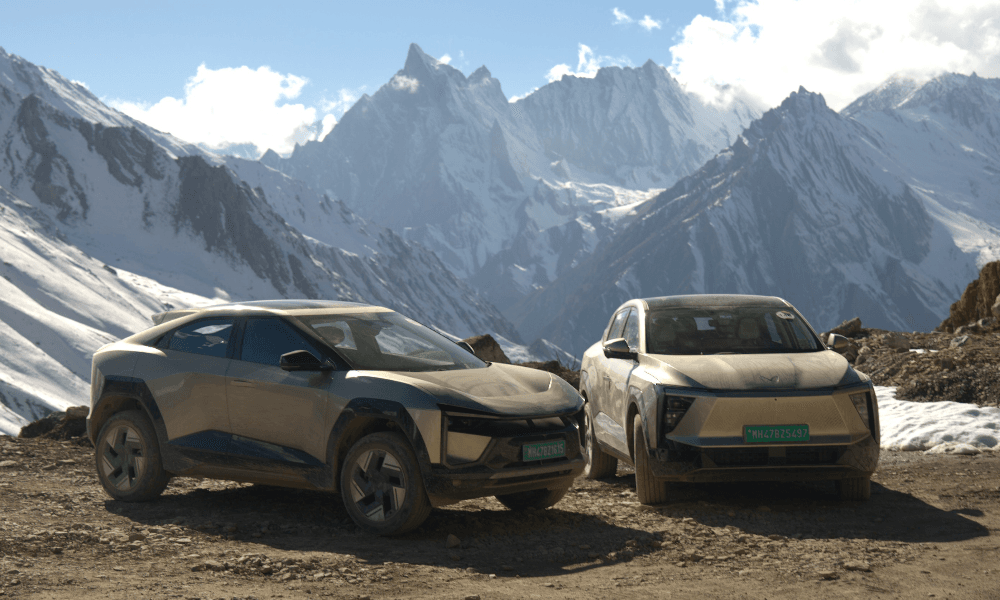
Thankfully, the cars we had for this expedition were the very capable born-electric Mahindra twins – BE 6 & XEV 9e – both equipped with massive 79 kWh batteries, and claiming a 500+ km range in regular city cycles. Even with battery sizes this large, it was still extremely difficult to predict how many miles we’d be able to leave behind at a given State of Charge (SOC). The best way to proceed was to be mindful of the distance to be covered till our next halt, and ensure that the SOC doesn’t fall below a safe 20% mark by the time we reach the location.

Adi Kailash Yatra Mahindra BE 6 1

Additionally, no matter how big the battery is, when planning such a drive, we often fail to factor in the steepness of inclines encountered en route. The general thumb rule is: the speed of discharge is directly proportional to the degree of gradient; therefore, a steeper climb always means a risk of running out of juice much faster than expected. On the hind side, the BE 6 that we drove beautifully demonstrated how efficiently it recoups the lost energy while plying on a downhill run. Both BE 6 and XEV 9e offer three levels of regeneration, and we drove the majority of the time in L2 mode, and switched to L3 (strong regeneration) on descents.


TRIP HIGHLIGHTS:


A quick lunch halt at Dharchula en route gave me an opportunity to cross over the Kali river through a rope bridge and be in the middle of a busy marketplace, technically a part of Nepal. Just in case you are not aware, the Kali River acts as a natural boundary between India and Nepal. Two small checkposts, one on either side of the bridge, manned by the respective defence forces, let you cross into a different country. And that’s how Nepal became the first country I visited just by showing my Aadhar card, and not my passport.

Adi Kailash Yatra Mahindra BE 6 3

Tracing the Kali River upstream, we reached Vyas Valley. The Kali Temple situated here marks the origin of the sacred Kali River. This is where we stopped for some tea and light snacks, and it was a pleasant surprise to find a military-run Marathi canteen selling bhajiya & vada pavs alongside an army souvenirs shop, barely 10 km before the Tibet border.


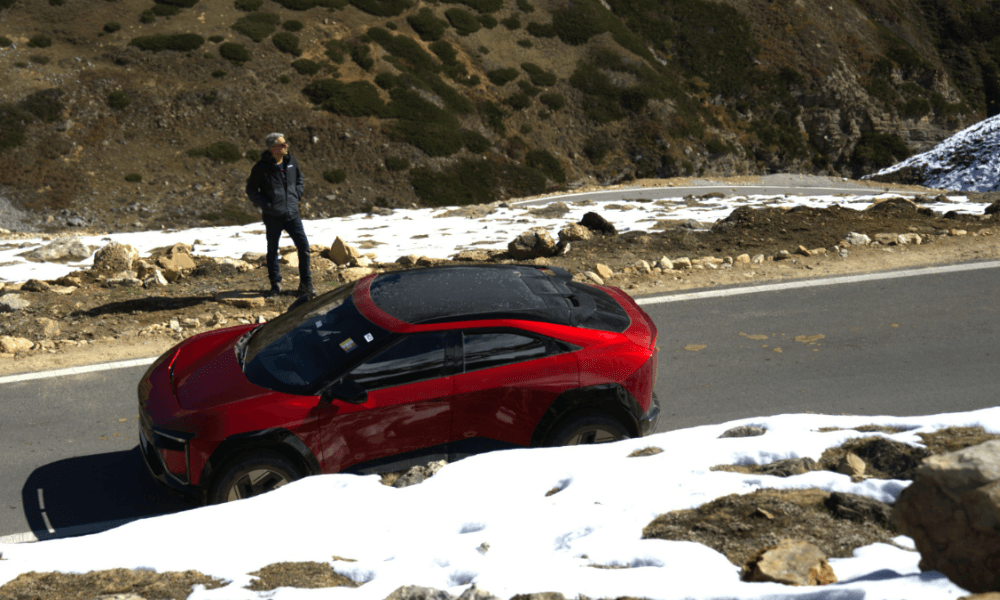
Above all, visiting the sacred Adi Kailash and the beautiful sight of the revered Om Parvat overshadow all the hardships and efforts taken to come this far. The road to Nabidhang barely existed, and it is here on the way to Om Parvat that we truly felt the need for off-road tyres in place of the road-biased OEM set, but the cars climbed up well and never let us feel any dearth of torque. Driving the BE 6 from Gunji to Adi Kailash, on the other hand, was an absolute delight. 

Adi Kailash Yatra Mahindra BE 6 7

The road surface was impeccably smooth, and a complete contrast to the numerous single-lane, rocky and sometimes muddy landslide sites we had to cross to reach the other side. The evening sun simmering through the snow-covered peaks, while you can hear the water gushing through the flawlessly blue rivers along the roadside, were some moments that will never fade away from memory.


USEFUL TIPS:


If you ever happen to plan an EV drive into hilly terrain, please bookmark this page, and the following tips may be of great help:


  • Research and plan halts in advance: Never set out on an intercity drive or an expedition into the hills without understanding the terrain well and identifying key fast-charging stations on the planned route.
  • Just a 3-pin socket isn’t enough: God forbid, if you run out of charge and it looks impossible to reach the nearest charging station, please ensure the portable home charger is always handy. Look for a 15 Ampere power socket, ideally at a commercial establishment frequently running heavy loads, and with proper earthing and voltage stabilisation measures in place, and less likely to use lower-grade cables. It may appear to be an inconvenience, but please remember modern EVs may refuse to initiate charging if the system senses any safety breach.
  • When travelling to regions with no EV fast-charging infrastructure, make an effort to learn about the local power cut schedules and anticipate outages based on news related to landslides or other natural disasters, so you can avoid getting stuck for an additional night or more.
  • Don’t just blindly rely on the range as shown on the odometer. It’s calculated based on charge depletion experienced over the most recently covered distance, and if conditions change in the next few kilometres, the displayed range will change too, causing misjudgement. Keeping an eye on the SOC % may still be a better idea.
  • Switch off the aircon or set it at a more comfortable temperature like 22–24 degrees C. This is the biggest drain on your battery after the drivetrain, and when in doubt, use other power-saving features in the car, e.g., switching off driver aids like the ADAS system, and activating the battery saver mode. Remember that every small conservation measure will reward you with a few precious extra kilometres on the odometer.
  • Lastly, watch the altitude difference: The Onward journey is always more challenging than the return, so always be observant about the topography of the place and anticipate the charge requirement for the return leg.
  • Further, a drive into the hills can always throw unknown challenges your way, so please go thoroughly prepared and do leave us a comment below if there’s anything more you wish to know.


THE REAL REASON WE COULD ACCESS THESE HOLY SITES:


Lastly, travelling to the forward regions of our country, sharing a boundary and sometimes disputed territories with hostile neighbours, is full of unnatural risks. Inclement weather and poor road infrastructure not only make it difficult to access these places but also put immense pressure on basic supplies necessary for the survival of the locals as well as for the tourists in the region. We are thankful to the various units of the Indian Armed Forces for securing our borders and supporting us with good roads and safety back-up in case of an untoward event.

Adi Kailash Yatra Mahindra BE 6 5

This trip wouldn’t have been possible without the backing of our alert, active, and supportive Armed Forces


from carandbike - News https://ift.tt/8BGSY0h
via IFTTT
2026 Kia Seltos Teased Ahead Of Debut On December 10

Kia has finally given us an official first look at the second-generation Seltos, ahead of its global debut on December 10. The SUV has already been spotted testing several times, both here and overseas, but the first set of teaser images offers the clearest look yet at how much the Seltos is changing for its next-generation phase. 


Also Read: New-Gen Kia Seltos Spotted Testing In India

second gen kia seltos teased ahead of debut on december 10 1

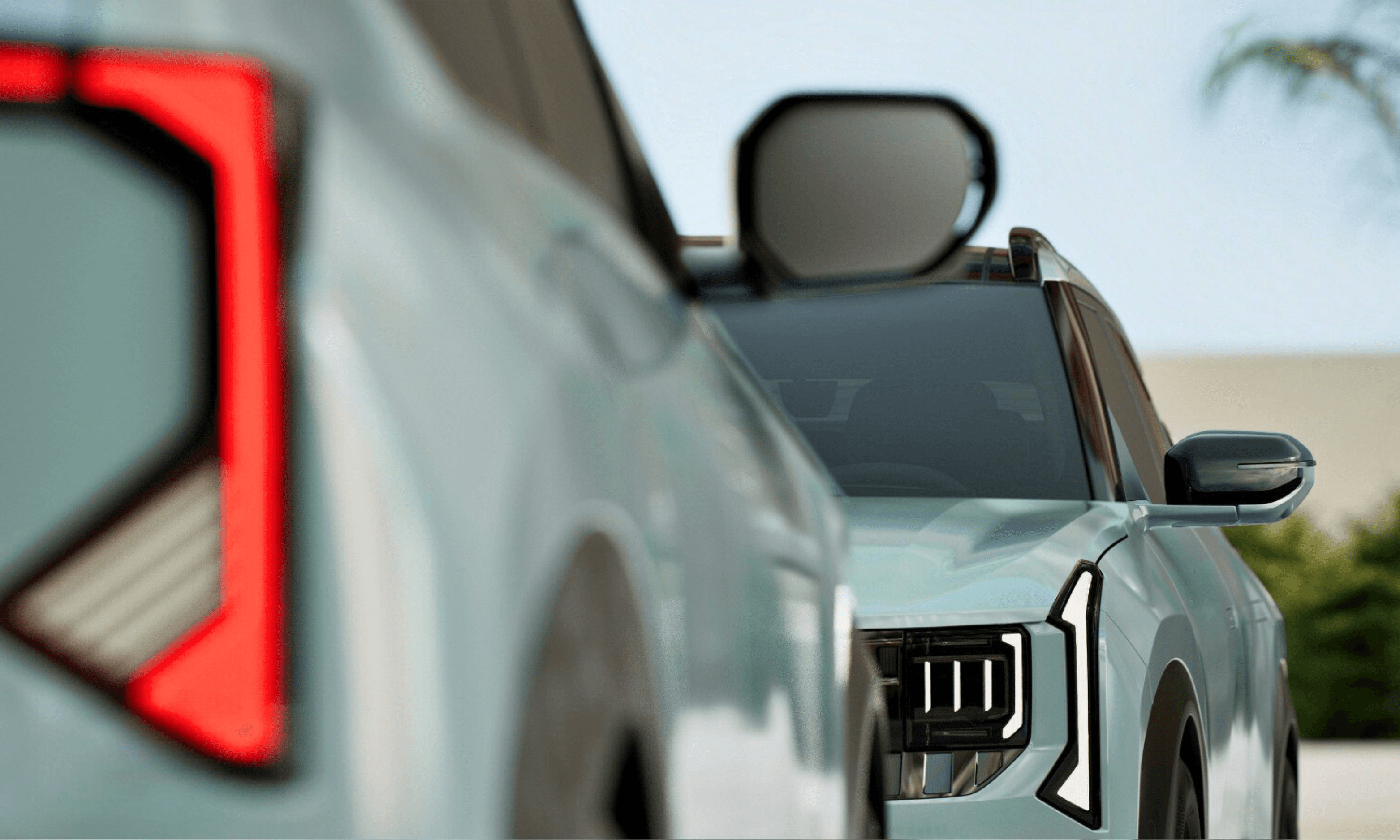
From the images, it’s clear that Kia is pushing the design towards its global design language, and the new-gen model appears to borrow some bits from the brand’s flagship Telluride SUV. The front end features a wider “Tiger Face” grille with a chrome surround, paired with tall vertical DRLs positioned right at the edges.


Also Read: Second-Gen Kia Seltos Global Debut On December 10

second gen kia seltos teased ahead of debut on december 10 4

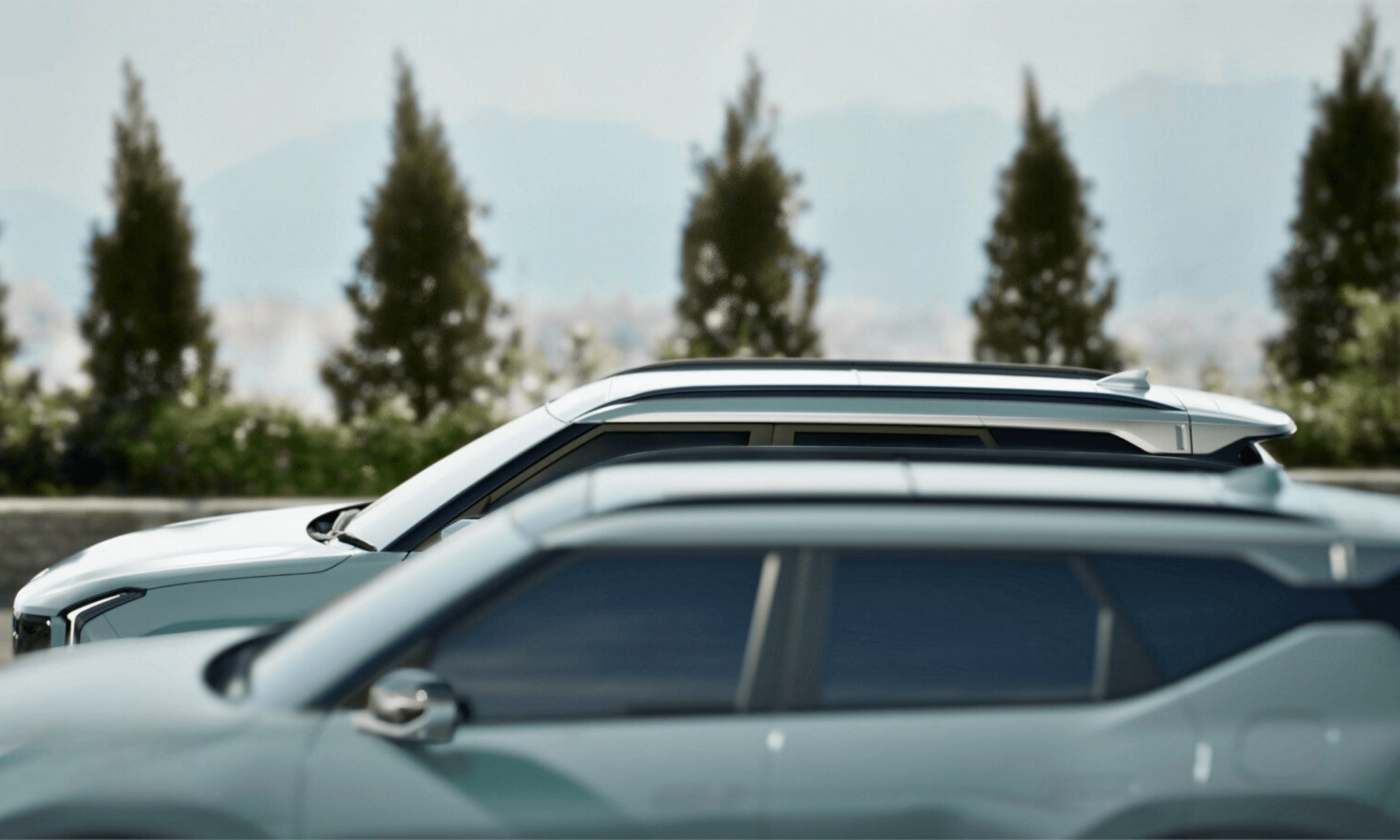
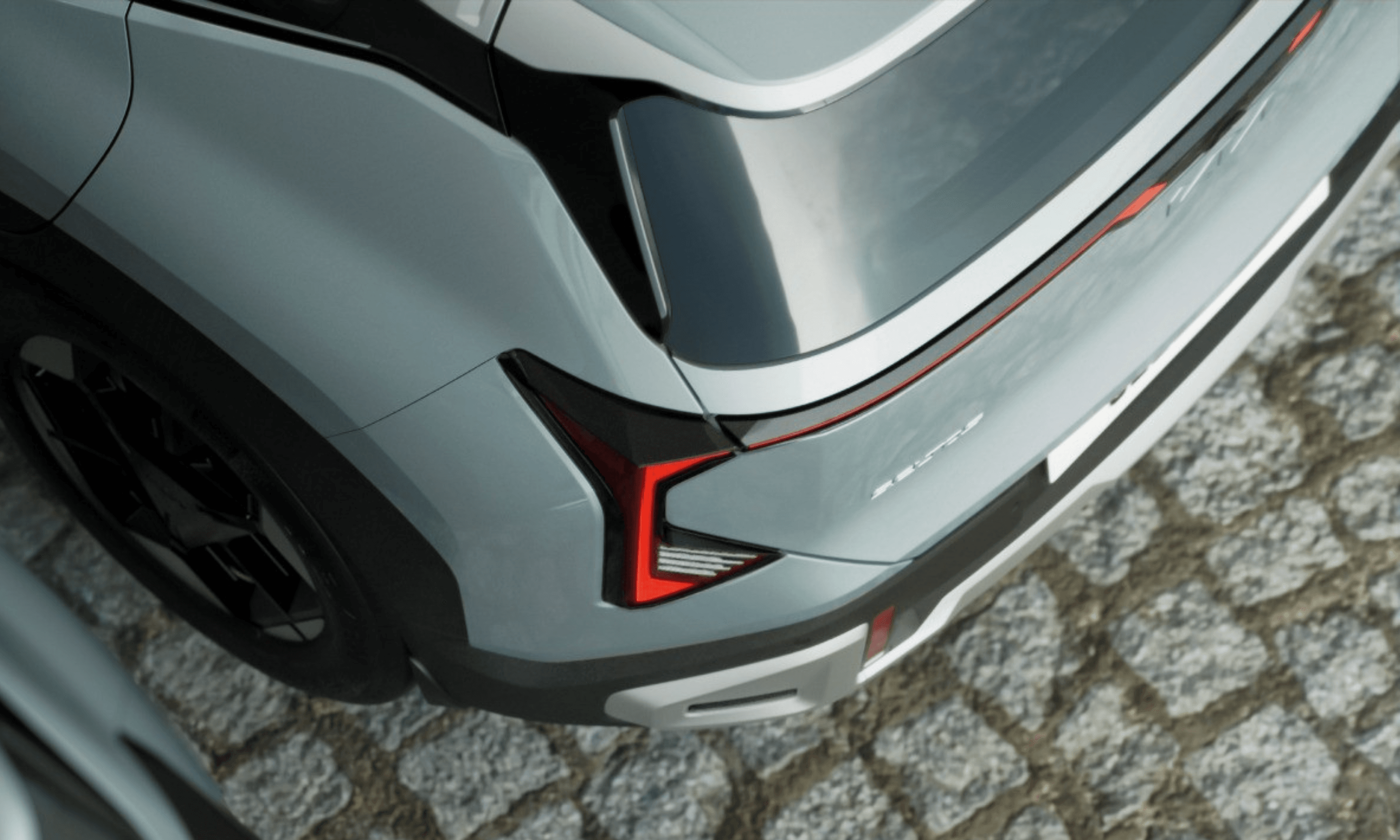
The profile looks equally refreshed. The teasers highlight blacked-out pillars, new flush-fitting door handles, fresh alloy wheel designs, and a kink in the window line flowing towards the rear. Around the back, the Seltos gets a full-width LED light bar that’s somewhat similar to the one on the Kia Carens Clavis. There is also a roof spoiler and a chunky silver skid plate.


Also Read: New-Gen Kia Telluride Revealed; Gets New Styling, More Space


second gen kia seltos teased ahead of debut on december 10 2
As for what’s under the hood, the next-gen Seltos is expected to continue offering petrol and diesel options for the Indian market. The big addition, though, is likely to be a hybrid powertrain, which is expected to be a part of its global debut.


Kia will reveal the new Seltos globally on December 10, with the India launch likely to happen in early 2026. Once it launches in India, it will go up against the likes of the Hyundai Creta, Honda Elevate, Tata Sierra, Skoda Kushaq, Maruti Suzuki Victoris and Grand Vitara and more in the segment. 


from carandbike - News https://ift.tt/92GJpn4
via IFTTT
Sunday, 30 November 2025

Boman Irani, Classic Legends Win Yezdi Trademark Case

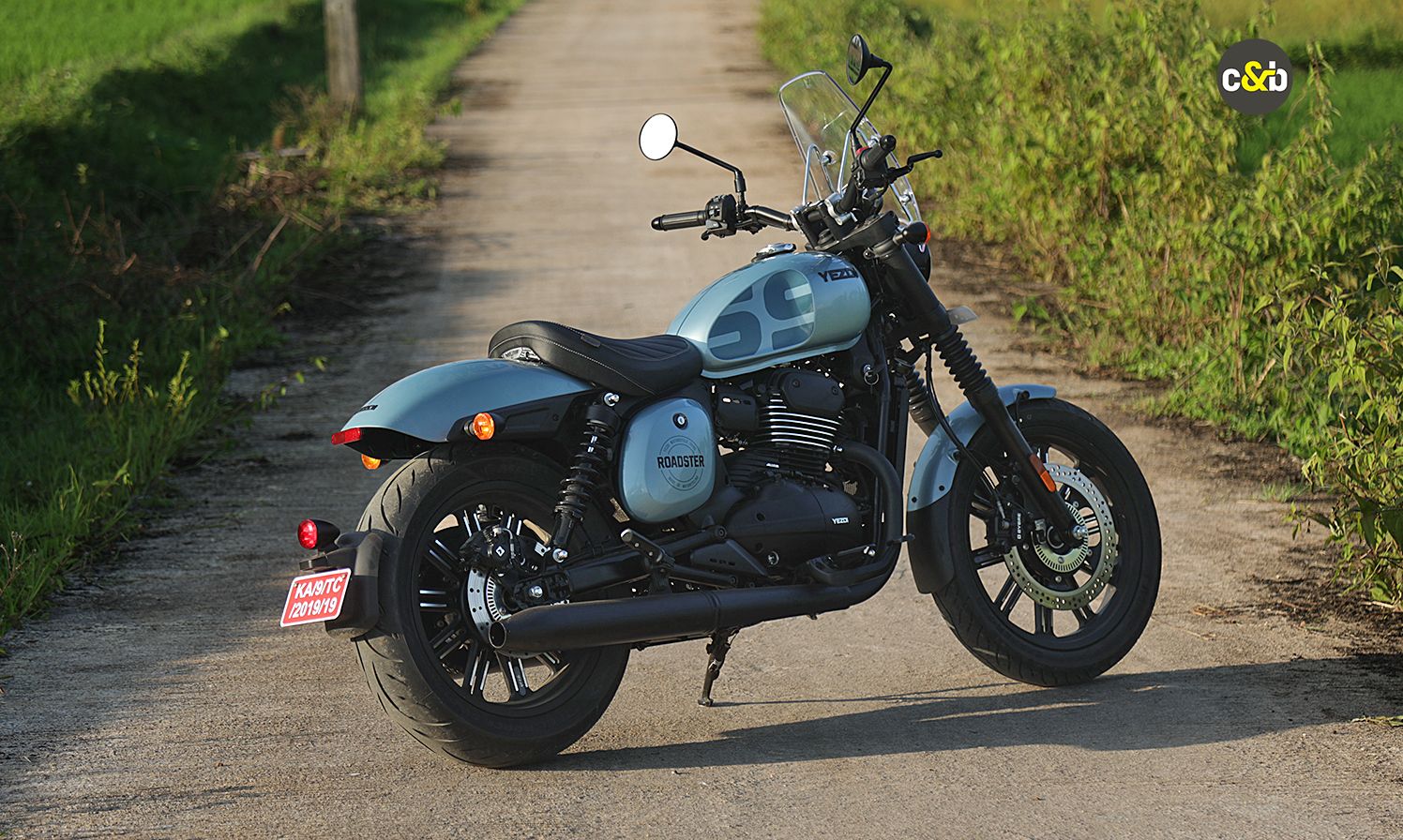
A division bench of the Karnataka High Court has ruled that Boman R. Irani, co-founder of Classic Legends, holds the valid rights to the Yezdi trademark. The High Court has overturned a previous single judge ruling and declared that Ideal Jawa’s prolonged non-use and failure to renew trademark registrations amounted to abandonment and reaffirmed Irani’s legitimate rights over the brand.


Also Read: 2025 Yezdi Roadster First Ride Review

Yezdi Adventure 350 7

The High Court observed that Ideal Jawa (India) Pvt Ltd had stopped using the trademark after production of the motorcycles with the Yezdi brand stopped in 1996, allowed registrations to lapse, and took no steps to protect it. The court said that the Official Liquidator did not renew the registration of the trademarks, which expired between 2007 and 2013 though the trademark authority had served notices.


Also Read: Karnataka HC Restrains Classic Legends From Using Yezdi Brand

2025 Yezdi Adventure

In its November 27, 2025 order, the High Court said that both Ideal Jawa and the Official Liquidator were inactive in using or renewing the trademark. The OL cannot claim ignorance of the trademark’s existence when Yezdi was Ideal Jawa’s sole business. With no business for 30 years, no renewal, no use, no protection, and trademark not even mentioned in asset sales, goodwill was extinguished, the HC noted.


2025 Yezdi Roadster 10

The court overturned a previous order of a single judge from 2022 which had declared that Ideal Jawa (India) Ltd, Mysuru owned the Yezdi trademark and restrained Irani, Classic Legends and others from using the trademark “Yezdi.”  The division bench of the High Court has noted that the dues owed to Ideal Jawa in liquidation have no connection to the value of its trademark, saying that the Official Liquidator cannot equate alleged debts with trademark value.


Also Read: Yezdi Motorcycles Re-Launched With 3 Models


Reacting to the judgement, Boman Irani, Co-founder of Classic Legends and Chairman and MD of Rustomjee Group, said, “The verdict feels much more momentous than a fateful personal victory for my family’s legacy. It reaffirms that the perseverance in keeping heritage brands alive never goes unrewarded. The honourable court and judges have supported our efforts to renew Yezdi through innovation and lawful means.”


Yezdi Scrambler And Adventure Bikes Receive New Colour Options

Boman Irani’s father drew the Yezdi insignia on a piece of paper when Czech motorcycle brand Jawa’s original licensing agreement with Ideal Jawa ceased in 1969. The Yezdi brand was then created to continue producing the iconic machines. Ideal Jawa stopped production in 1996 and was liquidated in 2001.


Also Read: 2022 Yezdi Scrambler First Ride Review 


While Ideal Jawa and the Official Liquidator failed to renew the trademark registrations, the HC noted that Boman Irani worked proactively to revive the legendary brand, first by lawfully acquiring the requisite trademark registrations in 2013-14. He eventually partnered with Anupam Thareja and the Mahindra Group to co-found Classic Legends in 2015, with the sole aim of bringing back the glorious days of the Yezdi brand. Classic Legends re-launched the Yezdi brand with three models in 2022.


from carandbike - News https://ift.tt/tdfOWER
via IFTTT

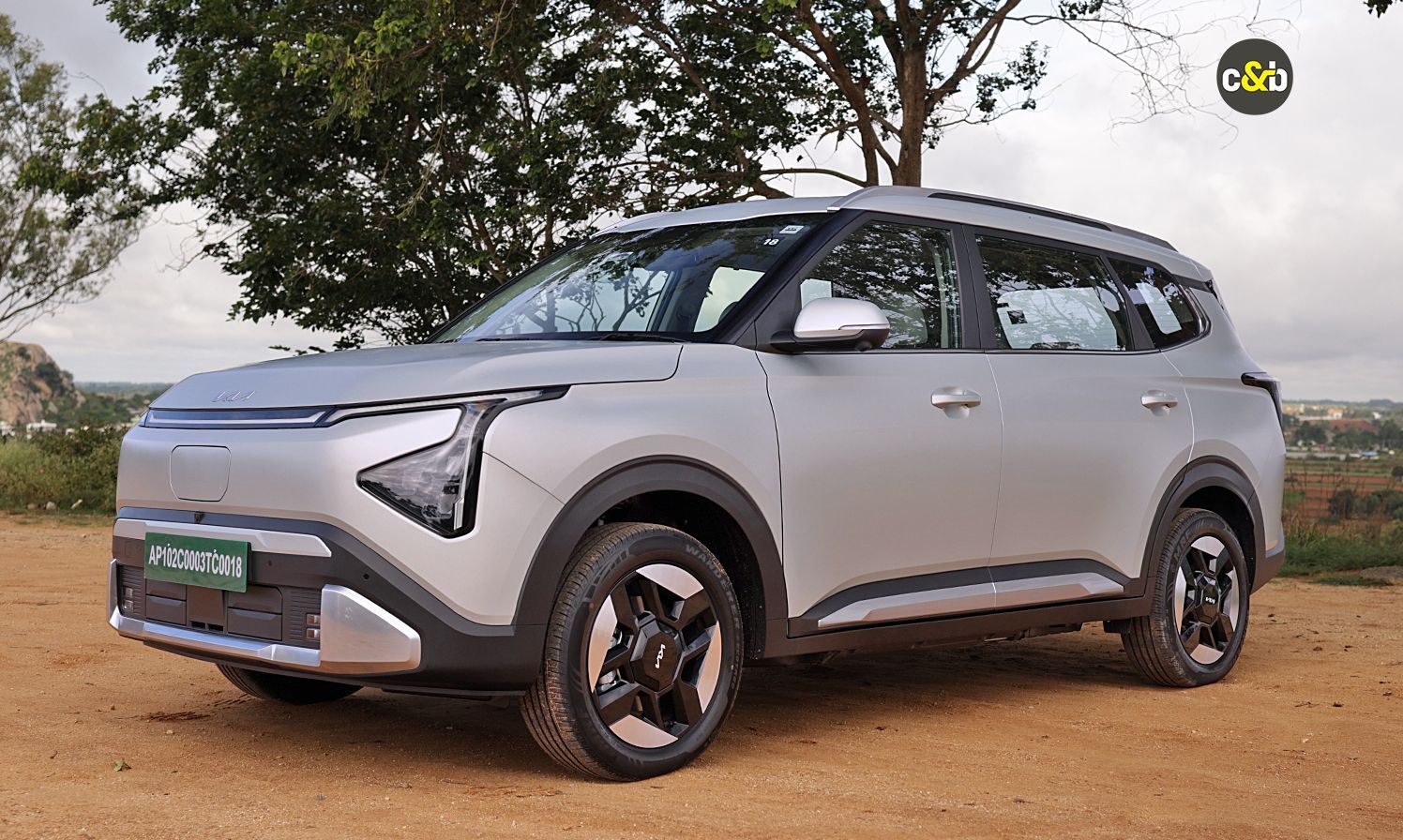
Mahindra XEV 9s vs Kia Carens Clavis EV: Spec Comparison

The Indian electric MPV/SUV space is heating up rapidly, with the arrival of the Mahindra XEV 9s, where the Kia Carens Clavis EV was the default choice as the only other car that offered this was the BYD eMax 7, and it costs more. Now both the XEV 9s and the Clavis EV are practical, family-focused, electric offerings aimed at the Rs 20–30 lakh price buyer. And both promise long-range capability with creature comfort. But which one suits your needs better? Let’s break it down 

Mahindra XEV 9 S 3

Also Read: Mahindra XEV 9e vs XEV 9s: Spec Comparison


Mahindra XEV 9s vs Kia Carens Clavis EV: Dimensions & Road Presence

Specification Mahindra XEV 9s Kia Carens Clavis EV
Length 4,737 mm 4,550 mm
Width 1,900 mm 1,800 mm
Height 1,747 mm 1,730 mm
Wheelbase 2,762 mm 2,780 mm
Seating 7-seater 6/7-seater

The XEV 9s looks more SUV-centric, while the Carens Clavis EV leans towards a softer MPV-family persona. Road presence goes to Mahindra thanks to its dimensions, but interior space usability may tilt in favour of Kia due to its packaging. 

KIA Clavis EV 34 96325f4555

Also Read: Mahindra XEV 9s Launched: In Pictures


Mahindra XEV 9s vs Kia Carens Clavis EV: Powertrain & Performance

Specification Mahindra XEV 9s Kia Carens Clavis EV
Battery Pack Options
  1. 59kWh
  2. 70kWh
  3. 79kWh
  1. 42kWh
  2. 52kWh
Real World Range ~450–500 km ~380–450 km
Drivetrain RWD  FWD 
Fast Charging 150 kW DC 120+ kW DC

On paper, Mahindra seems to be targeting more performance with choices for battery and RWD configuration. However, the Kia should be the focus of buyers who prefer efficiency and comfort-oriented driving with their seven-seater.

M9s

Also Read: Mahindra Introduces New 70 kWh Battery Pack With XEV 9S

Mahindra XEV 9s vs Kia Carens Clavis EV: Interior & Features

Features Mahindra XEV 9s Kia Carens Clavis EV
Instrument Cluster Triple-screens layout Dual-screen setup 
ADAS Level-2+ Level-2 
Seating Configuration 7 seats  6 / 7 seats (captain seats optional)
     
Comfort Features

4 Ventilated seats

Panoramic Sunroof

Rear Seat Tray

Rear Sunblind

Ventilated seats,

Panoramic Sunroof

Rear Seat Tray

Rear Sunblind

NCAP Safety Expected 5-Star Expected 5-Star
Airbags 6–8 6–8
ADAS Yes Yes
Whats App Image 2025 11 27 at 10 40 27

Also Read: Mahindra Introduces New 70 kWh Battery Pack With XEV 9S


At this price point, no one is backing off. Both offer all the features and tech that’s expected from this space and some more. But Mahindra aims to feel more premium and futuristic, while Kia prioritises family-friendly ergonomics and packaging.


Mahindra XEV 9s vs Kia Carens Clavis EV: Pricing & Value

Category Mahindra XEV 9s Kia Carens Clavis EV
Expected Price Rs 22–30 lakh Rs 20–28 lakh

Which One Should You Buy?

Mahindra XEV 9 S 3 1

Both are excellent new-age electrics with impressive range and family appeal. Choosing between them boils down to your lifestyle. Choose the XEV 9s if you are looking for a large, imposing SUV-like EV for your long distances, a premium feel and higher ground clearance. 

Carens Clavis travelog 10

However, opt for the Clavis EV for its ergonomic design, ease of use, and sensible family car capabilities, making it a suitable choice for everyday usability. 


from carandbike - News https://ift.tt/xprqD0B
via IFTTT
Saturday, 29 November 2025

Upcoming Car Launches In December 2025: Maruti e Vitara, Tata Harrier, Safari Petrol, New Kia Seltos, And More

The final month of the 2025 calendar year is almost here, and the industry is set to close out an already eventful year with several new launches. December 2025 will see a mix of electric and combustion-engine models arriving in the market. Here are the key launches confirmed for the month.


Also Read: Maruti Suzuki e Vitara Launch On December 2: Here’s What We Know So Far


Maruti Suzuki e Vitara – December 2

Maruti Suzuki e Vitara India Launch Specifications Details 1

Maruti Suzuki is preparing to introduce its first all-electric model, the e Vitara, in India on December 2, 2025. The SUV is produced exclusively at the Hansalpur plant in Gujarat, where mass manufacturing started on August 25, 2025.

maruti suzuki e vitara unveiled production version of evx concept maruti first ev carandbike 3

The e Vitara gets angular headlamps with Y-shaped DRLs, substantial cladding along the sides, and a connected tail-lamp arrangement. In global markets, its equipment list includes ADAS, a 10.25-inch digital instrument cluster, a 10.1-inch infotainment system, ambient lighting, and additional features depending on the variant. A similar configuration is expected for the India-spec version.


Also Read: Mahindra XEV 9S First Drive Review: Big Electric SUV, Bigger Expectations

Suzuki E Vitara India Launch Specs Price Details

Two battery pack options are likely to be offered: 49 kWh and 61 kWh. The lower-spec variants use a front-mounted motor rated at 142 bhp and 192.5 Nm, while the higher configuration delivers 172 bhp. Although an AWD version is available internationally, its availability for the Indian market has not been confirmed. Depending on the model, the e Vitara achieves a WLTP range of up to 428 km.


Tata Harrier Petrol & Tata Safari Petrol – December 9


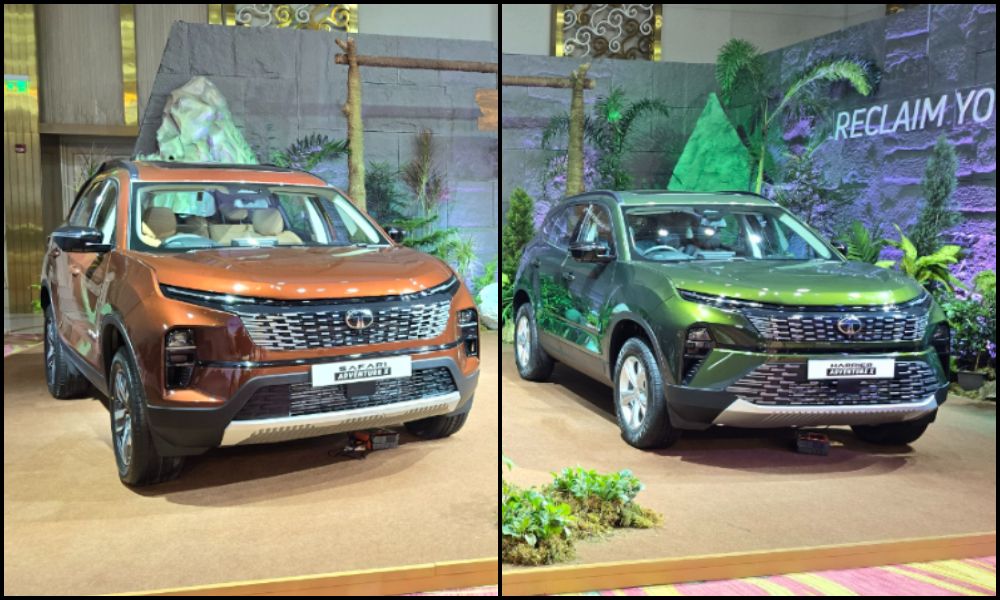
On December 9, Tata Motors is set to introduce petrol-powered versions of the Harrier and Safari. These additions follow the debut of the new petrol engines with the recently launched Sierra SUV. Both Harrier and Safari will get a 1.5-litre naturally aspirated petrol engine and a 1.5-litre turbo-petrol motor.


Also Read: Honda Amaze Secures 5 Stars In Bharat NCAP Crash Tests

Tata Safari Harrier Adventure Variants 3

The new naturally aspirated engine, part of the Revotron family, produces 105 bhp and 145 Nm. The 1.5-litre turbo-petrol TGDi unit, one of the more anticipated additions, punches out 158 bhp and 255 Nm. It remains to be seen whether the Harrier and Safari will retain these exact output figures or receive a different tune.


Second-Generation Kia Seltos – December 10

new gen kia seltos spotted testing in india for the first time

Image source - nitrorush_01
 

Kia will pull the covers off the second-generation Seltos on December 10, a day after the Harrier and Safari petrol launch. The new model has been undergoing extensive testing in India and internationally, with camouflaged images hinting at significant design changes.


The upcoming Seltos is expected to adopt elements of Kia’s latest design language, similar to the updated Telluride. Spy shots indicate a more squared-off front end, a flatter bonnet, a rectangular grille, and a split headlamp setup with vertically aligned DRLs. Interior shots surfaced earlier suggest dual-tone upholstery options and a new seat design aimed at improving comfort.


As for the powertrain, the new Seltos is likely to be equipped with petrol and diesel engine options for India. However, the addition is expected to be a hybrid powertrain in the mix.


Also Read: BMW Z4 Bows Out As Final Edition Draws Curtains On The Drop Top


Mini Cooper Convertible – December 2025

Mini Cooper Convertible 1

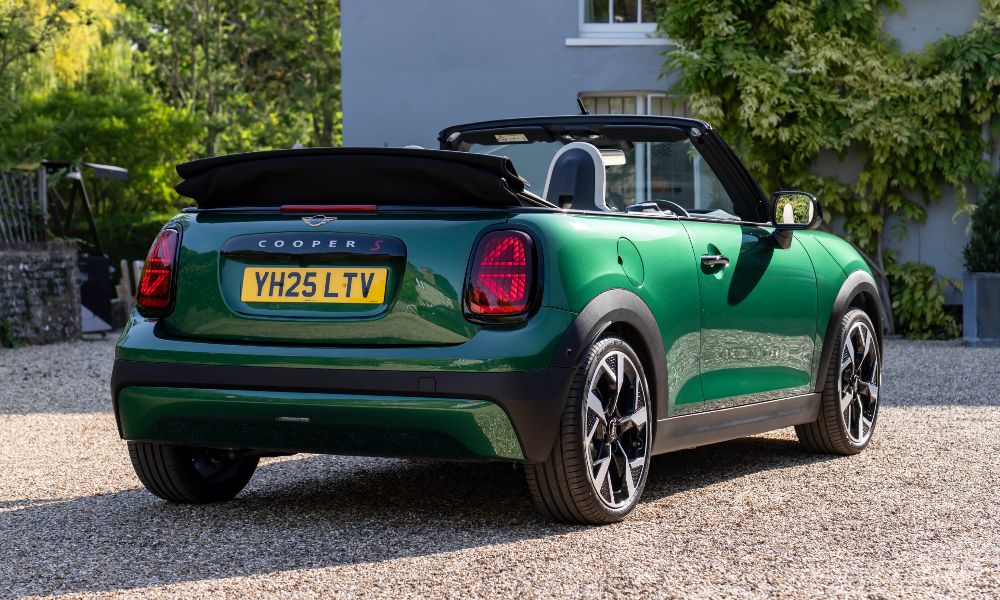
Mini India has opened bookings for the new Cooper Convertible ahead of its launch in December 2025, though an exact date has not yet been announced. The model is the drop-top derivative of the 3-door hatchback, which essentially replaces the fixed roof with a soft top that can be operated at speeds up to 30 kmph.


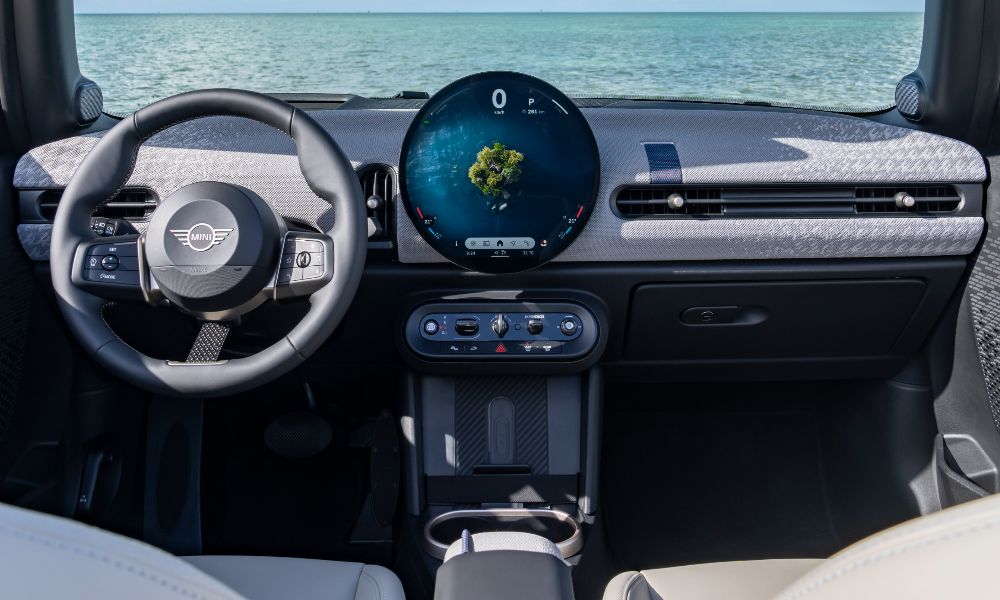
Visually, apart from the retractable roof, the Convertible maintains the design of its hard-top sibling. The cabin also mirrors the hatchback layout, highlighted by the signature circular central touchscreen, a bank of physical switches below it, and textured surfaces on the dashboard and door panels.

Mini Cooper Convertible 3

For India, the model is expected to arrive in the Cooper S configuration, powered by a 2.0-litre turbo-petrol engine producing 201 bhp and 300 Nm, paired with a 7-speed automatic transmission sending power to the front wheels. Globally, the Convertible is also offered in the Cooper C trim with 161 bhp and 250 Nm, as well as the higher-performance John Cooper Works variant belting out 228 bhp and 380 Nm. 


from carandbike - News https://ift.tt/IZCapsD
via IFTTT
Maruti Suzuki e Vitara Launch On December 2: Here’s What We Know So Far

Maruti Suzuki is preparing to launch its first all-electric offering, the e Vitara, in India on December 2, 2025. Production for the model began in August 2025 at the company’s Hansalpur facility in Gujarat, and the first batch was exported in September 2025. With the India launch approaching, here is what we know so far about it.


Also Read: Maruti Suzuki Recalls Over 30,000 Units Of Grand Vitara Over Faulty Fuel Gauge

Maruti Suzuki e Vitara India Launch Specifications Details 1

Maruti Suzuki e Vitara: Exterior


The e Vitara takes its styling cues from the Maruti Suzuki EVX concept. The production model features angular headlamp units paired with Y-shaped DRLs and extensive cladding around the wheel arches, bumpers, and lower doors. A connected tail-lamp design has also been incorporated, closely resembling what was showcased on the EVX concept.


Also Read: Maruti Suzuki Achieves 80% Battery Localisation For Grand Vitara Hybrid

maruti suzuki e vitara unveiled production version of evx concept maruti first ev carandbike 3

Maruti Suzuki e Vitara: Interior


As for the interior, the e Vitara adopts a dashboard layout not shared with any other Maruti Suzuki model currently on sale. A pair of free-standing displays, positioned within a single housing, sits at the top of the dashboard, along with a wide, soft-touch panel across the fascia. Below the central air-conditioning vents is a small set of physical controls. The gear selector has been replaced with a rotary dial.


Also Read: Maruti Suzuki Victoris Review: Fitting Package, Timed Right

maruti suzuki e vitara unveiled production version of evx concept maruti first ev carandbike 4

Maruti Suzuki e Vitara: Features Offered Globally


Globally, the e Vitara is equipped with features such as ADAS, a 10.25-inch digital instrument cluster, a 10.1-inch infotainment display, ambient lighting, a telescopic steering wheel, keyless entry and start, four speakers, and an auto-dimming interior rear-view mirror. Higher variants include additions such as 19-inch alloy wheels, ventilated front seats, a 10-way power-adjustable driver’s seat, an Infinity audio system, wireless charging, fog lamps, and a 360-degree camera.


The feature set for the India-spec model has not been confirmed yet, although several of these features are expected, depending on the variants.


Also Read: Maruti Suzuki Victoris Fuel Efficiency Figures Revealed

Suzuki E Vitara India Launch Specs Price Details

Maruti Suzuki e Vitara: Battery Packs, Motor Outputs, and Range


For India, the e Vitara is likely to be offered with both of its global battery options, 49 kWh and 61 kWh, with the larger pack expected to be reserved for higher trims. Lower variants use a front-mounted motor producing 142 bhp and 192.5 Nm, while the more powerful configuration delivers 172 bhp. An AWD version is offered in international markets but has not been confirmed for India. Depending on the variant, the e Vitara has a WLTP-certified range of up to 428 km.


Maruti Suzuki e Vitara: Rivals 


Once launched, the e Vitara will compete with the Hyundai Creta Electric, Tata Curvv EV, MG ZS EV, and the Mahindra BE 6. Sales in India will take place through Maruti Suzuki’s Nexa dealership network. 


Also Read: Maruti Suzuki Victoris Launched At Rs 10.50 Lakh

Maruti Suzuki e Vitara India Launch Specifications Details

Maruti Suzuki e Vitara: Production and Export


The e Vitara is manufactured exclusively at the Hansalpur plant. Mass production began on August 25, 2025, in the presence of Prime Minister Narendra Modi and Suzuki Motor Corporation President Toshihiro Suzuki. Maruti Suzuki has stated that the India-built e Vitara will be exported to over 100 countries over time.


The first export shipment consisted of 2,900 units dispatched from Pipavav Port in Gujarat to 12 European countries: the United Kingdom, Germany, Norway, France, Denmark, Switzerland, the Netherlands, Sweden, Hungary, Iceland, Austria, and Belgium.


Maruti Suzuki e Vitara: UK Launch Price


In June 2025, Suzuki introduced the E Vitara to the UK market, where the entry-level Motion trim, paired with the 49 kWh battery, went on sale at £29,999 (roughly Rs 35 lakh). The range-topping Ultra AllGrip-e version, which comes with the larger 61 kWh pack and an all-wheel-drive setup, was listed at £37,799 (about Rs 44 lakh).

Maruti Suzuki e Vitara India Launch Specifications Details 3

Maruti Suzuki e Vitara: Price Expectation


Although the UK pricing sits on the higher side, the model is expected to be more affordable in India since production is carried out at Suzuki Motor Gujarat’s Hansalpur facility. As for its prices, we expect it to start at around Rs 17 lakh and top out at Rs 23 lakh (ex-showroom).  


from carandbike - News https://ift.tt/s7mRVBl
via IFTTT
Friday, 28 November 2025

Mahindra BE 6 Formula E Edition: Variants Explained

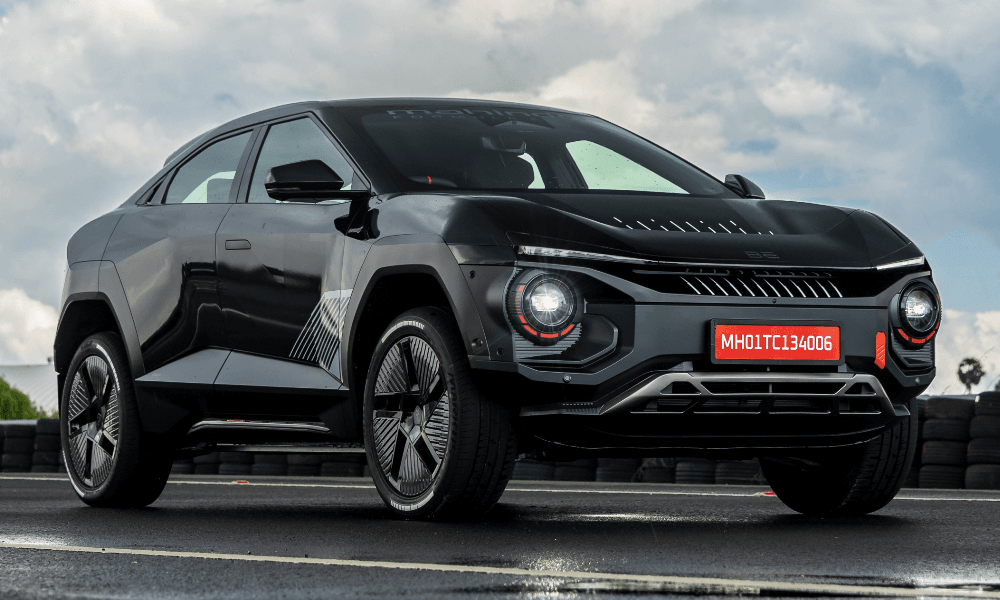
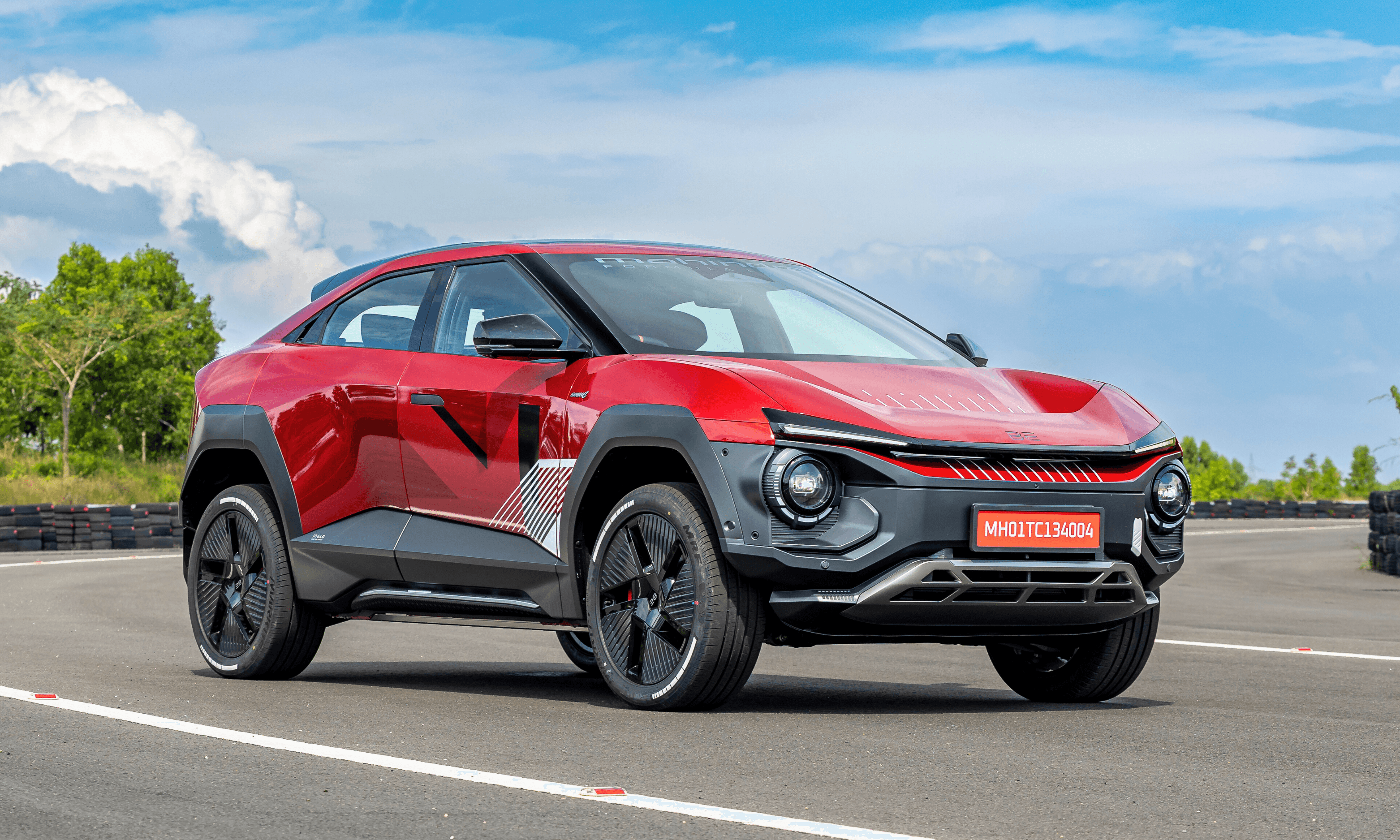
The Mahindra BE 6 electric SUV recently got its second flavour of special edition in the form of Formula E Edition. This version of the BE 6 adds some spices from the brand’s motorsport recipe with a bevy of cosmetic changes. It is offered in two variants named FE2 and FE3, both running on the same 79 kWh battery pack as the standard model. Here is a rundown of what each variant gets.


Also Read: Mahindra BE 6 Formula E Edition Launched At Rs 23.69 Lakh

Mahindra BE 6 Formula E Edition Variants Explained Features Price carandbike 1

Features marked with * are exclusive to the Mahindra BE 6 Formula E Edition and are not offered on the standard model.


Mahindra BE 6 Formula E: FE2 


Ex-showroom price - Rs 23.69 lakh 
Battery Pack - 79 kWh 
Claimed Range - 682 km  
Motor Power - 282 bhp and 380 Nm 

Mahindra-BE-6-Formula-E-Edition-Variants-Explained-Features-Price-carandbike

Features:  


  • Sonic Suite with Virtual Engine Sounds* 
  • Front Illuminated Logo 
  • New Front Bumper* 
  • Circular Projector Headlamps* 
  • New LED Tail Lamps* 
  • 19-inch Alloys 
  • New Rear Boot Spoiler* 
  • Race-Inspired Graphics on Side Doors, Fender, and Bonnet* 
  • Race Car-Inspired Start/Stop Button Flap* 
  • New Front and Rear Bumpers with Skid Plates* 
  • Sill Claddings* 
  • Tow Hook (Front and Rear)* 
  • Leatherette + Suede Upholstery* 
  • Firestorm Orange-Themed Interiors* 
  • Firestorm Orange FIA X Formula E Edition Plaque* 
  • Firestorm Orange-Coloured Brake Callipers* 
  • Painted Brake Calliper* 
  • Formula E-Inspired Custom Startup Animation* 
  • FIA Branding on Seat Belts* 
  • “Mahindra Formula E” Branding on Windshield* 
  • Translucent Door Inserts*  
  • 360-degree Camera 
  • Blind View Monitor 
  • 6 Airbags 
  • High-Stiffness Bodyshell 
  • All-Wheel Disc Brakes 
  • Brake-by-Wire Technology 
  • Intelligent Electronic Brake Booster 
  • Driver Drowsiness Detection 
  • Electronic Parking Brake 
  • Front and Rear Parking Sensors 
  • TPMS  
  • Two 12.3-inch Screens (Infotainment + Driver Display) 
  • 16-Speaker Harman/Kardon Audio 
  • Dolby Atmos 
  • Wireless Android Auto & Apple CarPlay 
  • 5G Connectivity 
  • Wireless Charging (Front Row) 
  • BYOD In-Car Experience*
  • Auto Dimming IRVM 
  • Auto Headlamps 
  • Rain-Sensing Smart Wipers 
  • Height-Adjustable Driver Seat & Seat Belt 
  • One-Touch Driver Power Window 
  • Dual-Zone Climate Control 
  • Auto-Fold ORVMs 
  • 60:40 Split 2nd Row Seats with 2-Step Recline 
  • Rear AC Vents 
  • Tilt & Telescopic Steering 
  • Cooled Console Storage 
  • 65W Type-C Fast Charging Ports (Front & Rear)


Also Read: Mahindra XEV 9S: Variants, Features, Prices Explained

Mahindra-BE-6-Formula-E-Edition-Variants-Explained-Features-Price-carandbike


Mahindra BE 6 Formula E: FE3


Ex-showroom price - Rs 24.49 lakh    

Battery Pack and other specs carried over from FE2


Features in addition to the FE2 variant


  • Adaptive Suspension 
  • 20-inch Alloy wheels* 
  • Night Trail - Carpet Lamps


Many of the features on this special edition are shared with the standard model, but the FE2 trim misses out on an ADAS suite, which is offered on the Pack Two trim of the regular BE 6, priced at Rs 23.50 lakh. 


The standard Pack Two variant, however, omits a few, such as a 360-degree camera, front parking sensors, and auto-folding ORVMs. These are features that the Formula E Edition entails.


Also Read: Mahindra XEV 9S 7-Seat Electric SUV Launched At Rs 19.95 Lakh

Mahindra BE 6 Formula E Edition 1

The FE3 trim adds adaptive suspension, which on the standard is available in the Pack Three Select trim of the BE 6, priced at Rs 24.50 lakh, though that version comes with a smaller 59 kWh battery, compared to the Formula E Edition’s larger 79 kWh pack. The standard Pack Three does get the 79 kWh version, but it is priced way above the FE3 at Rs 26.90 lakh.


All prices mentioned in this article are ex-showroom and exclude the cost of the charger. 


from carandbike - News https://ift.tt/lBnIuOH
via IFTTT
Mahindra XEV 9e vs XEV 9s: Spec Comparison

Mahindra has taken an interesting approach with the XEV lineup. With two distinct body styles, there are two distinct use-cases within the same family, making it a win-win situation for Mahindra’s growing EV line-up. Where the XEV 9e has already established itself with its sense of style, the 9s comes as a more rational, space-focused alternative. But which one makes more sense for you? Let’s break them down.


Also Read: Tata Harrier EV vs Mahindra XEV 9e: Battle Of India’s Electric Titans
 

XEV 9e vs XEV 9s: Design and Body Style

Mahindra XEV 9 E web 14 9704b15010

The XEV 9e arrived with a coupe-SUV styled profile with a sloping roofline and a visually bold and youthful design. It suited buyers who care about road presence and design flair. At the same time, the XEV 9s holds a conventional upright SUV silhouette with a flatter roof. And where the tail section of the 9e was a talk of the town with its sleek bar running across the tailgate, the 9s is more of an evolution of the very familiar XUV700. And it might be a minute detail for some, but the 9s gets a rear wiper and washer, something missing on the 9E due to its coupe-style tailgate.

Whats App Image 2025 11 27 at 10 40 59

The flatter roof should also translate to more headroom, better ingress/egress, and space utilisation in the 9s. Which also brings us to the fact that the 9s offers three-row seats. 


Also Read: Mahindra Introduces New 70 kWh Battery Pack With XEV 9S


XEV 9e vs XEV 9s: Battery, Range and Platform

Mahindra XEV 9 S 3

Both EVs share Mahindra’s scalable INGLO platform, along with similar charging architecture and battery tech.

Battery Options XEV 9E XEV 9S
59 kWh
70 kWh
79 kWh

The 70kWh battery in the 9S is a major differentiator, delivering 241bhp and 380 Nm and a claimed range of 600km. It’s offered only in a single trim, though, but should make the 9s lineup more flexible for a wider range of users.


Also Read: Mahindra XEV 9s Launched: In Pictures

 Mahindra XEV 9e First Drive Review: A Star Is Born!


XEV 9e vs XEV 9s: Interior, Space & Comfort

Whats App Image 2025 11 27 at 10 40 27

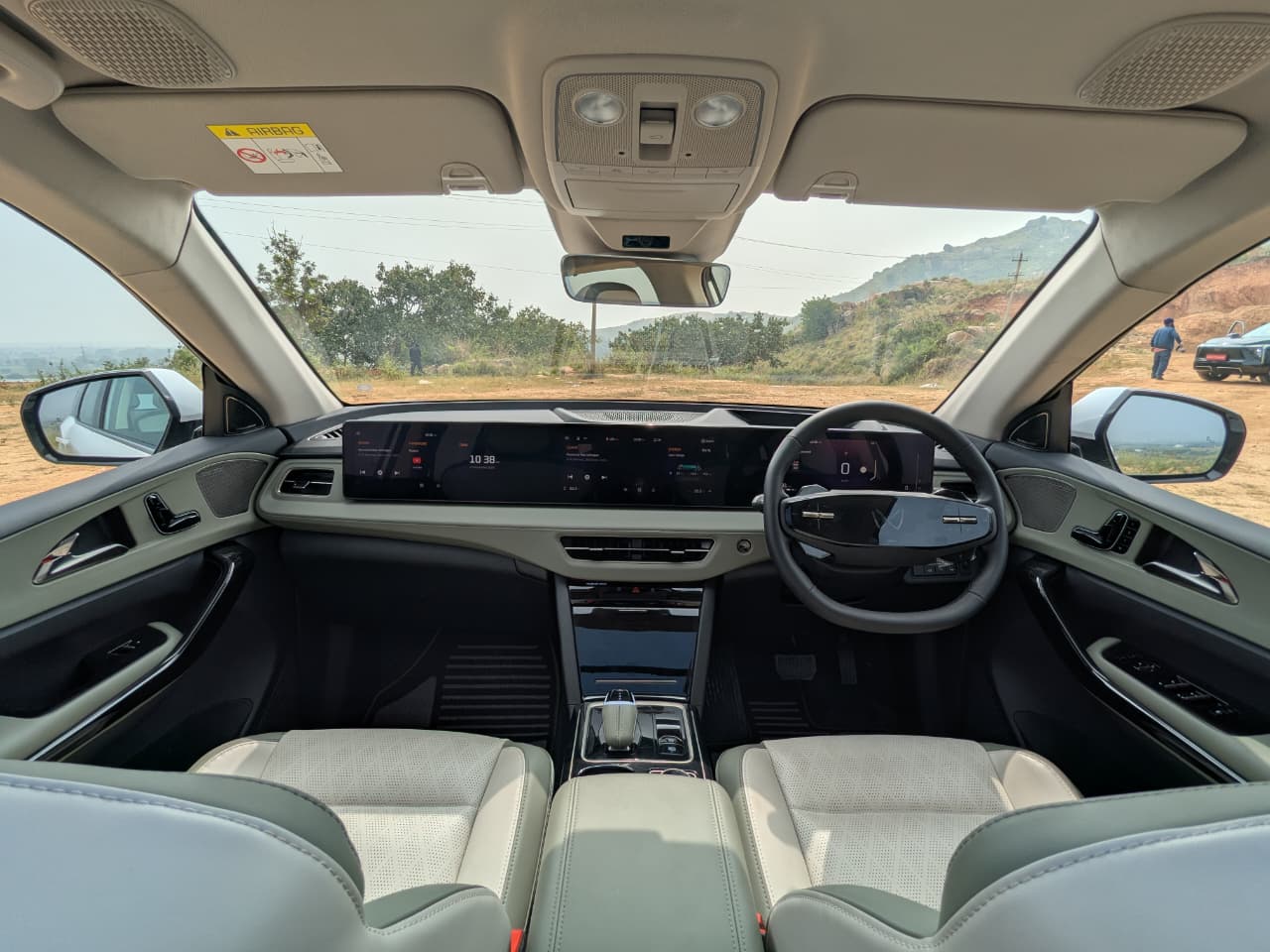
With the XEV 9’s 5-seater layout, it comes as an ideal choice for nuclear families and city-first usage. But the XEV 9s’ 7-seater layout with usable third row makes it a more practical choice for those who either need more seats or need to do longer distances with a tad more convenience. Also, small touches like ventilated sliding second-row seats and tray tables enhance this long-distance comfort.

Whats App Image 2025 11 27 at 10 41 23 1

That said, both get the same premium interior language, multi-screen dashboard and high-tech cockpit, but the 9s simply offers more room to breathe, and that matters when real life gets in the way of lifestyle.


Also Read: Mahindra BE 6 Formula E Edition Launched At Rs 23.69 Lakh


XEV 9e vs XEV 9s: Pricing & Value

Model Starting Price Top-End Price
XEV 9s Rs 19.95 lakh Rs 29.45 lakh
XEV 9e Rs 21.90 lakh Rs 30.50–31.25 lakh

Here’s the part that surprises the most. The more spacious and more practical 9s not only start cheaper, but its fully loaded trims are also still priced lower than the 9e. This might be the introductory prices playing their game, but if you look at pure value-for-money at the moment, the 9s makes a very strong case for itself.


from carandbike - News https://ift.tt/YWOylnP
via IFTTT
Honda Amaze Secures 5 Stars In Bharat NCAP Crash Tests

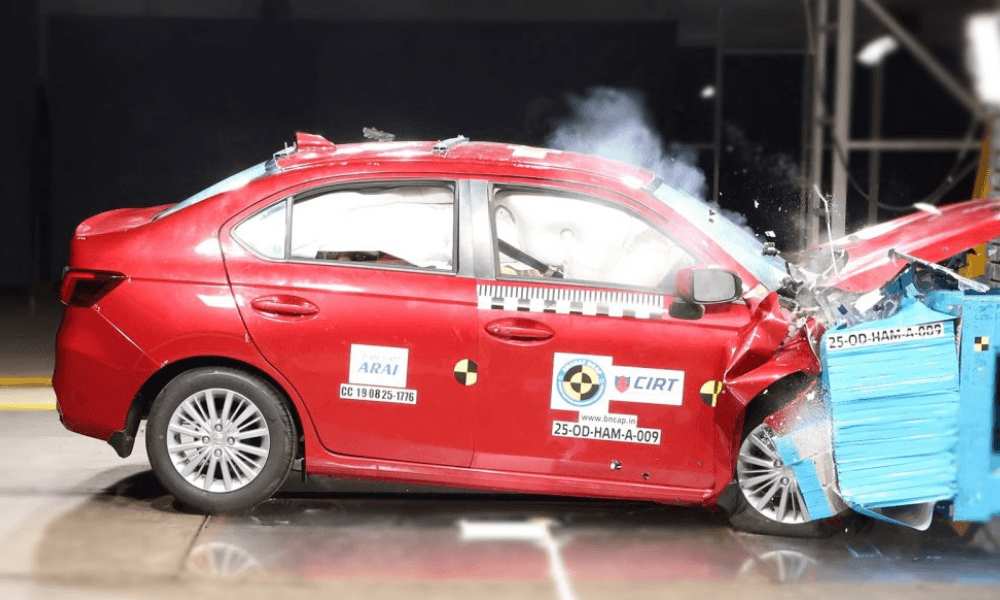
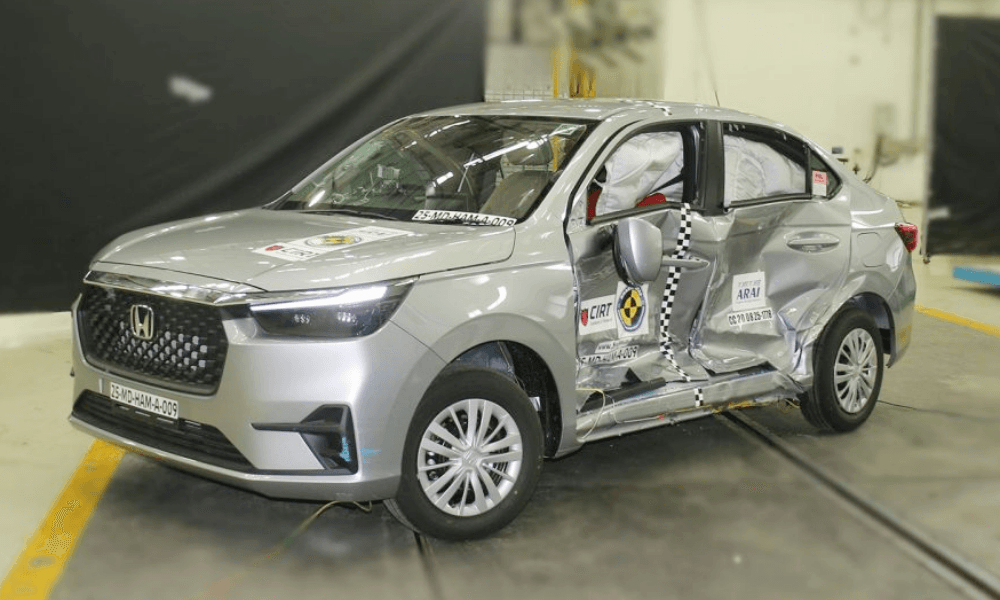
The third-generation Honda Amaze has been awarded five stars in the Bharat NCAP evaluation. The sub-compact sedan has achieved five stars in Adult Occupant and four stars in Child Occupant Protection. The rating applies to all variants: V, VX and ZX in both MT and CVT guises.


Also Read: New Honda Amaze vs Maruti Suzuki Dzire: Subcompact Sedan Battle Continues

2025 Honda Amaze Bharat NCAP Crash Test Results Details 1

Honda Amaze: Adult Occupant Protection


In the adult-occupant category, the Amaze managed to get a total of 28.33 out of 32 points. It achieved 14.33 points in the frontal offset deformable barrier test and 14 points in the side movable deformable barrier test. In the frontal test, the report shows that the head and neck are well protected, while the chest, knees and lower legs offer a reasonable level of protection with some areas performing better than others.


In the side-impact test, the head and lower body show strong protection, though the chest area performs less effectively compared with other regions. The separate side-pole test also shows that the occupant is generally well protected.


Also Read: 2025 Honda Amaze Review: Practically Flawless

2025 Honda Amaze Bharat NCAP Crash Test Results Details 2

Honda Amaze: Child Occupant Protection


In the Child Occupant Protection test, the Amaze managed to score a combined score of 40.81 points out of 49. This total incorporates dynamic crash performance, child-seat installation scores and the vehicle’s available child-safety equipment. For the impact tests, Bharat NCAP used child seats for both an 18-month-old and a 3-year-old dummy, each installed rear-facing using ISOFIX anchorages and a support leg. 


In the dynamic tests, the younger dummy scored 7.81 out of 8 in the frontal impact and the maximum 4 out of 4 in the side impact, while the older child achieved full marks in both scenarios. The child-seat installation assessment also returned a perfect score.


Also Read: Bharat NCAP: Maruti Suzuki Dzire Secures 5-Star Crash Safety Rating

2025 Honda Amaze Bharat NCAP Crash Test Results Details 3

Honda Amaze: Standard Safety Features


The Amaze’s standard safety equipment list includes six airbags, front pretensioner seatbelts with load limiters, three-point seatbelts for all five occupants and head restraints for both rows. The car also offers rear parking sensors, ABS with EBD, brake assist, a brake-override system and Vehicle Stability Assist with traction and stability control functions. Hill-start assist and an emergency stop signal are also part of the standard package.  


from carandbike - News https://ift.tt/j2fUdME
via IFTTT
Thursday, 27 November 2025

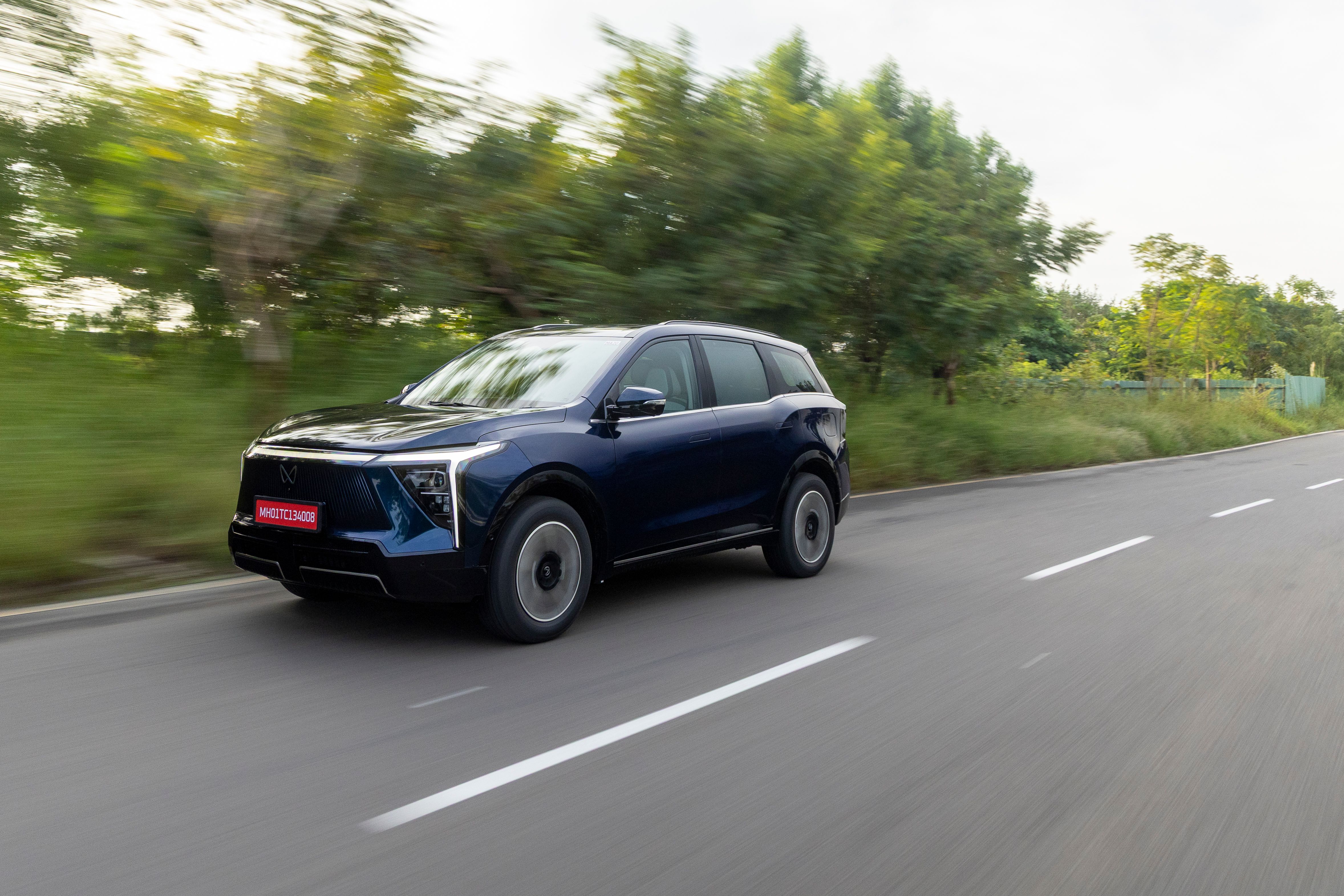
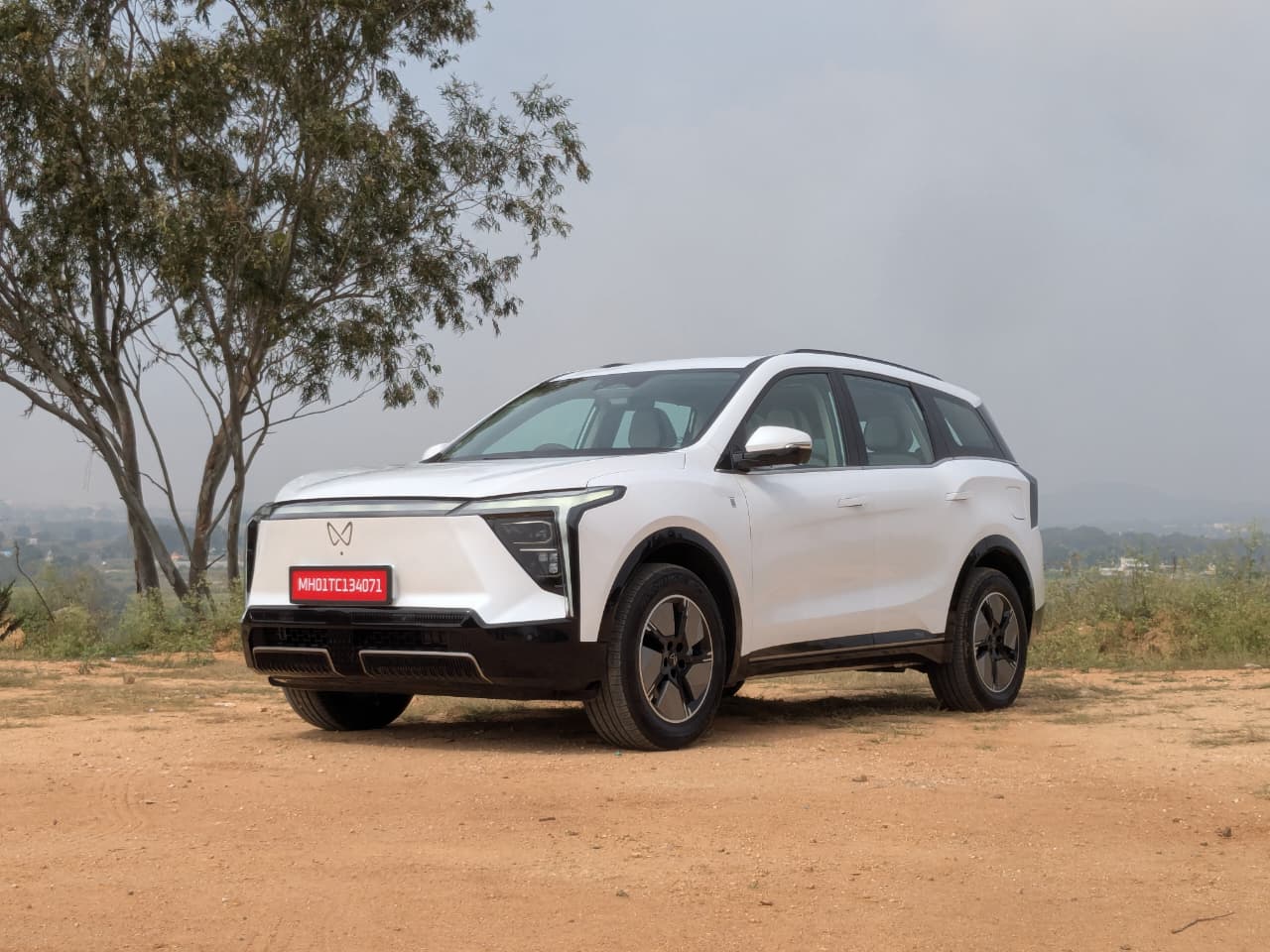
Mahindra Introduces New 70 kWh Battery Pack With XEV 9S

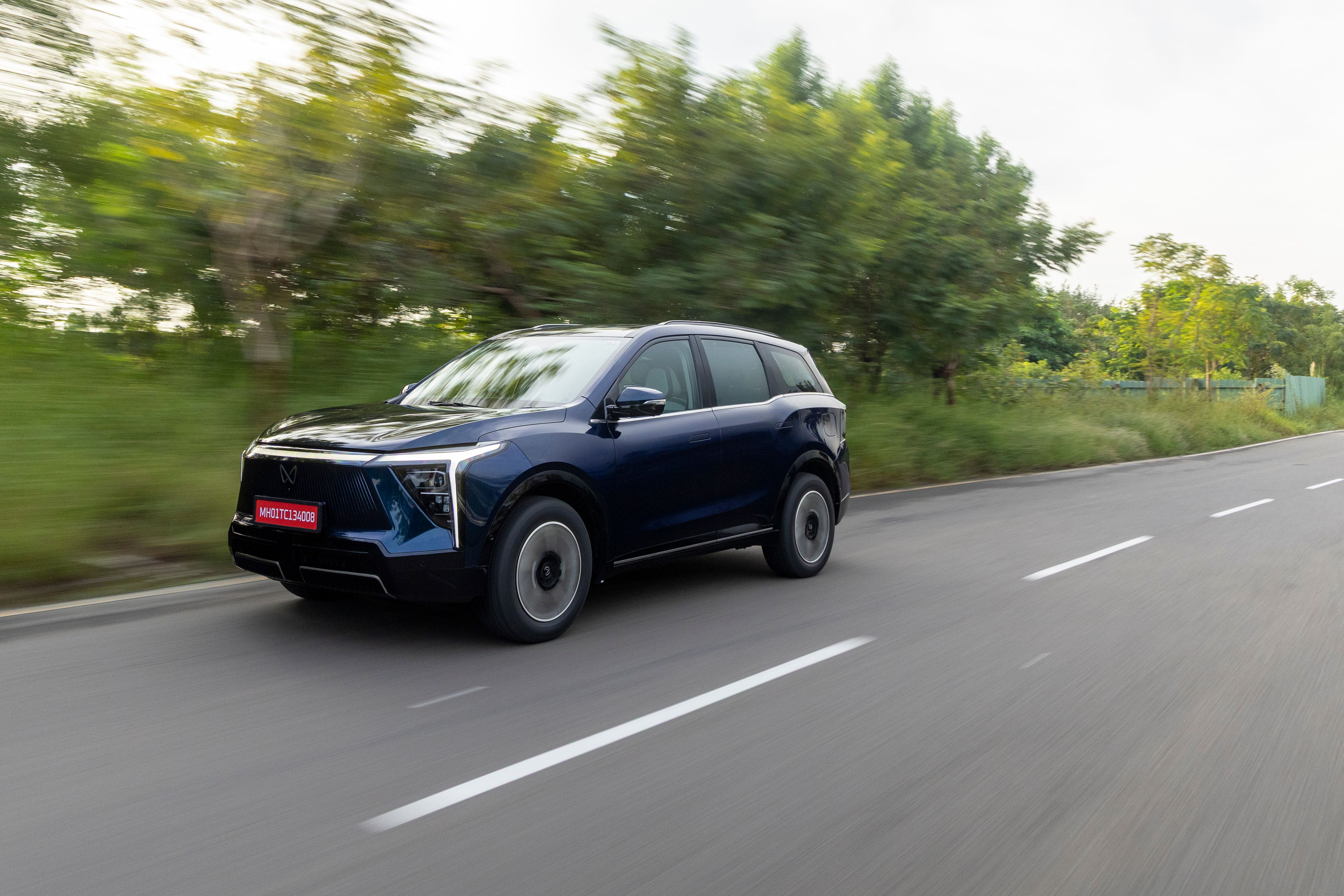
While we know that the Mahindra Electric Origin SUVs – the BE6 and XEV 9e – debuted two battery packs on the INGLO platform, the newly launched XEV 9s arrived with three battery packs to choose from. Apart from the familiar 59kWh and 79kWh, the new battery pack is a 70kWh unit and here’s a brief rundown on it. 

Mahindra XEV 9 S 3

Also Read: Mahindra XEV 9s Launched: In Pictures
 

The new 70kWh is the same Lithium iron phosphate (LFP) composition and is available in a single trim – the Pack Two Above. It powers the single motor mounted on the rear wheels, making around 240bhp and the standard 380Nm. The claimed MIDC range of the 70kWh is 600 km. However, we expect it to be good enough for 450 km of real-world driving range. 

Mahindra XEV 9 S 10

Also Read: Mahindra BE 6 Formula E Edition Launched At Rs 23.69 Lakh
 

Charging the 70kWh battery pack from 0-100 per cent with an 11.2kW AC charger will take 7 hours and 10.2 hours with a 7.2kW AC charger. Moreover, this battery pack supports 160kW of DC fast charging owing to is 400V architecture. A 20-80 per cent charge at a 160kW plug will take only 20 minutes, claims the Indian carmaker. 

Mahindra XEV 9 S 3 1

Also Read: Mahindra XEV 9S 7-Seat Electric SUV Launched At Rs 19.95 Lakh
 

Akin to the other two battery packs, even the 70kWh unit will be offered with a lifetime warranty. The 70kWh Pack Two Above is priced at Rs 24.45 lakh (ex-showroom)


from carandbike - News https://ift.tt/NdKXOZj
via IFTTT
Honda Dio 125 X-Edition, Shine 125 Limited Edition Launched

Honda Motorcycle and Scooter India has launched new special editions of the Dio 125 scooter and Shine 125 motorcycle. Called the Dio 125 ...