Suzuki Motor Corporation has highlighted its technology strategy for the next decade, with India continuing to play a key role in its global manufacturing and technology plans.
At its Technology Strategy Briefing 2026, held on September 25, the Japanese automaker presented its upcoming strategies, which include battery electric vehicles (BEVs), hybrid vehicles, CNG, compressed biogas (CBG) and internal combustion engines. It also plans to share technologies globally while tailoring products to regional requirements.
India a Key Global Production Hub
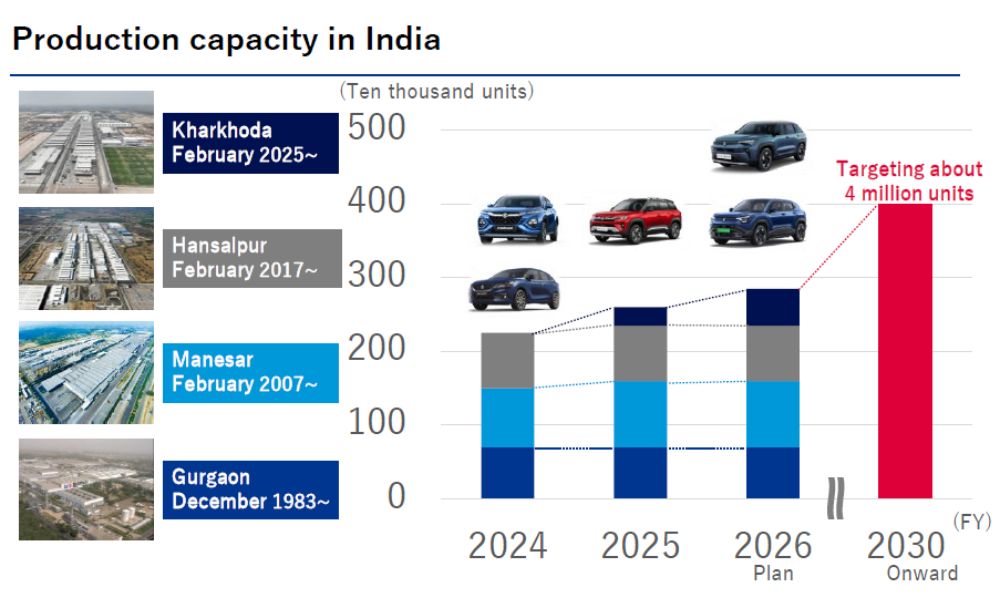
Suzuki Motor Corporation plans to continue expanding its manufacturing capacity in India, with an annual production target of around four million units from fiscal year 2030 onwards. The company currently has production facilities in Gurgaon, Manesar, Hansalpur and Kharkhoda, with the latter beginning operations in 2025. Suzuki said it will adapt Japanese technology to meet local requirements in India and export it to international markets.
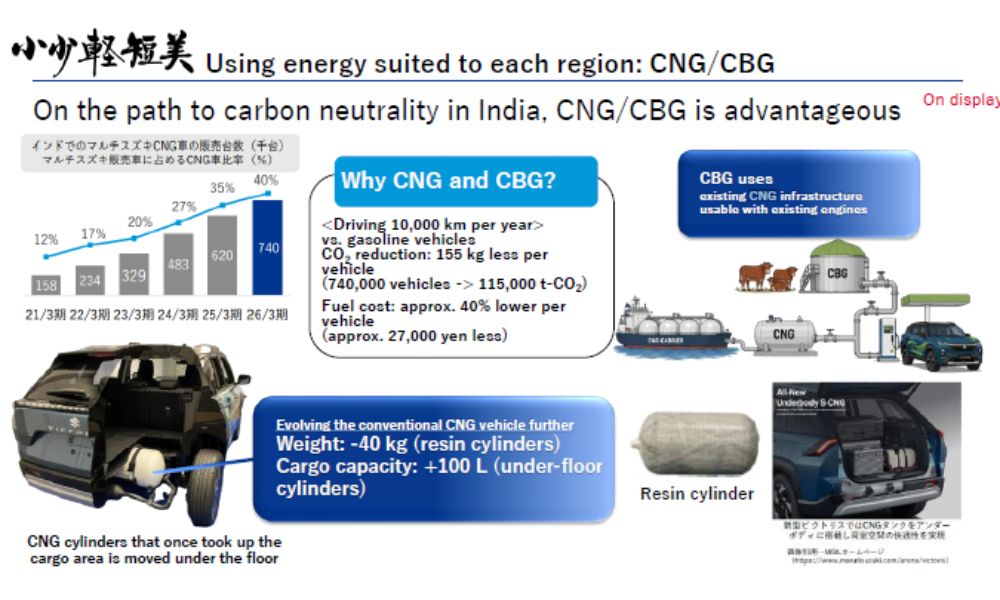
As part of its biogas expansion strategy, Suzuki said three CBG plants have started operations over the past year in cooperation with the National Dairy Development Board and dairy cooperatives. The CBG produced from sources such as cow dung can be used with existing CNG vehicles and infrastructure.
e-SKY EV Prototype Claims 310km Range
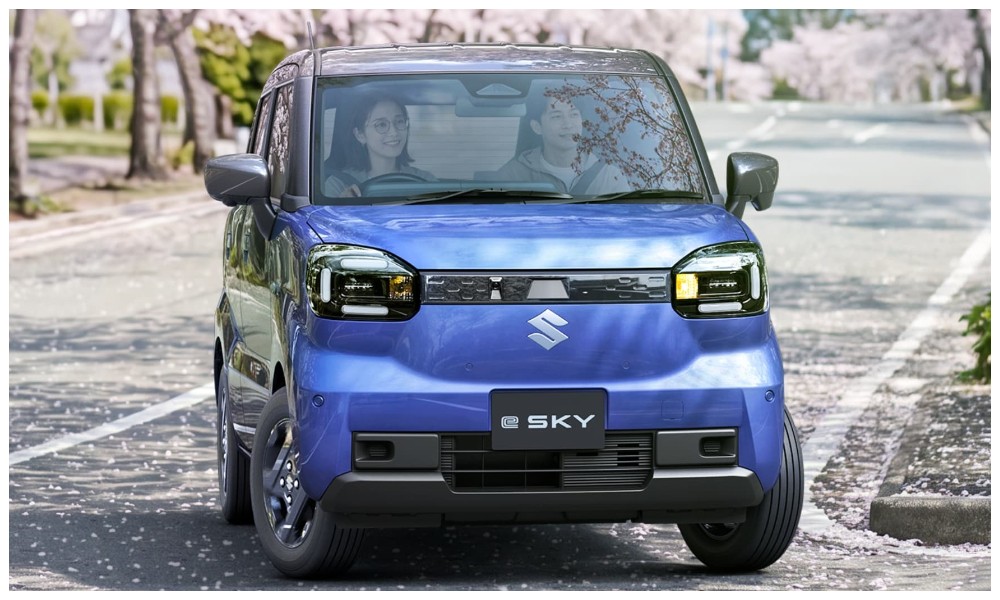
The e-SKY electric vehicle was used as an example of Suzuki's approach to developing smaller and lighter EVs. The prototype has a claimed single-charge range of 310km, while Suzuki quotes an efficiency figure of 97Wh/km and a vehicle weight of 1,030kg. It can run for up to 50km with a five-minute fast charge. These figures are prototype reference values rather than production specifications.
Suzuki also outlined how reducing rolling resistance, optimising suspension characteristics, lowering electrical consumption and adjusting gear ratios helped the prototype achieve a range of up to 310km, compared with 230km earlier.
REEV Light Tech
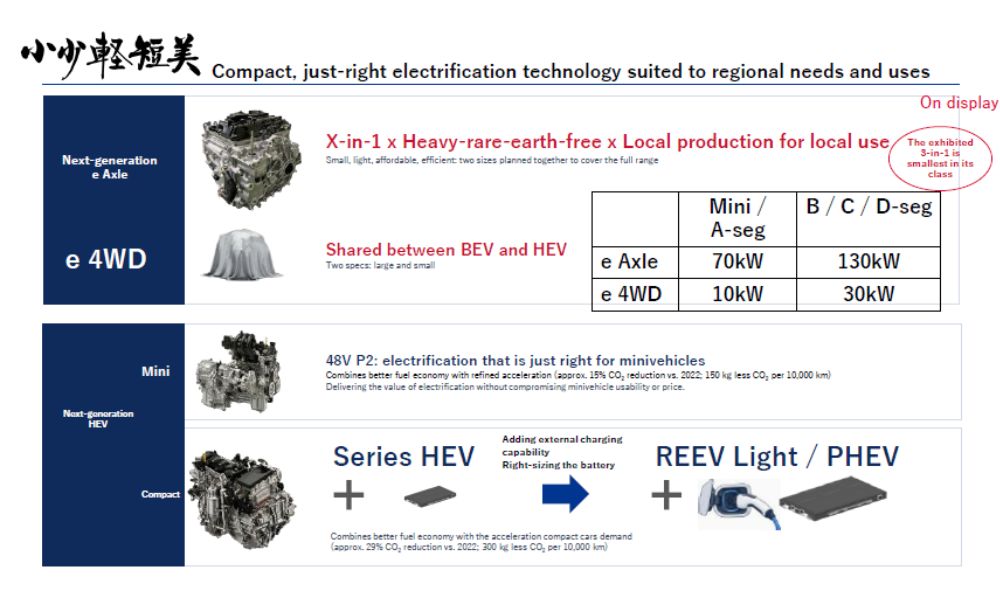
As part of its electrification technology development across different vehicle segments, Suzuki's plans include next-generation hybrid systems for mini vehicles and compact cars, along with a series-hybrid system and a light range-extender EV concept.
For mini vehicles, Suzuki says its new hybrid system is aimed at balancing fuel economy, driving performance and cost, with a claimed 15 percent reduction in CO2 emissions compared with an ICE vehicle. Hybrids that generate electricity will play a key role in the development of compact cars. Suzuki plans to add external charging capability and a right-sized battery to this system, creating what it calls a “REEV Light”.
The company is also developing common e-axle technology for BEVs and hybrids. Two basic sizes are planned, with the larger unit intended for B-, C- and D-segment vehicles. Suzuki says it is also working on motors that do not use heavy rare-earth materials.
Development on ICE tech
Despite its focus on electrification, Suzuki plans to continue developing internal combustion engines for markets where they remain relevant. Suzuki is developing a next-generation direct-injection turbocharged engine, referred to as DITC, for growth markets including India.
The company is further studying CNG and CBG technologies for India. It says CNG vehicles account for around 40 percent of sales in India and is working on ways to improve packaging and reduce weight. One concept involves moving the CNG cylinder underneath the floor, which Suzuki says could increase cargo capacity by 100 litres and reduce weight by around 40kg through the use of a resin cylinder.
from carandbike - News https://ift.tt/b29JKW8
via IFTTT


No comments:
Post a Comment