Wednesday, 16 July 2025

Kia Carens Clavis EV: Variants Explained

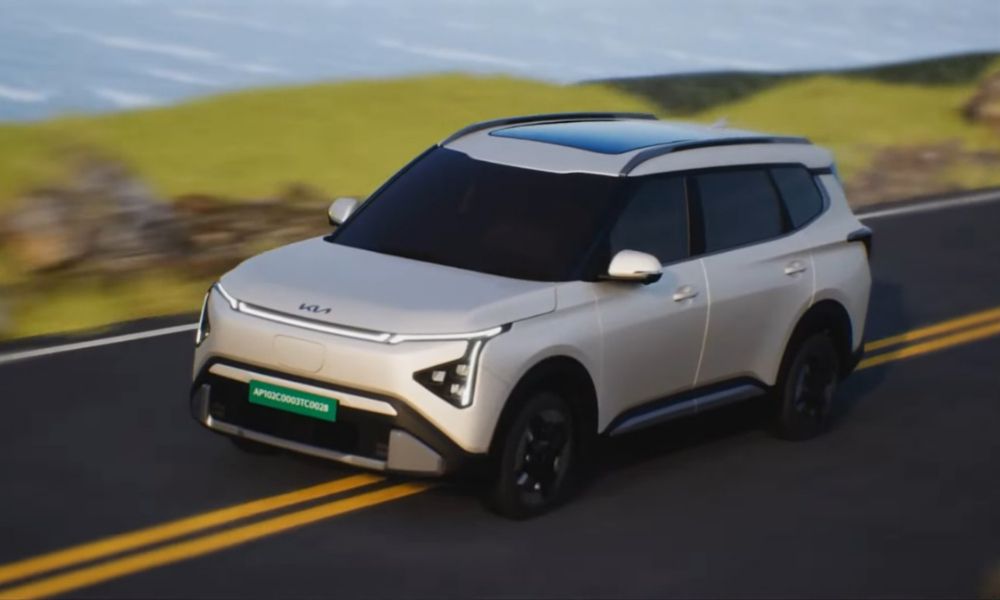
Kia’s latest launch in the Indian market is the Carens Clavis EV, its most affordable all-electric offering here to date. Visually similar to its ICE counterpart, the Carens Clavis EV is also mechanically similar to the Hyundai Creta electric SUV. Priced from Rs 17.99 lakh to Rs 24.49 lakh (ex-showroom), the EV is offered in four variants in total. Here are the features offered in each variant of the Carens Clavis EV. 


Also Read: Kia Carens Clavis EV Launched In India; Prices Start At Rs 17.99 Lakh


Clavis EV HTK+
 

  • 16-Inch Black High Glossy Aero Alloy Wheel
  • Active Air Flap
  • Front Charging port with illumination
  • Auto Headlamps
  • Luggage Lamp, Map Lamp – 1st Row with Sunglass Holder, Rear Door Sunshade Curtains
  • Power Windows (All Doors) with Switch Illumination
  • Electric Adjust Outside Mirrors with Auto Fold and integrated LED turn signal
  • Roof Flushed 2nd & 3rd Row Diffused AC Vents
  • Smart Key with Motion Sensor & Remote Start
  • Fully Automatic Air Conditioner
  • Keyless Entry with Burglar Alarm
  • Infotainment-Temperature control swap switch
  • Rear wiper and washer
  • 25 litre frunk with cover
  • Paddle shifters for i-Pedal & regenerative  braking
  • 26.62-inch dual panoramic display panel
  • Cruise Control with Speed Limiting Option
  • 4 Speakers
  • 2 Tweeters
  • USB A-type Media Port
  • C-Type USBs: 1st row: 1; 2nd row: 2; 3rd row: 2
  • Wireless phone projection
  • Steering-mounted audio controls
  • Drive mode select [Eco/Normal/Sport]
  • Fabric with semi-leatherette combi seats (Black)
  • Integrated Roof Rails
  • Smart Pure Air Purifier with AQI Display
  • Shift By Wire
  • Virtual Engine Sound Noise (VESS)
  • Six airbags
  • ABS (Anti-Lock Brake System)
  • BAS (Brake Assist System)
  • ESC (Electronic Stability Control)
  • VSM (Vehicle Stability Management)
  • HC (Hill-Start Assist Control)
  • ESS (Emergency Stop Signal)
  • DBC (Downhill Brake Control)
  • Highline Tyre Pressure Sensors
  • Rear Parking Sensors (4)
  • Front Parking Sensors (4)
  • Speed Sensing Auto Door Locks & Impact Sensing Auto Door Unlock
  • Roll Over Sensor
  • All Seats 3-Point Seat Belts with Reminder
  • ISOFIX
  • Rear Occupant Alert
  • All Wheel Disc Brakes


Clavis EV HTX+
 

  • Dual Pane Panoramic Sunroof
  • Triton Navy & Beige Two Tone Interiors
  • Inside Door Handle Hyper Silver Metallic Paint
  • Leather Wrapped Gear Knob
  • Front seat belt height adjuster
  • Smart Pure Air Purifier with AQI Display
  • Power Steering Wheel with Tilt & Telescopic Adjust
  • Floating Console with Premium Sliding Cover, Cup Holder, Open Storage & Surround Ambient Light
  • Solar Glass- UV Cut (All Door Windows)
  • Retractable Seat Tray Table with Cup Holder
  • All Window Up/Down Through Smart Key
  • Dual Pane Panoramic Sunroof
  • Side (LH, RH) Flushed 2nd and 3rd Row Diffused AC Vents
  • Double D-Cut - Dual Tone Leatherette Wrapped Steering Wheel
  • 64-Colour Ambient Lighting & Footwell Lamp
  • Leatherette Wrapped Door Trims
  • 360 Degree Camera
  • Solar Glass – UV Cut (All Door Windows)
  • Smartphone Wireless Charger


  • ADAS Level 2 


  1. Front Collision Warning (FCW)
  2. Front Collision-Avoidance Assist - Car (FCA-Car)
  3. Front Collision-Avoidance Assist - Pedestrian (FCA-Ped)
  4. Front Collision-Avoidance Assist - Cycle (FCA-Cyc)
  5. Front Collision-Avoidance Assist - Direct Oncoming (FCA-DO)
  6. Lane Departure Warning (LDW)
  7. Lane Keeping Assist (LKA)
  8. Lane Following Assist (LFA)
  9. High Beam Assist (HBA)
  10. Driver Attention Warning (DAW)
  11. Front Collision-Avoidance Assist - Junction Turning (FCA-JT)
  12. Smart Cruise Control (SCC) with Stop and Go
  13. Leading Vehicle Departure Alert (LVDA)
  14. Blind Spot Collision Warning (BCW)
  15. Blind Spot Collision Avoidance Assist (BCA)
  16. Rear Cross Traffic Collision Warning (RCCW)
  17. Rear Cross Traffic Collision Avoidance Assist (RCCA)
  18. Safe Exit Warning (SEW)
  19. Blind View Monitor in Cluster


Clavis EV HTX ER 
 

  • 17-inch dual-tone aero alloy wheels
  • Extended Range (51.4kWh)


Clavis EV HTX+ ER
 

  • 4-Way Power Driver Seat
  • Front Ventilated Seats
  • 2nd row Captain Seats with Sliding, Reclining & Tumble
  • Rain Sensing Wipers
  • BOSE Premium Sound System with 8 Speakers
  • V2L - Vehicle to Load [External & Internal]


from carandbike - News https://ift.tt/AmQI6B3
via IFTTT
Tuesday, 15 July 2025

Kia Carens Clavis EV Launched In India; Prices Start At Rs 17.99 Lakh

Kia has marked its entry into the mass market electric vehicle market with the new Carens Clavis EV. Priced between Rs 17.99 lakh and Rs 24.49 lakh (ex-showroom), the Carnes Clavis EV is based around Kia’s internal combustion (ICE) MPV name sake with only small changes setting it apart cosmetically. Bookings for the Clavis EV will commence on July 22 while deliveries are slated to commence in the following days. 


Also Read: Kia Carens Clavis EV Launch Live Updates: Price, Features, Specifications, Images


Kia Clavis EV

The Carens Clavis EV only gets minor cosmetic changes over its counterpart, with the majority of it centred around the fascia. The chrome trim running between the daytime running lamps at the base of the bonnet has been replaced by a lightbar, while a charging port is now housed in the nose below. The central air vent design has also received minor tweaks and now features the addition of fog lamps on the top model. 

Down the sides, the Clavis EV gets model-specific alloy wheels and no further design updates. Changes to the back too are few and far between with the ICE Carens Clavis’ design more or less unchanged. 


Moving to the cabin, the Carens Clavis EV retains the three-row layout of its ICE counterpart. The dashboard design too is unchanged, replete with the twin screens housed within a widescreen display. What has changed, however, is the design of the centre console between the seats. The centre armrest console has been extended forward, now housing additional storage spaces and a row of physical buttons at the front. The gear selector, too has been dropped, creating even more storage further forward. The gear selector now sits on the steering column, similar to that in the Hyundai Creta Electric. 


On the feature front, the Clavis EV continues to offer a lot of tech from its ICE counterpart, including ADAS functions, auto climate control with dedicated vents for the second and third row, a 10.25-inch touchscreen, ambient lighting and a panoramic sunroof. The EV also has Vehicle-to-Vehicle and Vehicle-to-Load charging capabilities. 

Moving to the powertrain, the Carens Clavis EV shares its running gear with the Hyundai Creta Electric. This means an electric motor drives the front wheels, with buyers able to choose between two battery sizes – 42 kWh and 51.4 kWh. Motor output also varies depending on the battery, with the smaller battery variants developing 133 bhp and the larger battery-equipped models pushing out a stronger 169 bhp. Kai claims a range of up to 490 km for the Clavis EV. 


The Carens Clavis EV lacks a direct competitor, being the only three-row electric vehicle to be offered in that price bracket, with the closest alternative being the more expensive BYD eMax7. 


from carandbike - News https://ift.tt/qEzWkOx
via IFTTT

Kia Carens Clavis EV Launch Live Updates: Price, Features, Specifications, Images

Kia is all set to launch the Carens Clavis EV in India today, on July 15. Having been revealed in images earlier, the all-electric derivative of Kia’s MPV will get minimal cosmetic changes over its internal combustion counterpart. On the mechanical front, the Carens Clavis EV is expected to share many of its components with the Hyundai Creta Electric, which was launched earlier this year. 


Also ReadHardeep Singh Brar Appointed New President & CEO of BMW Group India
 

The Clavis EV on the outside retains much of the styling of its petrol and diesel counterparts, replete with the Kia EV5-inspired nose and enclosed grille design. The most visible changes come in the form of the charging flap that is incorporated into the nose, and the slim upper air inlet above the number plate housing on the internal combustion model has been enclosed. The EV also gets fog lamps on the lower bumper. Down the sides, the changes are down to the new EV-specific alloy wheel design.


Also ReadKia Carens Clavis EV Debut On July 15

Kia Carens Clavis EV 2

Moving to the cabin, the EV features the same basic design as the internal combustion model, though with some noticeable changes. The centre console between the front seats has been redesigned. The area housing the gear lever on the internal combustion model looks to have been converted into a storage bin, while the armrest console has been extended forward, creating space for what looks to be a covered storage space and buttons near the forward lip. The dual-screen layout looks to be unchanged from the internal combustion Carens Clavis.


Also ReadKia Carens Clavis EV Set To Debut In India In July
 

On the feature front, the EV will come with twin displays, roof-integrated rear AC vents, three-point seatbelts for all occupants, ambient lighting and a panoramic sunroof, as shown in the previous teaser. The teaser also confirmed that the Clavis EV will get Vehicle to Load tech.


On the powertrain front, full details are yet to be announced, though Kia has confirmed that the Carens Clavis EV will get a 51.4 kWh battery pack offering up to 490 km of range. The battery pack is also used in the Hyundai Creta Electric, so it is not much of a stretch for Kia to offer a smaller 42 kWh battery in line with the Hyundai EV. Electric motor outputs could also be similar to the Creta.


from carandbike - News https://ift.tt/rD5n7Se
via IFTTT

Monday, 14 July 2025

VinFast VF6 And VF7 Bookings Open For Rs 21,000; Will Go On Sale Next Month

VinFast Auto India — the Indian subsidiary of Vietnam-based VinFast Group — has officially opened bookings today for two of their electric SUVs, the VF7 and VF6, in the country ahead of the official launch slated for August 2025. Interested buyers can reserve their VinFast either at the showrooms or through the company’s official website, VinFastAuto.in for a (refundable) amount of Rs 21,000. 


Also read: VinFast VF6 And VF7 Bookings To Open On July 15: To Be Available In 13 States Initially 
 

Vinfast VF 7 11

Also Read: VinFast To Offer Mobile EV Charging Services In India


While the VinFast will be locally assembled at VinFast’s upcoming factory in Thoothukudi in Tamil Nadu, these two offerings will initially be available across 27 cities through 32 dealerships. The first set of showrooms are expected in cities namely Delhi, Gurugram, Noida, Chennai, Bengaluru, Hyderabad, Pune, Jaipur, Ahmedabad, Kolkata, Cochin, Bhubaneshwar, Trivandrum, Chandigarh, Lucknow, Coimbatore, Surat, Calicut, Visakhapatnam, Vijayawada, Shimla, Agra, Jhansi, Gwalior, Vapi, Baroda and Goa. Moreover, the Tamil Nadu facility is also expected to become VinFast’s future EV production hub. 


Also Read: Vinfast Ties Up With MyTVS For Vehicle Service And Charging In India


Moreover, the Haiphong-based carmaker has also partnered with ancillary OEMs such as RoadGrid, myTVS, and Global Assure to create a nationwide charging and after-sales service network, apart from BatX Energies, for battery recycling, rare metal recovery, and end-of-life battery repurposing. A total of 500 million USD investment is made by the Vingroup JSC aiming to produce 150,000 vehicles annually once fully operational, while also, creating approximately 3,500 direct jobs in the country.

Vinfast VF 6 13


Also Read: VinFast VF7 Electric SUV Spotted On Test Ahead Of India Launch

Speaking on the occasion, Pham Sanh Chau, CEO of VinFast Asia, said: “We are deeply encouraged by the overwhelming support from Indian consumers at the Bharat Mobility Global Expo. It reaffirmed the country’s readiness and enthusiasm for sustainable mobility solutions. The VF 6 and VF 7 represent our vision of bringing world-class EVs tailored to local needs, and we’re confident that Indian customers will find these models not only competitive, but truly inspiring.”


As for the cars, the VF6 is a B-segment electric SUV which is slightly smaller than the Hyundai Creta EV – which it will be squarely aiming at. With 59.6kWh battery pack, and around 200bhp/310Nm, the VF6 is expected to offer a range of (NEDC cycle) of up to 460 km while the stricter WLTP range is claimed to be around 380 km.


from carandbike - News https://ift.tt/R12Tbvs
via IFTTT

Bajaj Pulsar N150 Delisted From Official Website

Bajaj Auto has silently removed the Pulsar N150 from its official website. With this, the Pulsar N lineup now comprises only three models: the Pulsar N125, N160, and N250. The N150 bridged the gap between the N125 and N160, both in terms of pricing and specifications, and bore a close resemblance to the N160 in design. 


Bajaj updated the N150 last year alongside the N160. It received new colour options and a digital console with Bluetooth connectivity. It was offered in two variants: the base model without connectivity features, which was priced at Rs 1.25 lakh, and the top-spec version with Bluetooth features priced at Rs 1.31 lakh (ex-showroom, Delhi). 


Also Read: 2025 Bajaj Pulsar NS400Z First Ride Review


Bajaj Pulsar N150 Edited 2

On the powertrain front, the Pulsar N150 featured a 150 cc engine producing 14.3 bhp and 13.5 Nm of torque, paired with a 5-speed gearbox. 


As of now, Bajaj has not officially stated the reason for its removal. While it could be discontinued, it remains to be seen if an updated version will be rolled out.  


In other news, Bajaj Auto recently launched the updated Pulsar NS400Z in India at a price tag of Rs 1.92 lakh (ex-showroom). With this update, the NS400Z gets a bump in its power output and upgraded cycle parts.  


from carandbike - News https://ift.tt/KoNBgQk
via IFTTT

Yamaha FZ-X Hybrid Launched At Rs 1.50 Lakh

Yamaha has expanded its hybrid motorcycle lineup in India with the launch of the FZ-X Hybrid, priced at Rs 1.50 lakh (ex-showroom). Positioned above the standard FZ-X, the new model features a Matte Titan (matte green with golden wheels) colour scheme and gets a full colour TFT display. 

Also Read: Yamaha FZ-S Fi Hybrid Launched in India at Rs 1.45 Lakh; Gets New 4.2-inch TFT Display

Yamaha FZ X Hybrid launched 1

The FZ-X Hybrid has the same 149 cc engine found in the standard model. However, it now incorporates Yamaha’s Smart Motor Generator (SMG) system, which features an integrated starter generator (ISG). The motorcycle is also equipped with a Stop-and-Start System (SSS), which automatically shuts off the engine when stationary and restarts it with a clutch press. The engine continues to produce 12.2 bhp and 13.3 Nm of torque. 


Also Read: Yamaha XMax Hybrid Scooter Concept Unveiled


  Yamaha FZ X Hybrid launched 2

Aside from the addition of hybrid tech, it also gets a new 4.2-inch full-colour TFT display. The instrument cluster supports smartphone connectivity via the Yamaha Y-Connect app and features turn-by-turn navigation powered by Google Maps. It also offers real-time directions, road names, intersection alerts, and other essential route data.  


At Rs 1.50 lakh, the FZ-X Hybrid is priced Rs 20,000 higher than the standard FZ-X (Rs 1.20 lakh) and Rs 5,000 above the recently launched FZ-S Hybrid (Rs 1.45 Lakh). 


from carandbike - News https://ift.tt/uR2XMEZ
via IFTTT

Hyundai Aura S AMT Launched At Rs 8.08 Lakh

Hyundai has updated the variant line-up of the Aura subcompact sedan with the addition of the S automated manual transmission (AMT) variant. Priced at Rs 8.08 lakh (ex-showroom), the S AMT brings down the starting price for the Aura AMT by about Rs 87,000. The subcompact sedan was previously only offered with an AMT option on the second-from-top SX+ trim priced at Rs 8.95 lakh (ex-showroom).


Also read: Hyundai Inster EV Awarded Four-Star Crash Safety Rating By Euro NCAP
 

Hyundai Aura Hy CNG

In terms of features, the S AMT gets all the kit from its manual counterpart, including 6 airbags, ABS, tyre pressure monitoring, LED DRLs, footwell lighting, 2 DIN audio system with Bluetooth connectivity, remote locking, electric adjust wing mirrors and front and rear power windows.


Also read: 641 bhp Hyundai Ioniq 6 N Debuts At Goodwood Festival Of Speed
 

The AMT additionally also offers kit such as power folding wing mirrors, turn indicators integrated into the wing mirrors, electronic stability control and hill start assist. The latter two were previously available only in the SX, SX+ and SX(O) trims.

Hyundai Aura AMT

Also read: Hyundai Creta Tops Sales Charts In June, Becomes Bestseller For Third Time In 2025
 

Moving to the powertrain, you still get the familiar 1.2-litre petrol engine paired with a 5-speed AMT unit.


Coming to the competition, the Aura goes up against the likes of the Honda Amaze and Maruti Suzuki Dzire.  


from carandbike - News https://ift.tt/tSG2R7E
via IFTTT

Sunday, 13 July 2025

Race-Ready Lamborghini Temerario GT3 Drops Hybrid Tech; Make Race Debut In 2026

Lamborghini has unveiled the race-spec Temerario GT3 as it looks to take its V8 supercar onto the racetrack in 2026. Set to make its race debut at the Sebring 12 Hours in March 2026, the Temerario GT3 gets extensive changes over its road-going counterpart in an effort to shave weight and meet GT3 regulations, including deleting the hybrid system in its entirety. 


Also read: 907 BHP Lamborghini Temerario Debuts With Twin-Turbo V8 Hybrid Powertrain
 

Lamborghini Temerario GT 3 3

Starting with the chassis, the aluminium spaceframe of the Temerario has been modified to feature easily removable front and rear subframes, along with being lightened and strengthened even further. The subframes themselves have also undergone modifications compared to the road car, with all the extra supports and braces for the hybrid system deleted. The central chassis has also been modified with an FIA GT3-spec roll cage to meet regulations.


Additionally, while the Temerario GT3 may look very similar to the road car, Lamborghini says that the bodyshell is entirely different. The Italian exotic car maker says that the entire GT3’s body shell is made from carbon composite materials designed to be quickly replaced should the need arise. The front and rear ends are made from a single piece each, with even the vehicle’s lighting featuring quick connectors for easy plugging and unplugging. Even the carbon composite underfloor has been designed to be easily replaceable mid-race when the car is raised on jacks.


Also read: Lamborghini Temerario Launched In India At Rs 6 Crore
 

Lamborghini Temerario GT 3 1

Of-course, the aerodynamics of the race car has been revised as well. There is a larger rear diffuser, redesigned front bumper with a large splitter, new ducting and venting for improved aerodynamics and cooling, and the large GT3-spec rear wing.


Coming to the powertrain, the only recognisable component from the road-going Temerario is the twin-turbocharged V8 engine. To meet GT3 regulations, Lamborghini has ripped out the road car’s strong hybrid system replete with the battery and front electric motors. The engine itself also gets modifications, including new, smaller turbochargers, redesigned radiators and intakes and a new compressor. Lamborghini says that the engine has also been recalibrated to make peak power over a wider powerband. Peak engine power now stands at 543 bhp (subject to balance of performance) compared to the road car's 789 bhp. Power is sent to the rear wheels via a 6-speed transverse-mounted gearbox. 


Also read: Revuelto-Inspired Ducati Panigale V4 Lamborghini Unveiled
 

Lamborghini Temerario GT 3 2

The GT3 also gets a new suspension set-up featuring new 6-way dampers from KW – also used in the company’s SC63 LMDh project. The new suspension has also been designed with easy assembly and disassembly in mind, while the race car also gets a bespoke hydraulic power steering unit.


The cabin also gets extensive changes from the road car, dropping all the luxury trimming to save weight and featuring FIA regulation switchgear and controls along with a race seat with harnesses. 


from carandbike - News https://ift.tt/BqsOPGS
via IFTTT

Car Insurance Renewal Made Simple: A Beginner’s Guide for 2025

Getting car insurance renewed is something that seems simple at first. But omitting crucial steps might drive up costs, reduce coverage, or cause undue stress. Better policy structures and online tools have made car insurance renewal easier in 2025. But what to check and when to be alarmed enough to seek help is still worth understanding. This guide will walk you through the process so that you can renew your policy with a clear mind. 


Know When Your Policy Expires


The beginning of being able to control your car insurance is knowing precisely when it ends. Too many fall into the trap of overlooking it, and only find out that their cover has lapsed. Driving without insurance is risky. It’s also illegal and may be difficult if you have to file a claim.


Set a notification far ahead of the expiration date. 2-3 weeks' lead time is usually ok. A large number of insurers also send email or SMS alerts, which can be convenient reminders to kick off the renewal process. 


Review Your Current Coverage 


Before you renew it, you should compare your current policy with other offers. Has your daily commute changed? Are you driving more or less than last year? Did you do any modifications to your car that might need more coverage? 


Even the most minor tweak could influence how much and what type of policy you need. If you have only been buying third-party liability insurance, now is the time to think about moving up to a comprehensive insurance plan that has wider coverage. 


Compare Plans and Insurance Providers 


Before you renew, it’s always worth investigating alternate insurance options. Your current insurer may no longer have the lowest-cost coverage for the level of protection you need. Compare plans on popular insurance comparison websites. 


Don’t just go for the lowest premium. Also, check on add-ons such as zero depreciation cover, engine protection, and roadside assistance. A provider’s claim settlement ratio and customer service quality should also influence your decision. 


Understand the Value of Add-Ons 


Add-ons are additional coverages that extend beyond your basic insurance policy. They will cost you extra, but in many cases, they are worth it. Here are a few add-ons that are popular for good reasons: 


  • Zero Depreciation Cover: No depreciation of car parts is deducted at the time of any claim. 
  • Roadside Assistance: Provides you with emergency assistance in the event your vehicle breaks down. 
  • Engine Protection Cover: Beneficial for flood-prone locations. 
  • No Claim Bonus Protection: Allows you to keep your bonus even if you need to make a small claim once. 

Choose the add-ons that are relevant to your driving style and area. 


Check and Apply Your No Claim Bonus (NCB) 


Made no claims during the previous policy period? You are eligible for a special discount. This grows annually, as long as you don't make a claim. It can get up to 50% over time. 


You can also carry forward your NCB in case you change insurers. But you would have to approach your insurer for an official document in order to do so. Using the NCB during renewal can bring down premium costs.  


Avoid Letting Your Policy Lapse 


NCB is the discount on the premium if you have not claimed in the previous policy period. The discount is applied to the base rate and accumulates for subsequent claim-free years. Maximum benefit can go up to 50%. 


How to protect and use NCB: 


  • Inform your new insurer if switching companies 
  • Request a NCB certificate from your current insurer 
  • Apply the NCB during your next policy renewal 
  • Avoid raising small claims to preserve your discount 


Renewing Online Saves Time 


Online renewal is now one of the fastest and easiest ways. Most insurance companies provide an easy-to-use online portal where you can compare plans, pay your premium, and receive your policy documents in a matter of minutes. This approach spares you the paper chase, and can even make you eligible for online-only discounts. 


Print a copy for your car, and carry a digital copy on your phone when your policy is renewed. Having both editions gives you peace of mind for any occasion you may need to prove you have insurance. 


Conclusion 


Renewing the insurance policy of your vehicle doesn’t need to be complicated. Just don’t rush and do a bit of careful reviewing. Always remember to go ahead with the renewal before expiry for added benefits.  


from carandbike - News https://ift.tt/t0Pfoab
via IFTTT

Hyundai Inster EV Awarded Four-Star Crash Safety Rating By Euro NCAP

European crash testing agency Euro NCAP has put the all-electric Hyundai Inster through its paces, awarding it a four-star crash safety rating. The all-electric derivative of the Casper sold in the South Korean market, the Inster, is one of Hyundai’s most affordable EVs in Europe and made its debut in mid-2024.


Also read: 641 bhp Hyundai Ioniq 6 N Debuts At Goodwood Festival Of Speed
 

Starting with the adult occupant rating, the Inster secured a 70 per cent score. Euro NCAP said that the body shell remained stable during frontal offset impact testing and offered good to marginal levels of protection to adult occupants. The agency, however, noted that the driver’s head ‘bottomed out’ the airbag, thus causing the SUV to drop points. In a full width frontal impact test, the Inster provided good protection to the head and legs of adult occupants in the front and rear seat though forces exerted on the chest saw the chest protection rating stay at marginal.

Hyundai Inster Euro NCAP 1

In the lateral impact testing, the Inster provided between marginal and good levels of protection in the side barrier and pole impact tests. The EV, however, was penalised for the driver door unlatching during the side barrier impact test. Excursion control (the extent to which a body is thrown to the other side of the vehicle during side impact) was poor. Euro NCAP noted that the Inster came with a centre airbag and offered good protection from passenger-to-passenger impact injuries, but the score was not considered given its poor side excursion protection and unlatched door during side impact testing.


Also read: Hyundai Creta Tops Sales Charts In June, Becomes Bestseller For Third Time In 2025
 

In terms of rear-end collisions, the front seats offered good protection from whiplash injuries, though the rear occupants were only offered marginal protection.

Hyundai Inster Euro NCAP 2

Moving to child occupant protection, the Inster received an 81 per cent score offering good to adequate levels of protection to the 6-year-old and 10-year-old dummies in case of frontal impacts. The EV, however, dropped points in lateral testing with Euro NCAP noting that the 10-year-old dummy’s chest recorded ‘accelerations above Euro NCAP’s threshold’ thus securing a poor rating. The Inster secured a good score for the passenger airbag deactivation system, though Euro NCAP noted that the vehicle lacked a system to warn the driver of an infant being left in the back seat.


Also read: Hyundai Verna SX+ Launched At Rs 13.79 Lakh 
 

The Inster secured a 70 per cent score for Vulnerable Road User protection with Euro NCAP noting that the EV offered good protection to the road user's head save for on reinforced surfaces such as the A-pillar and the windshield beams. Pelvis protection was rated as poor across the vehicle’s front, while protection to the legs was rated as good. Euro NCAP also noted that the vehicle's autonomous braking system (AEB) performed adequately, though the vehicle offered no protection against ‘dooring’ - opening the door into the path of an approaching cyclist. 

Hyundai Inster Casper EV Unveiled Gets 49 k Wh Battery 355 km Range

The car's ADAS system meanwhile secured a 67 per cent score. Euro NCAP said that the system performed adequately in the tests though the autonomous emergency braking system did drop points for a poor showing when tested against a vehicle crossing a junction. 


from carandbike - News https://ift.tt/15ko9Vn
via IFTTT

Saturday, 12 July 2025

EVs As CVs – Citroen Evaluating A Parallel Idea

French marque Citroen has been building automobiles since the early 1900s. But its first commercially produced electric vehicle came more than a century later. Interestingly, it was for its newest market – India. And the car is the eC3.


Also Read: Citroen C3 Sport Edition Launched In India At Rs 6.44 Lakh


Citroen e C3

The hatchback, made on the C-Cubed, made-for-India platform, was built keeping multiple powertrains in mind, including battery power. Released in a record time of less than a year since the launch of its gasoline version, the eC3 was presented as a no-frills mobility option for urban India. The no-frills part may not have gone exactly well with private car owners, but intrigued fleet owners. A low entry price, lots of space despite being an entry-level hatchback and low running costs – especially with the battery-operated version – made it a sensible pick for commercial people transportation.

Citroen e C4

Since then, the brand's global range has seen a few more electrics, starting with the battery-powered quadricycle Ami, eC4 hatchback, eC4 X fastback and eSpaceTourer MPV. As the demand for EVs as personal mobility keeps fluctuating globally, the uptake for commercial-use EVs has been steady. More so, in India, where not every car owner has access to set up personal charging stations at their residence or office, which is important to make it financially viable.


Also Read: Citroen Offers Benefits Up To Rs. 2.80 Lakh On Select Models To Celebrate 4th Anniversary In India


Citroen Ami

However, the fast-charging network is growing rapidly, making it practical for fleet operators as they can afford the slightly higher running costs compared to home chargers. Citroen India sees potential to make the most of it.


And amongst their current international range of EVs, the eSpaceTourer is being seen as a potential model for India. An MPV with three rows and flexibility of seating a minimum of 6 and a maximum of 9 passengers, plus a 700-litre luggage room, could make sense for VIP travel or airport runs for fleet operators who currently have very limited options. 

Citroen spacetourer

For reference, the eSpaceTourer is a full-sized people carrier with a 74KWh battery pack and a range of 350-400km. In France, it is sold in an XL size that’s longer than a Kia Carnival, Toyota Vellfire or even the recently-unveiled MG M9 electric MPV. It offers more passenger room and a bigger boot, even with all seats up. We had a brief drive in the car. It has the feel of a big MPV with a very supple ride. Steering is light, and it is easy to manoeuvre. Comfort is top-notch. The interiors – all-black – are more functional than looking luxurious, but won’t put off customers if Citroen can manage to sell it without a premium, like it does with its made-for-India range. 


In France, eSpaceTourer XL retails for a price tag which is equivalent to just under Rs 50 lakh. With a 110% import duty on this, India price could touch Rs 1 crore, which may not be ideal but still undercut the more popular luxury MPVs, also giving Citroen India a first-mover advantage, given the product is ready.


from carandbike - News https://ift.tt/1jJaOAb
via IFTTT

Honda Dio 125 X-Edition, Shine 125 Limited Edition Launched

Honda Motorcycle and Scooter India has launched new special editions of the Dio 125 scooter and Shine 125 motorcycle. Called the Dio 125 ...