Tuesday, 17 February 2026

Maruti Suzuki e Vitara: Variants, Features, Specifications Explained

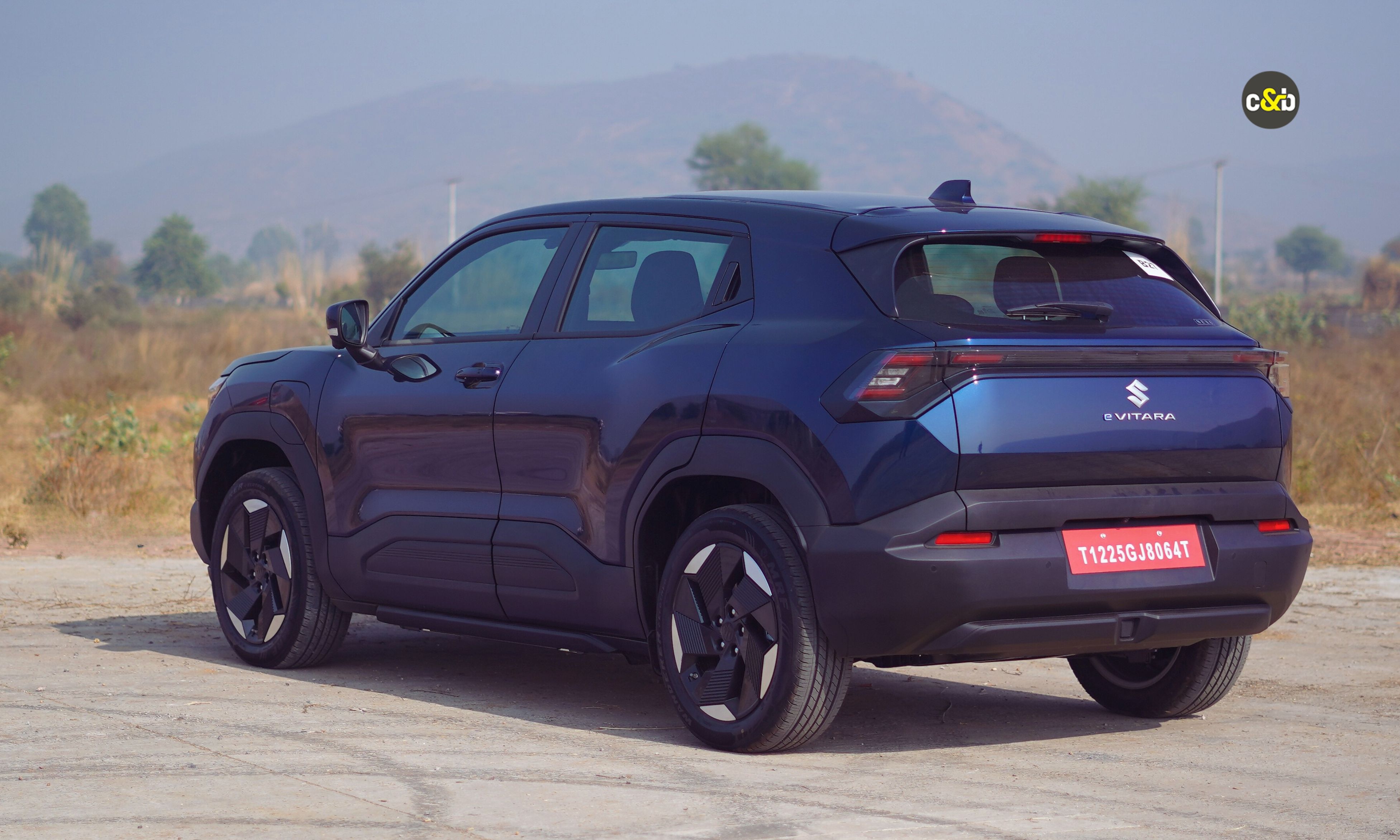
Maruti Suzuki has finally launched the e Vitara, the carmaker’s first EV for India, following its launch in global markets in 2025. For now, the company has only announced starting prices for the e Vitara that too with the BaaS model. Priced from Rs 10.99 lakh (ex-showroom), battery rental starts at Rs 3.99 per km. Order books are now open online and at Nexa dealerships, with the booking amount set at Rs 21,000.  
Maruti Suzuki e Vitara m4

For India, the e Vitara is offered with the same two battery pack options as the international-spec. This includes a 49 kWh and 61 kWh, across three variants: Delta, Zeta and Alpha. The larger battery is offered on the top two trims, while the Delta comes with the smaller pack. While we wait for full prices to be announced, here’s a detailed look at what each variant offers.


Also Read: Maruti Suzuki e Vitara Launched In India; Prices Start At Rs 10.99 Lakh Under Battery Subscription Model


Maruti Suzuki e Vitara: Delta (Base)


Battery Pack: 49 kWh

Range: 440 km (claimed)

Power: 142 bhp and 193 Nm  


  • LED projector headlamps
  • Auto headlamps
  • Follow-me-home headlamps
  • 3-Point Matrix rear lamps
  • 18-inch alloy wheels with aero garnish 
  • Black wheel arch extensions
  • Black side mouldings
  • Acoustic & IR cut windshield
  • Green glass (front, rear, back door)
  • Roof end and quarter spoiler
  • Shark fin antenna 
  • Body-coloured door handles
  • Body-coloured ORVMs with turn indicators
  • Front variable intermittent wipers
  • Rear wiper and washer
  • Electric rear demister
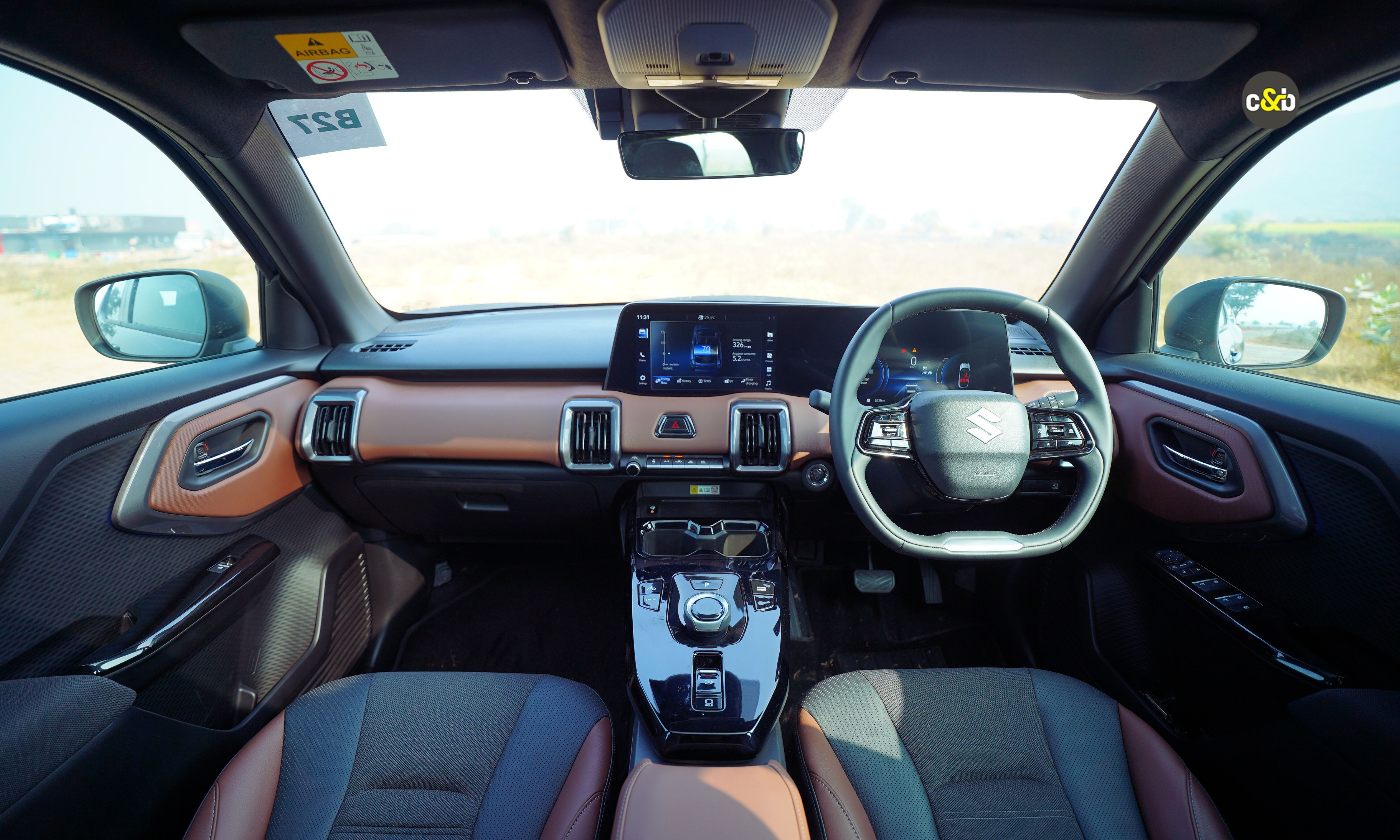
  • Soft-touch dual-tone interior
  • 10.1-inch infotainment system
  • 10.25-inch MID 
  • Front armrest with storage
  • Glovebox lamp
  • Front and rear door pockets
  • Front cup holders
  • Rear centre armrest with cup holder 
  • Bottle holders (all doors)
  • Flat-floor luggage board
  • Shopping bag hook
  • Fabric seats 
  • Two-spoke steering wheel (synthetic leather)
  • LED cabin lamps and boot lamp
  • Automatic climate control
  • PM2.5 air filter
  • Rear AC vents 
  • Sliding and reclining rear seats
  • 40:20:40 split rear backrest
  • Adjustable headrests
  • Wireless Android Auto & Apple CarPlay
  • Suzuki Connect connected services
  • Power steering
  • Keyless entry
  • Push start-stop
  • Auto up/down power windows
  • Electrically adjustable ORVMs
  • Steering-mounted controls
  • Rear seat reminder
  • 7 airbags
  • ISOFIX mounts
  • ABS with EBD and brake assist
  • ESP
  • Hill hold control
  • Tyre pressure monitoring system
  • Electronic parking brake 
  • Front and rear parking sensors (no camera)
  • Day/night IRVM
  • AVAS
  • Immobiliser
  • Multi-collision braking
  • Type-2 AC charging inlet
  • CCS2 DC charging inlet
  • 3kW portable charger
  • 7.4kW wall box charger
  • Drive modes (Eco/Normal/Sport)
  • Snow mode
  • Multi-level regenerative braking


Also Read: Maruti Suzuki e-Vitara Review: Worth The Wait?
Maruti Suzuki e Vitara m19

Maruti Suzuki e Vitara: Zeta (Mid-spec)


Battery Pack: 61 kWh

Range: 543 km (claimed)

Power: 172 bhp and 193 Nm  
 
Features (In Addition to Delta)  
 

  • Luggage parcel shelf
  • Wireless charger
  • Infinity speakers (without subwoofer)
  • Front and rear parking sensors with camera assist
  • Wireless charger
  • Enhanced interior trim elements


Also Read: Maruti Suzuki Brezza Facelift Spied With 6-Speed Manual Gearbox
Maruti Suzuki e Vitara m39

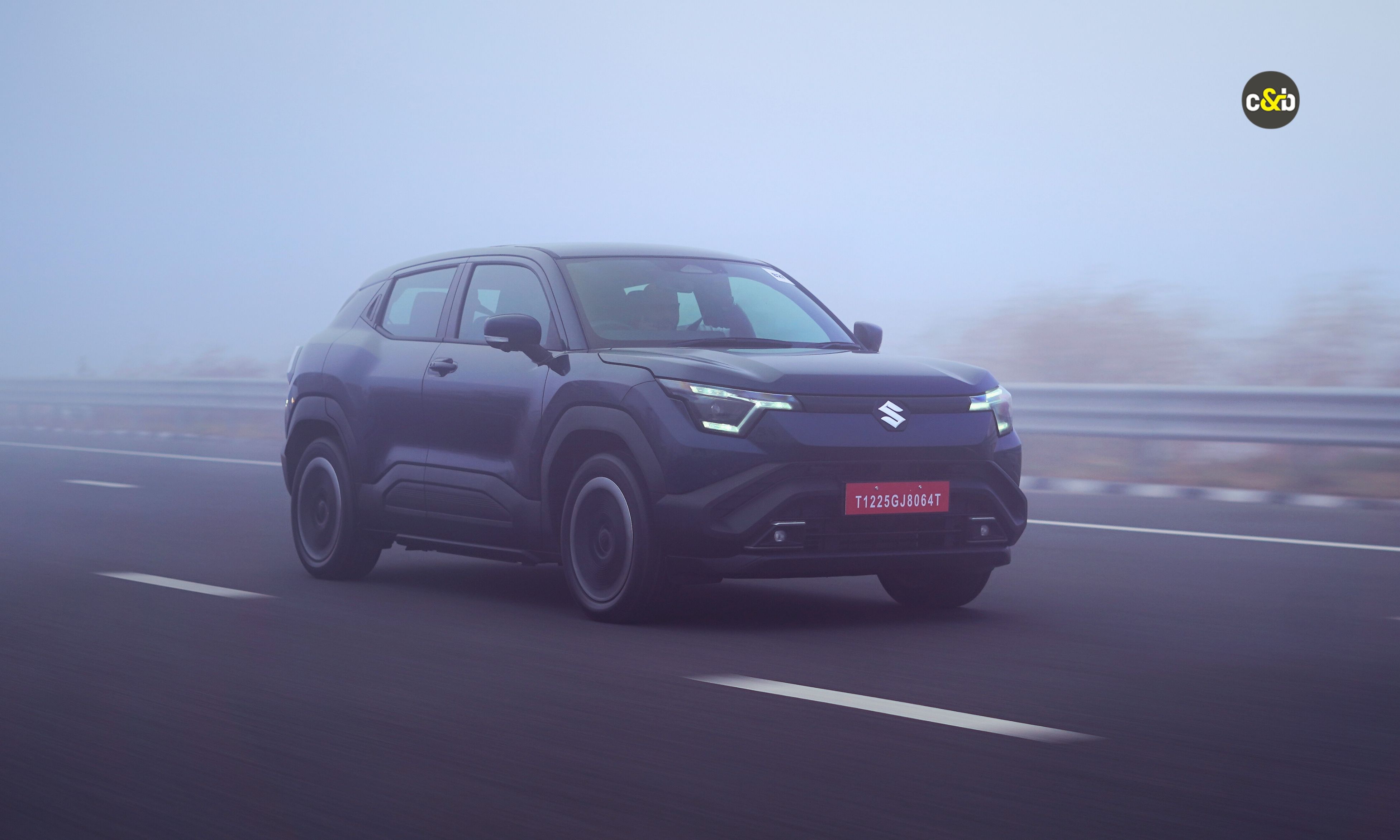
Maruti e Vitara: Alpha (Top-Spec)


Battery Pack: 61 kWh

Range: 543 km (claimed)

Power: 172 bhp and 193 Nm   
 

  • Adaptive High Beam System (AHS)
  • LED fog lamps
  • Dual-tone exterior finish
  • Dark green glass (all doors)
  • Synthetic leather + fabric seats
  • Ventilated front seats (front)
  • 10-way power adjustable driver seat
  • Fixed glass sunroof
  • Infinity premium sound system with subwoofer
  • Instrument panel tweeter speakers
  • 360-degree camera
  • Level 2 ADAS
  • Blind spot monitoring
  • Adaptive cruise control
  • Lane keep assist
  • Forward collision warning
  • Emergency braking
  • Rear cross traffic alert
  • Connected & Smart Features
  • Alexa connectivity
  • Smartwatch connectivity
  • Junction view and lane guidance
  • Trip planning with charging stations
  • Integrated digital display app


from carandbike - News https://ift.tt/dpAGh5S
via IFTTT
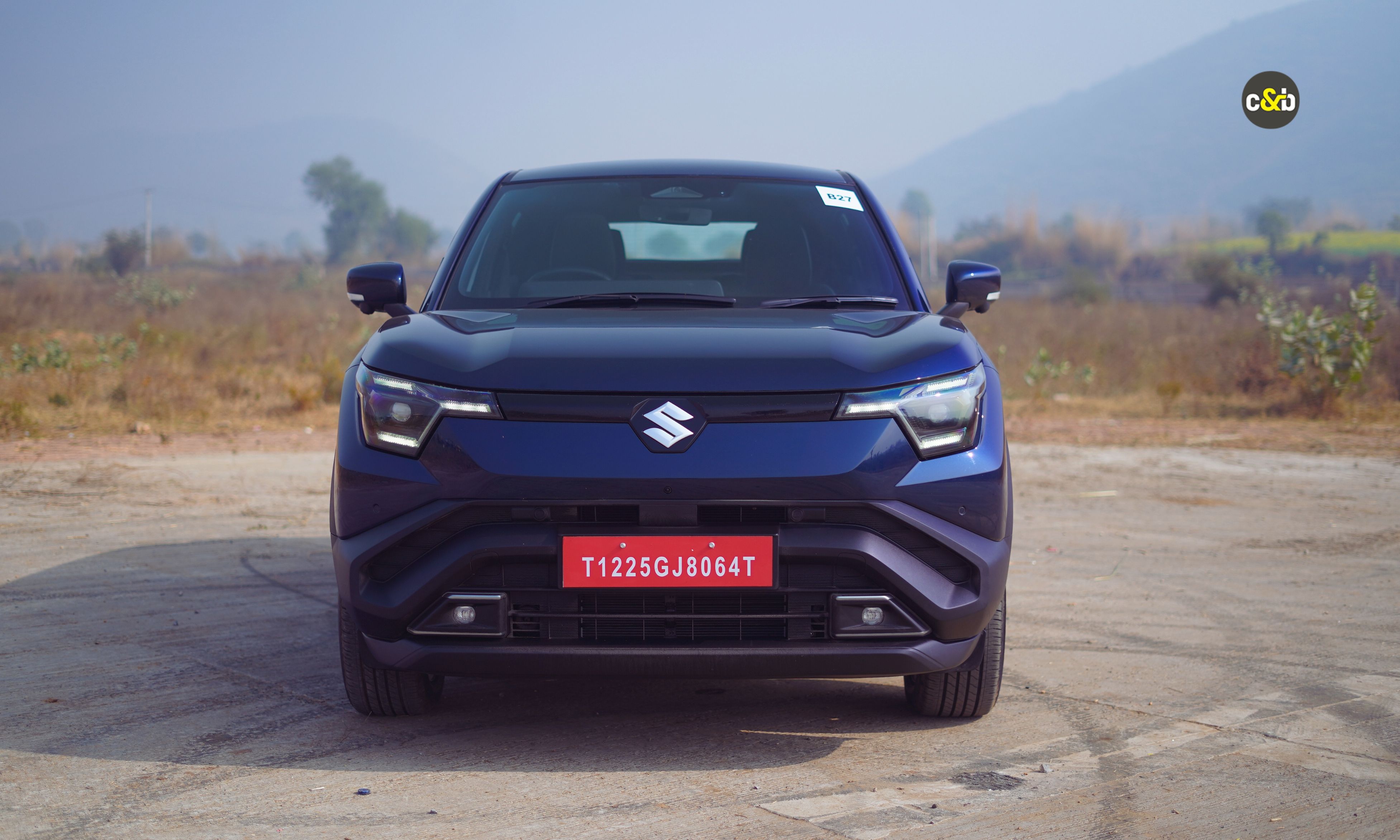
Maruti Suzuki e Vitara Launched In India; Prices Start At Rs 10.99 Lakh Under Battery Subscription Model

Maruti Suzuki has finally announced the starting price for its first-ever electric vehicle, the e Vitara SUV, in India, as well as commencing bookings. The electric SUV will go on sale in three variants across two battery pack options, with prices starting from Rs 10.99 lakh (ex-showroom) under the battery subscription model. Battery rental starts at Rs 3.99 per km. Bookings are now open online and at Nexa dealerships, with the booking amount set at Rs 21,000. Full prices are still awaited.


Also read: Maruti Suzuki e-Vitara Review: Worth The Wait?
 

The SUV will go up against the likes of the Hyundai Creta Electric and the Mahindra BE 6, and is expected to soon be joined by its Toyota-badged cousin, the Urban Cruiser EBella.

Maruti Suzuki e Vitara m3

Also read: Maruti Suzuki Brezza Facelift Spied With 6-Speed Manual Gearbox
 

Previewed by the EVX concept, the e Vitara first made its India debut at the 2025 Bharat Mobility, with details of the India-spec model being announced at the end of the year. The e Vitara will be offered in three variants - Zeta, Delta and Alpha - with two battery pack options - 49 kWh and 61 kWh. The 49 kWh is exclusive to the entry Zeta trim, while the Delta and top-spec Alpha both solely get the 61 kWh battery. Maruti claims a range of up to 440 km for the 49 kWh models and up to 543 km for the 61 kWh variants.
 

Maruti Suzuki e Vitara m4

Front wheel drive is standard with the motor in the Zeta variants pushing out a peak 142 bhp and 192.5 Nm. This is upped to 172 bhp in the larger battery variants, though torque remains unchanged. The AWD model sold globally is not coming to India for now.
 

Also read: Car Sales January 2026: Six Marutis in Top 10, But Tata Nexon Takes Top Spot
 

Maruti Suzuki e Vitara m19

On the tech front, the e Vitara will offer features such as a 10.1-inch touchscreen with wireless smartphone integration, a 10.25-inch digital instrument cluster, ADAS features, ambient lighting, a 10-way adjustable powered driver seat, ventilated front seats, drive & regen modes and more. On the safety front, the SUV offers features such as 7 airbags, 360-degree cameras and tyre pressure monitoring.


Also read: Maruti Suzuki Victoris Crosses 50,000 Sales Milestone In 4 months
 

Maruti says that customers buying the e Vitara prior to March 31 will get a complementary home charger with installation charges also covered. Early buyers will also be offered complementary DC fast charging at Nexa outlets for the 1st year or up to 1000 units. The SUV will also come with a 8 year warranty battery warranty and a 3-year vehicle warranty.


from carandbike - News https://ift.tt/tEpOILQ
via IFTTT

Toyota Hyryder 7-Seat Version Spied Testing

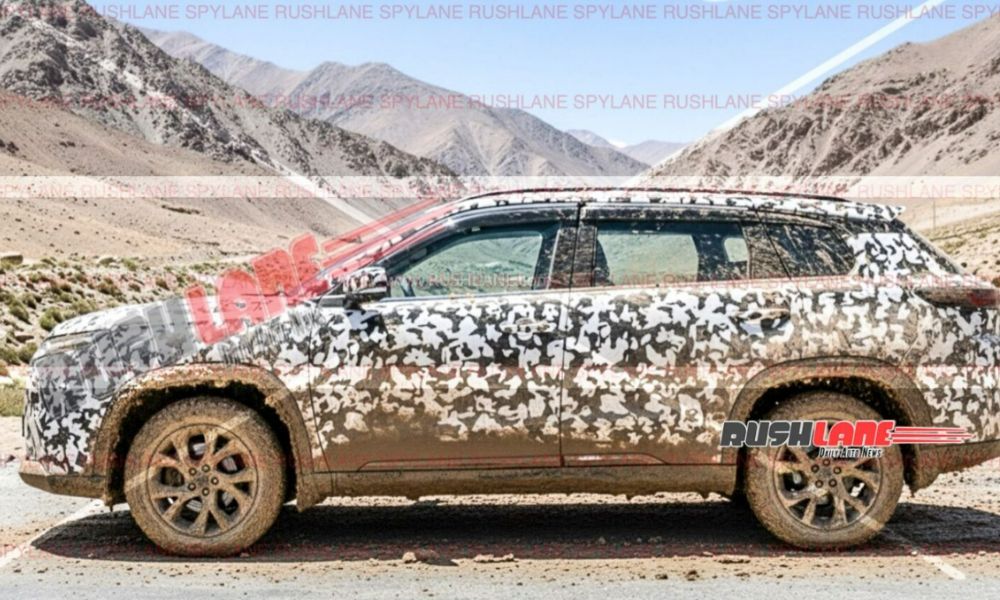
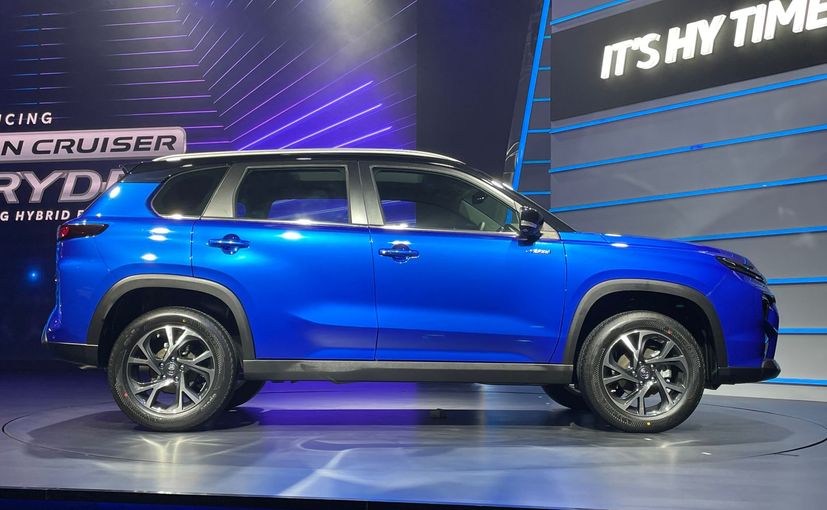
Back in April 2025, spy shots of what was believed to be a three-row SUV based on the Toyota Hyryder grabbed attention. As it turned out, that model was actually the Maruti Victoris. Now, nearly a year later, images of a fresh test mule have surfaced, and this one appears to be the 7-seat iteration of the Toyota Urban Cruiser Hyryder currently on sale in India.


Also Read: New Toyota Highlander EV Is Brand's First 3-Row Electric SUV

Toyota Hyryder 7 Seat Version Spied

The test mule, believed to be the three-row version of the Toyota Urban Cruiser Hyryder, retains much of the standard model’s upright SUV proportions, though the extended rear section is hard to miss. While the front and side profile appear largely similar under camouflage, the longer roofline and stretched rear overhang hint at additional seating.


The quarter glass area also looks slightly enlarged, suggesting space carved out for a third row. The test car rides on alloy wheels similar in size and design to the five-seater, and the overall stance remains familiar, albeit with visibly added length at the back. 


Also Read: Toyota Urban Cruiser Hyryder Gets Head-Up Display, Dash Cam With Optional ‘Tech Package’

Hyryder side 2022 07 20 T13 02 56 188 Z

While the interior remains under wraps for now, the seven-seat version is expected to feature an additional third row, along with a few upgrades over the standard Hyryder. Likely additions could include Level 2 ADAS, ventilated front seats, an updated infotainment system and enhancements to overall in-car tech.


The Hyryder, in its 7-seat derivative, will likely be offered with a 1.5-litre petrol engine and a strong hybrid version, which also has a 1.5-litre motor with a hybrid system. Transmission options could remain the same with a 5-speed manual, a 6-speed automatic torque converter unit and e-CVT automatic for the hybrid model. 
 

Spy shot source


from carandbike - News https://ift.tt/IWDzHaG
via IFTTT

Monday, 16 February 2026

Ferrari 849 Testarossa India Launch On March 14

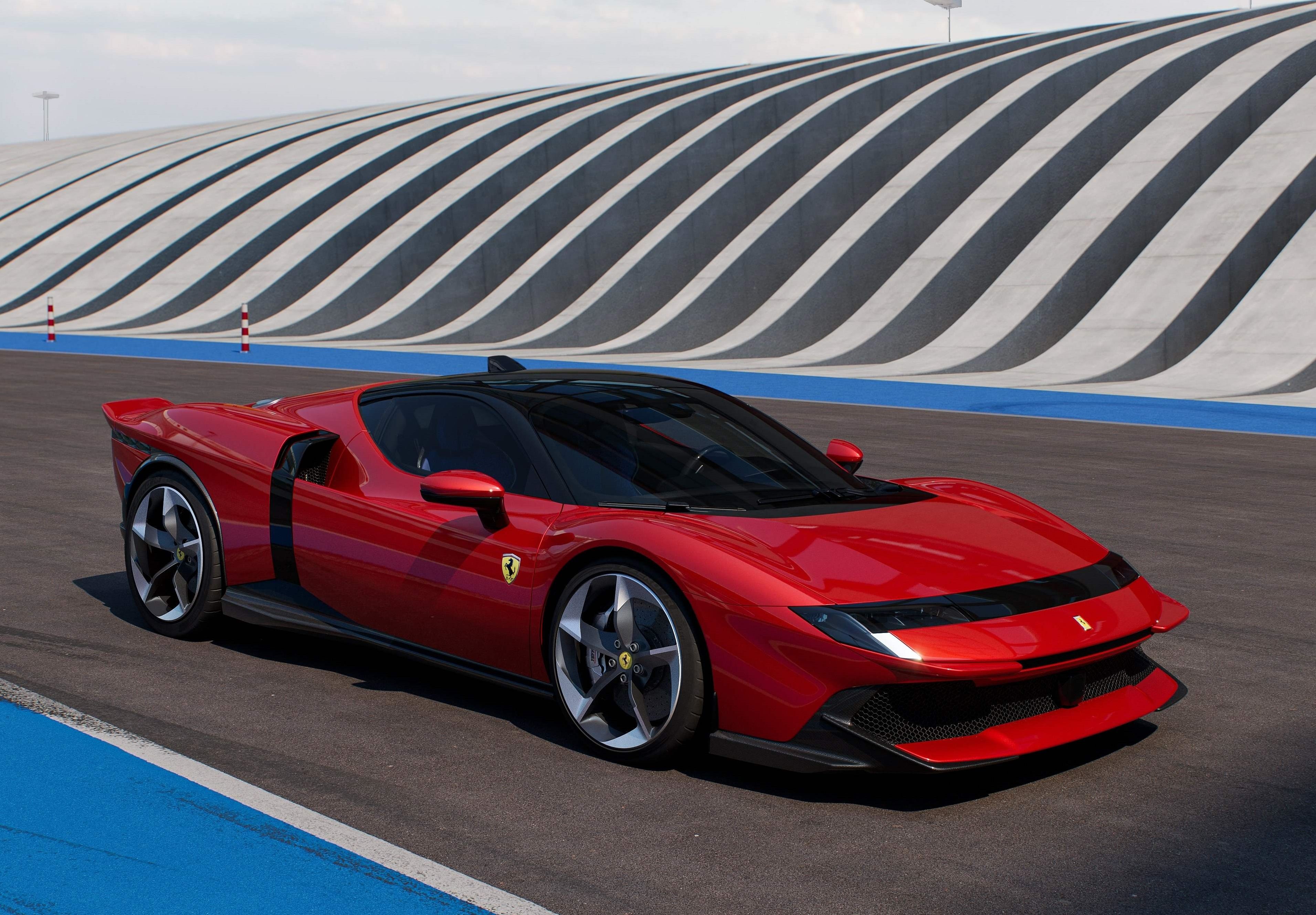
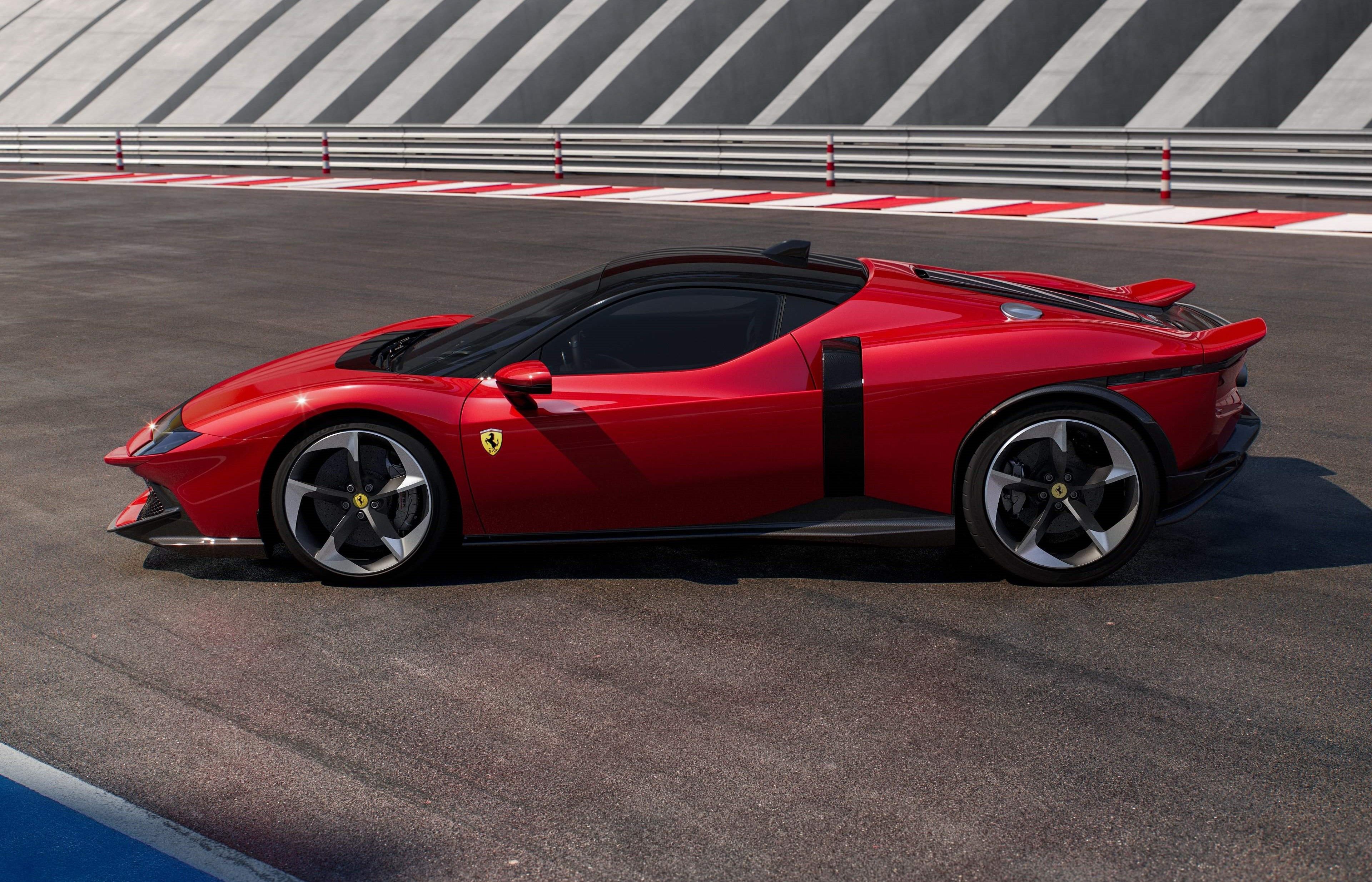
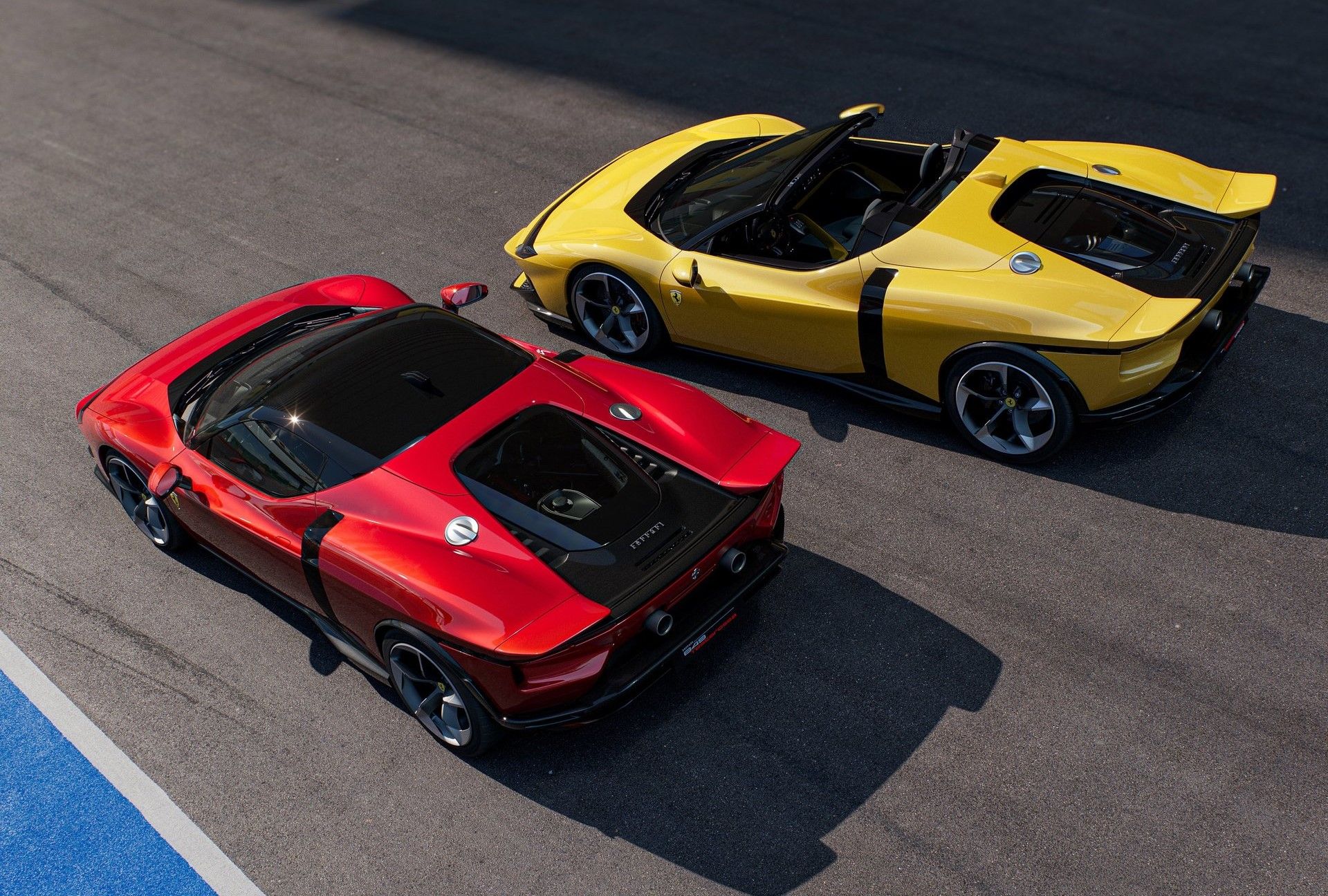
We don’t get to see a Ferrari being launched in India every day, so when one comes along, it's a bit extra special. And the one that is coming to our shores now is truly special. I am talking about the Ferrari 849 Testarossa, a car that revived the iconic Testarossa nameplate. It was introduced sometime back in September 2025 as a replacement of the SF90 Stradale, and this prancing horse will be launched in India on March 12, 2026. The car is expected to be priced upwards of Rs. 10 crore. 


Also Read: Ferrari 849 Revives Iconic Testarossa Nameplate


Ferrari 849 Testarossa 2026 Front Three Quarter 4e500700


In Ferrari’s own words, the new 849 Testarossa is “a hybrid plug-in super sports Berlinetta equipped with three electric motors alongside the mid-rear twin-turbo V8, delivering a total of 1050 cv, 50 more than the car it replaces”. More specifically, it’s a 4.0-litre twin-turbo V8 that makes about 819 bhp, while the three electric motors add another 215 bhp. The combined figure is around 1,036 bhp, teasing the hypercar territory and around 50 bhp more than the SF90 Stradale. Peak torque stands at 850 Nm.


Also Read: Ferrari’s First EV Named Luce; Retro-Style Interior Revealed


Ferrari 849 Testarossa 2026 Side Profile 4e500700


What these numbers essentially translate to is a 0-100 kmph sprint in under 2.3 seconds, and a top speed of 330 kmph. And thanks to the modern plug-in hybrid tech, the new Testarossa can go 25 km in pure-electric mode, courtesy of a 7.5kWh battery.


Also Read: Ferrari 12Cilindri India Review: Straight From The Heart


Ferrari 849 Testarossa 2026 HD feb2b72c1befd45e11b874f83fe360dd5f7a1c442


Visually, the 849 Testarossa might remind you of the original 1970s Ferrari prototypes, but the newer elements, including the active aerodynamics, are pure modern-age tech from Maranello. The car’s twin-tail rear end and active aero generate about 415 kg of downforce at 250 kmph, which means high-speed stability is likely to be impressive. And yes, you can have one in the Spider open-top version too. But if you can add more zeros on the cheque book, then get the ‘Assetto Fiorano’ pack, it is 30kgs lighter, has stiffened suspension, and dialled-up aero with twin wings.


Ferrari 849 Testarossa 2026 Interior 4e500700


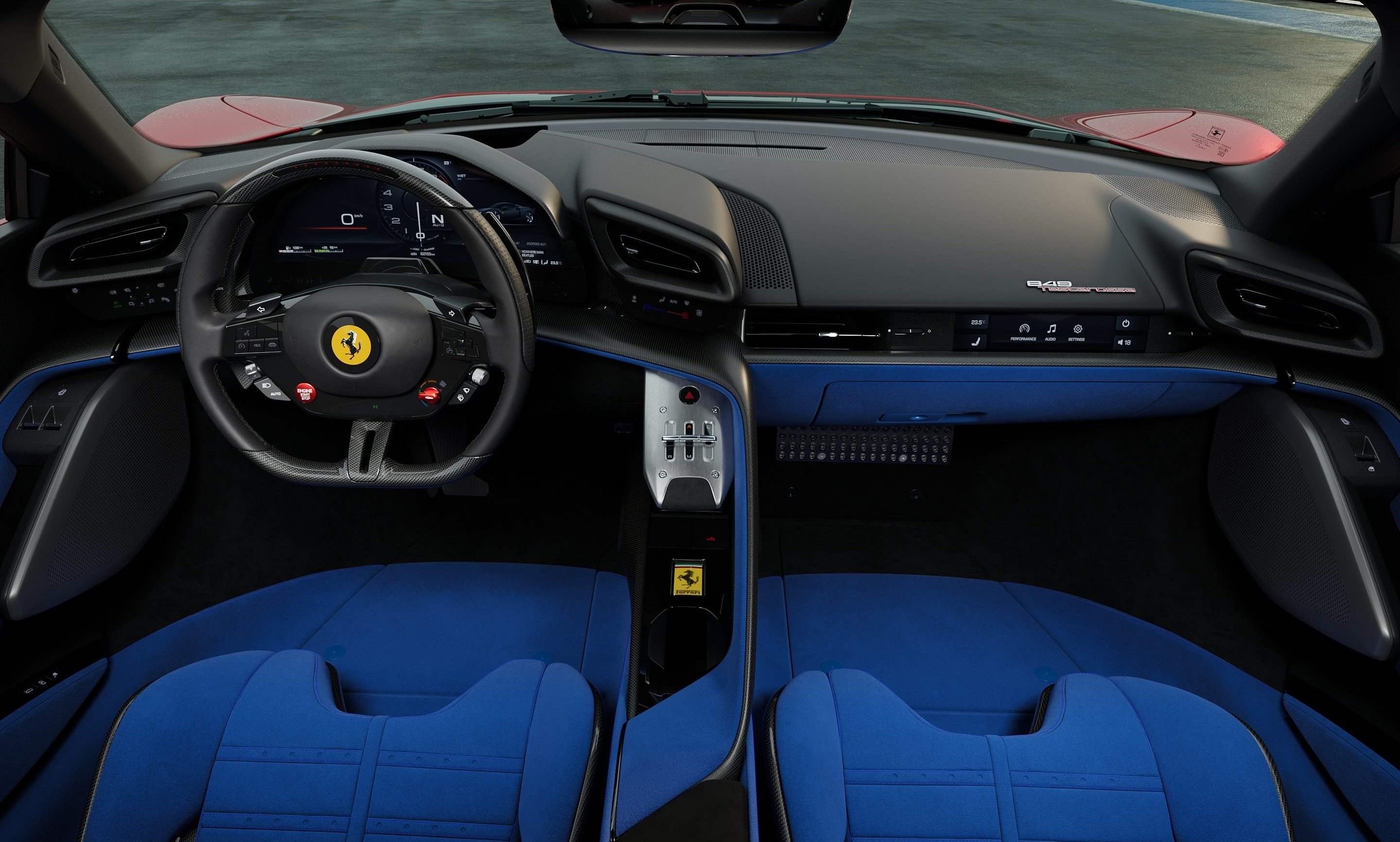
Inside, the new-age Testarossa offers you a new-age cabin, and it’s built around the driver. The cockpit-style layout looks bold and modern, but elements like the steering wheel with mechanical buttons, evocative gated gear-selector motif add a retro vibe. The fully-digital driver cluster and a sleek, digital display for the passenger add a modern touch. Overall, the cabin looks clean, purpose-built and certainly a class above. 


from carandbike - News https://ift.tt/twaq3c4
via IFTTT
Mobileye To Deploy Hands-Off ADAS Tech In India In 2027

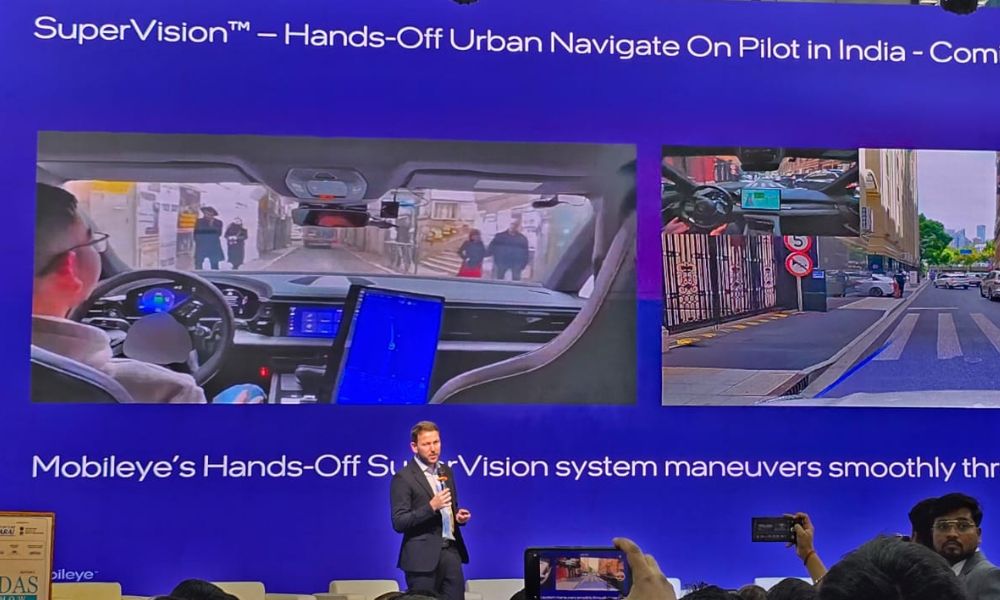
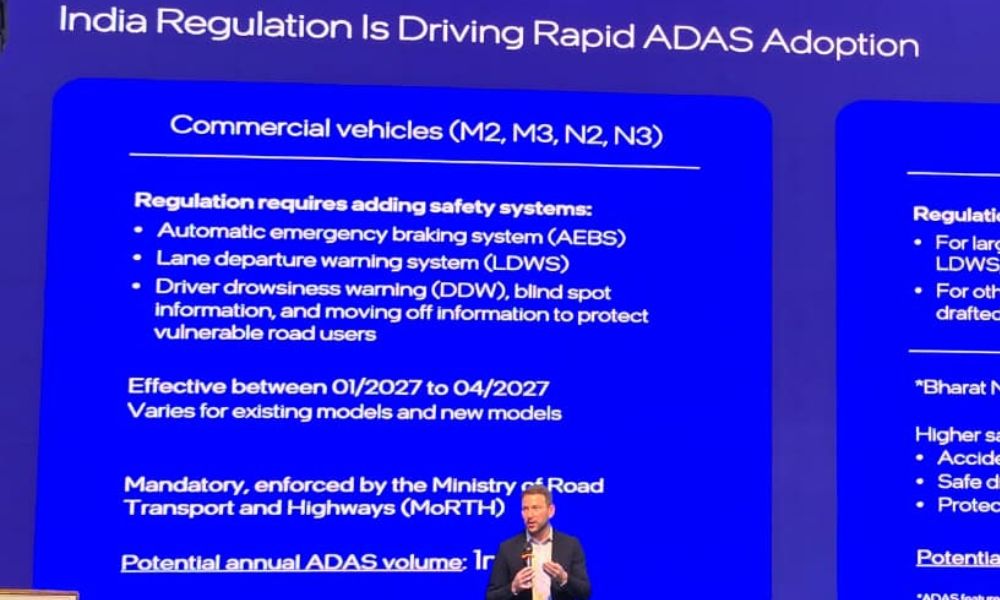
Automotive tech firm Mobileye, at the recently concluded ADAS Show 2026, revealed that it planned to commence testing its Hands-Off ADAS technologies in India from 2027. During a presentation, Mobileye Vice President for India & China, Elie Luskin, revealed that the company had plans to localise its Level 2+ ADAS systems for the Indian market, with testing of hands-off systems commencing from 2027.
 Mobileye

Speaking to car&bike Luskin said that Mobileye offered a scalable ADAS solution ranging from a basic system up to full Robotaxi or full driverless tech in global markets. The hands-off systems fell somewhere in the middle and were capable of driving the vehicle in multiple scenarios, including in deep urban environments, without the driver needing to make inputs at the steering or the pedals.
 

“So what we are planning to do by 2027, we are planning to deploy this solution in India. We are finalising the details now. We already have two vehicles equipped with this system in India. We are starting data collection, and we are way ahead in making this a reality,” Luskin said.
 ADAS regulations cars

Luskin added that the system would initially become operational on highways but would gain urban manoeuvring capabilities through subsequent OTA updates.
 

India Could Become Third Largest ADAS Market In The World
 

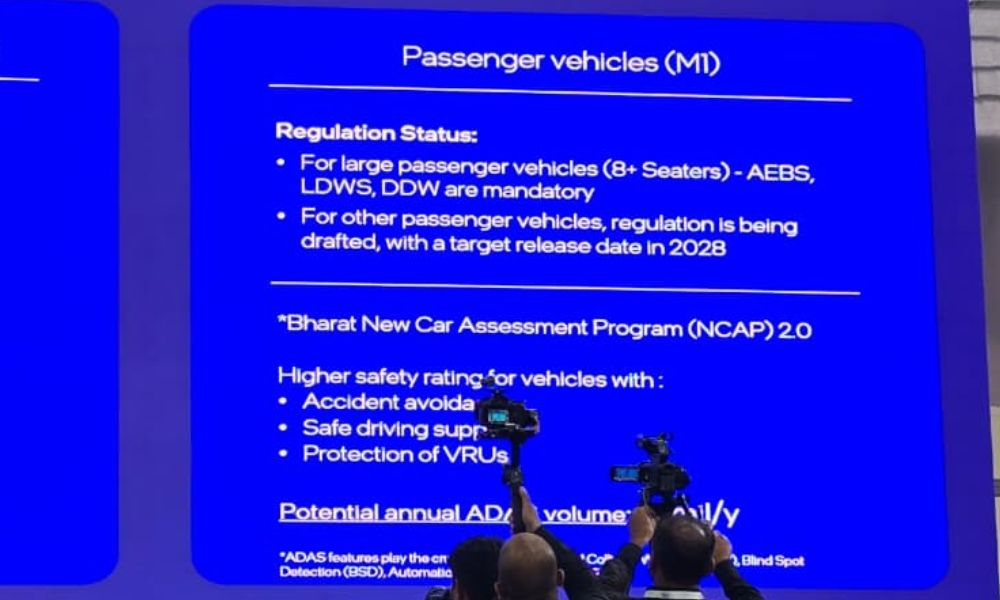
Speaking during a separate presentation, Luskin revealed that the upcoming ADAS regulations for commercial vehicles and the new Bharat NCAP 2.0 norms could help the tech flourish in the Indian market. He stated that just on the CV side alone, sales of ADAS system in India could cross 1 million units a year. Furthermore, the new Bharat NCAP 2.0 norms and any subsequent norms to mandate the tech in passenger cars could make India the third-largest ADAS market.
 India ADAS regulations

“So to make it work, Mobileye has dedicated a lot of resources to localise. So all of our ecosystem is now being localised in terms of local manufacturing, local validation, working closely with OEMs with an eye to make this happen in India,” Luskin said.


from carandbike - News https://ift.tt/Zn57xdf
via IFTTT

Sunday, 15 February 2026

Maruti Suzuki Brezza Facelift Spied With 6-Speed Manual Gearbox

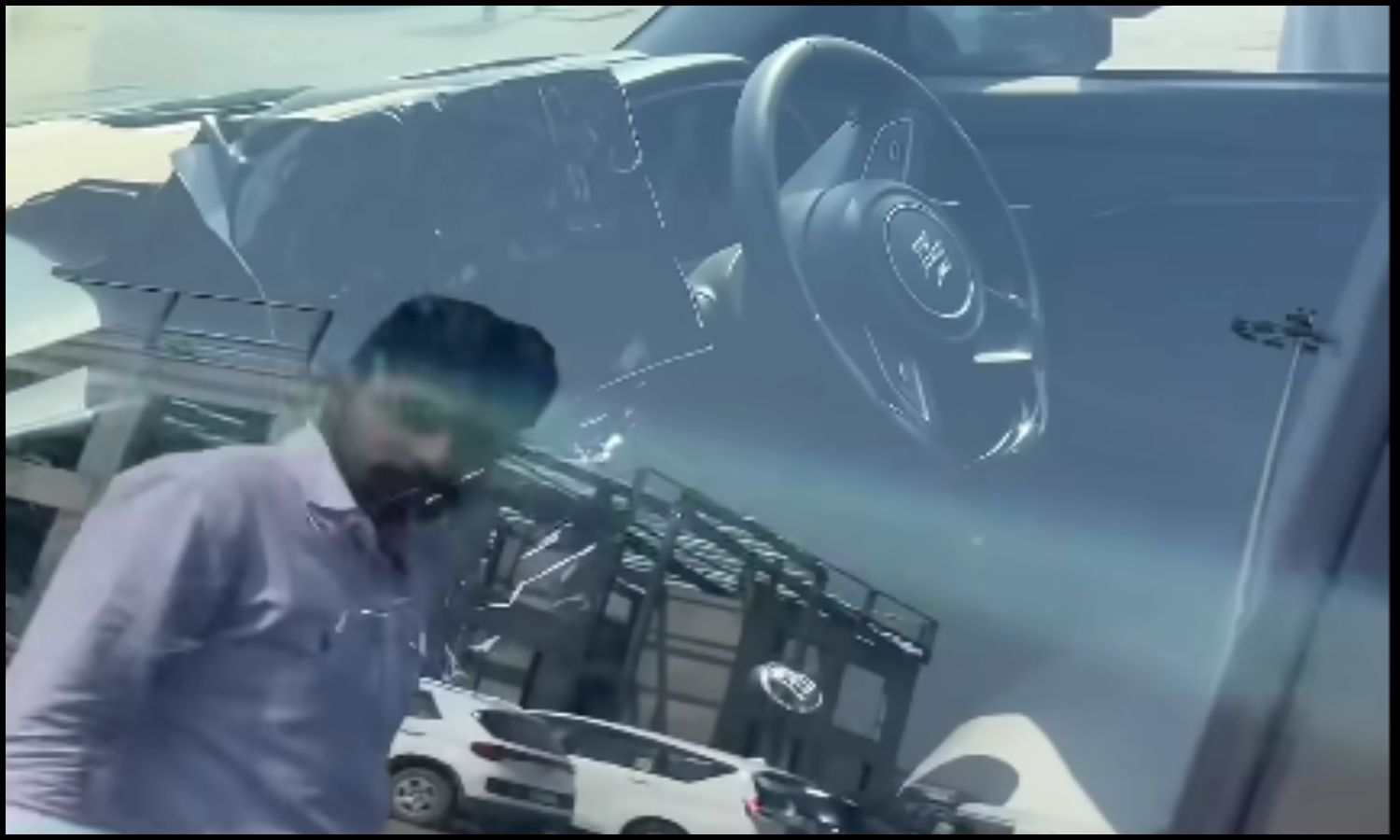
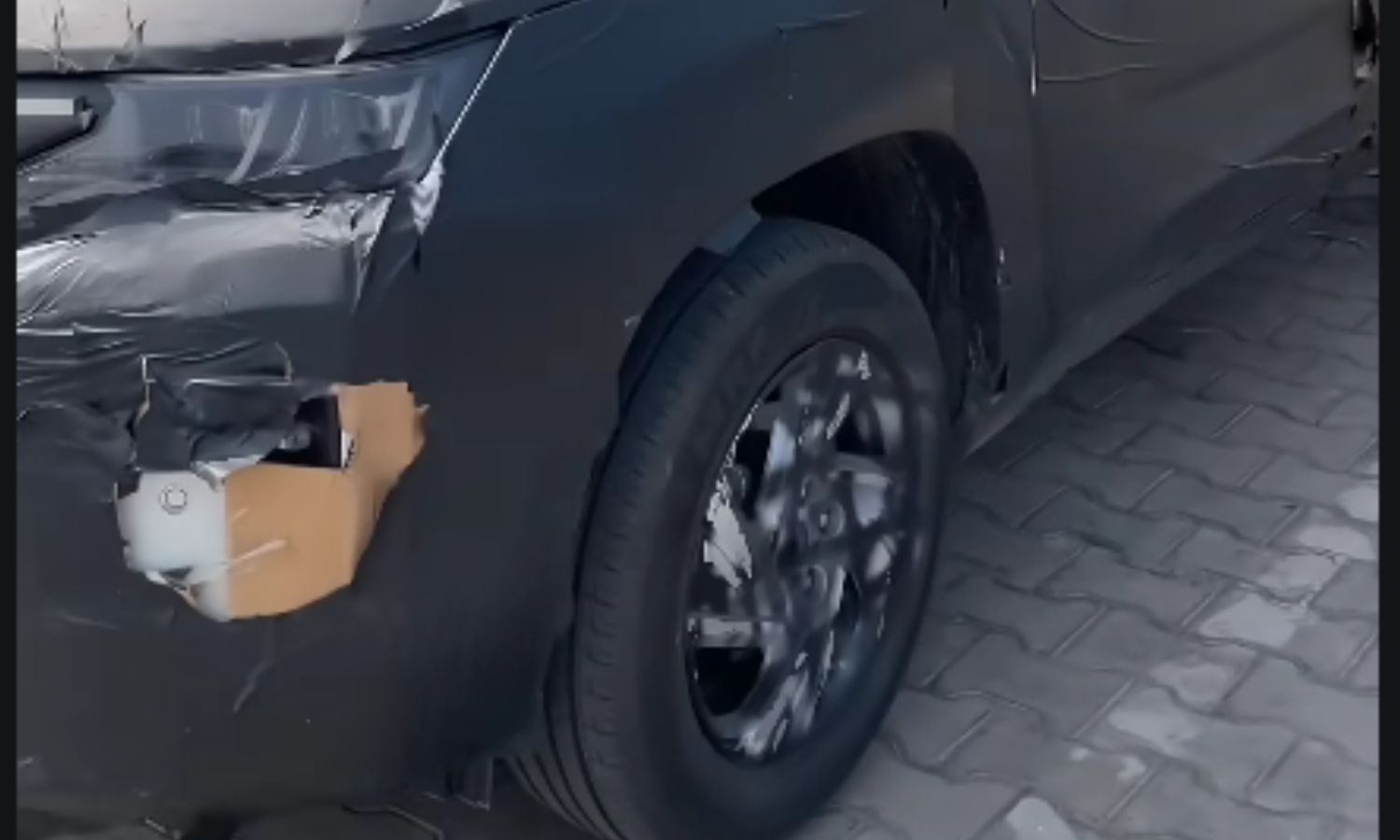
The Maruti Suzuki Brezza facelift has been spied testing yet again with a video doing the rounds online providing a closer look at the camouflaged car’s exterior and a glimpse of its interior. However, design changes aside, the biggest talking point in this latest video is the gear lever on the interior - the pattern suggests that it is a 6-speed manual unit - a first for any Maruti car in India.


Also read: Car Sales January 2026: Six Marutis in Top 10, But Tata Nexon Takes Top Spot

 Maruti Brezza facelift spied 1


So far, all Maruti cars are shipped with a 5-speed manual gearbox as standard, be it with the 1.0-litre K10, 1.0-litre Turbo (Fronx only), 1.2-litre K12 (4 cyl) or Z-Series (3 cyl) or the 1.5-litre K15 petrol engine. Automatic gearboxes, meanwhile, have varied between a 5-speed AMT, a long-serving 4-speed automatic or a 6-speed automatic, depending on the model chosen.
 

The move to a 6-speed manual should have some noticeable benefits on fuel economy as well as acceleration over the older 5-speed unit. It should also aid in Maruti meeting the more stringent CAFE 3 norms that are set to arrive in 2027. It, however, remains to be seen if the new gearbox could be offered with the carmaker’s smaller capacity engines.
 

Also read: Maruti Suzuki Victoris Crosses 50,000 Sales Milestone In 4 months
 

Moving to the cosmetics, the Brezza looks to get a revised fascia with a tweaked grille and a new bumper. The dual-barrel LED projector headlamps, though, look unchanged from the current subcompact SUV. At the rear, the changes are likely to also be minor with tweaks to the tail lamps and a revised bumper.
 

Maruti Brezza facelift spied 3

On the inside, the covering on the centre console suggests that it could be redesigned. Top variants could move away from the existing 9.0-inch SmartPlay Pro+ touchscreen and get the new 10.1-inch SmartPlay Pro X unit that arrived in the new Victoris while also borrowing other tech from the SUV such as ventilated front seats, a powered driver seat and more.
 

Also Read: Maruti Suzuki Announces Price Protection Amid Long Waiting Periods


Mechanically, the 1.5-litre K15 naturally aspirated petrol engine is expected to soldier on as is, the 6-speed torque converter automatic gearbox option. The CNG models, meanwhile is expected to follow the Victoris in adopting an underbody CNG tank to maximise boot space.
 

The Brezza facelift is likely to make its debut sometime later this year.


Image source


from carandbike - News https://ift.tt/ai0BJje
via IFTTT

Saturday, 14 February 2026

SIAM Reports PV Sales Of Almost 4.5 Lakh Units, 2W Sales Of Over 19 Lakh Units In January 2026

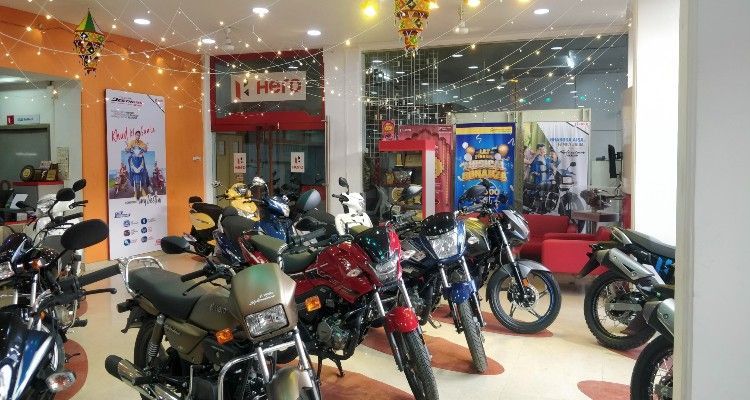
The Society of Indian Automobile Manufacturers published the sales data for January 2026, reporting double-digit growth across the passenger vehicle (PV), two-wheeler (2W) and three-wheeler segments. Total PV sales in the domestic market stood at 4,49,616 units while 2W sales amounted to 19,25,603 units - best ever numbers for January.
 

Also read: January 2026 Auto Retail Up 17.61% YoY At 27.22 Lakh Units: FADA Report
 

Commenting on the industry’s sales performance, SIAM Director General, Rajesh Menon, said, “The new year has begun on a positive note, extending the strong momentum seen in the previous quarter, supported by sustained demand following the GST rate reduction. The initiatives announced in the Union Budget 2026 to strengthen India’s manufacturing base, along with existing policy tailwinds, are expected to deliver long-term benefits for the sector and support growth in the medium term.”
 

Domestic Passenger Vehicle, Two-Wheeler Sales For January 2026
 

Hero Dealership Festive Season 2022 10 28 T17 10 08 300 Z a5dfa45027

Year-on-year, both 2W and PV sales posted double-digit growth - up 26.2 per cent and 12.6 per cent respectively.
 

Subsegment sales data for PVs continued to show a rising demand for SUVs in the Indian market, with domestic sales up 15.9 per cent year-on-year from 2,12,995 units to 2,46,844 units. Passenger Car sales, meanwhile, were down 5.1 per cent from 1,27,065 units to 1,20,636 units. Do note that these subsegment numbers do not include sales of Tata Motors.
 

Also read: Two-Wheeler Sales January 2026: Hero MotoCorp, TVS, Royal Enfield, Suzuki Report Sustained Growth
 

On the two-wheeler side, sales of scooters, motorcycles and mopeds all grew in the double digits year-on-year. Scooter sales were up 36.9 per cent from 5,48,201 units to  7,50,580 units, while motorcycle sales grew 20.3 per cent from 9,36,145 units to 11,26,416 units. Moped sales, meanwhile, grew by around 16 per cent from 41,872 units in January 2025 to 48,607 units.
 

Passenger Vehicle, Two-Wheeler Exports In January 2026
 

Maruti Suzuki Exports

On the export front, SIAM reported a PV export growth of 33.4 per cent lead by the passenger car segment. Total PV exports stood at 76,822 units, of which 37,329 units (a year-on-year growth of 43.6 per cent) were of passenger cars. SUV exports stood at 38,421 units, up 26 per cent from January 2025.
 

Also read: Auto Sales Jan 2026: Tata Claims Second Place With Over 70,000 Units Sold; Hyundai Reports Best-Ever Domestic Sales
 

On the two-wheeler side, exports grew by almost 20 per cent, with scooter exports rising 38.8 per cent from 44,875 units last year to 62,294 units. Motorcycle exports, meanwhile, were up 16.5 per cent at 3,90,667 units, while moped exports were up 1058 per cent from a low of 300 units in January 2025 to 3,474 units in January 2026.
 

Year-To-Date Passenger Vehicle, Two-Wheeler Domestic Sales In FY2026
 

Year-to-date figures from the financial year 2025-2026 painted a more subdued picture though both PV and 2W sales continued to report a sales growth. Total PV sales in the April 2025 to January 2026 period stood at 37,06,551 units - a 6.2 per cent growth over the previous fiscal year. Two-wheeler sales, meanwhile, were up 7.8 per cent to 1,78,58,440 units


from carandbike - News https://ift.tt/Iy0HhDw
via IFTTT

Thursday, 12 February 2026

MG Majestor SUV Unveiled In India Ahead Of April 2026 Launch

JSW MG Motor India is having a fresh crack at ending the dominance of the Toyota Fortuner, with the full debut of the MG Majestor SUV, ahead of its planned launch in April 2026. The Majestor was first revealed at the 2025 Auto Expo held in New Delhi, but that was only an exterior design reveal, with the final, production-ready SUV being unveiled today in Faridabad. Pre-bookings for the Majestor have opened online, with the reservation amount set at Rs 41,000. Deliveries of the Majestor will begin in the month of May, the company confirmed during its unveil presentation. The first 3,000 customers will also receive a 5-year, unlimited kilometres warranty package, bundled with five free services and five years of roadside assistance.


mg majestor suv unveiled ahead of april 2026 launch carandbike 2


MG Majestor: Design and dimensions


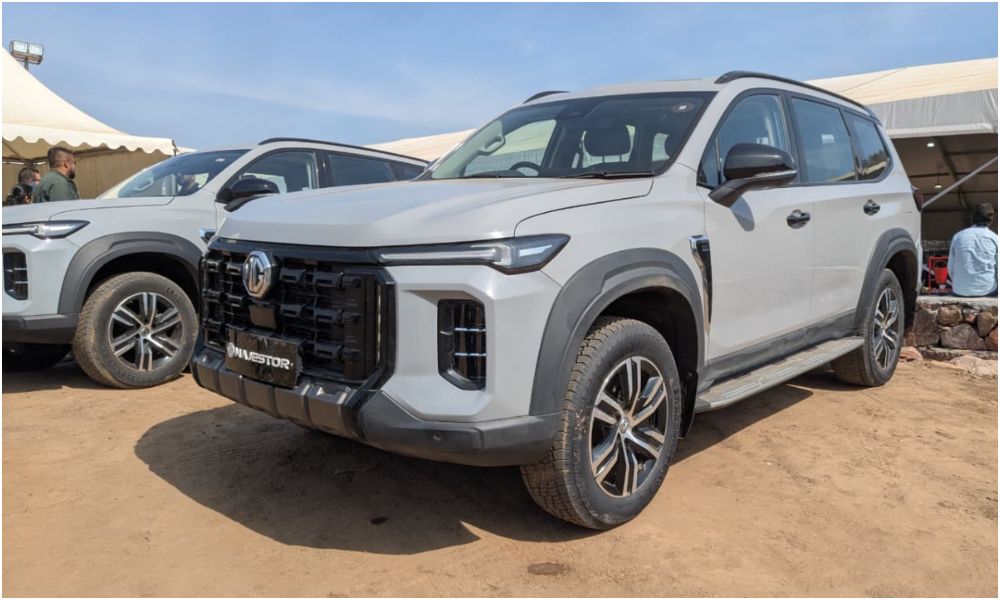
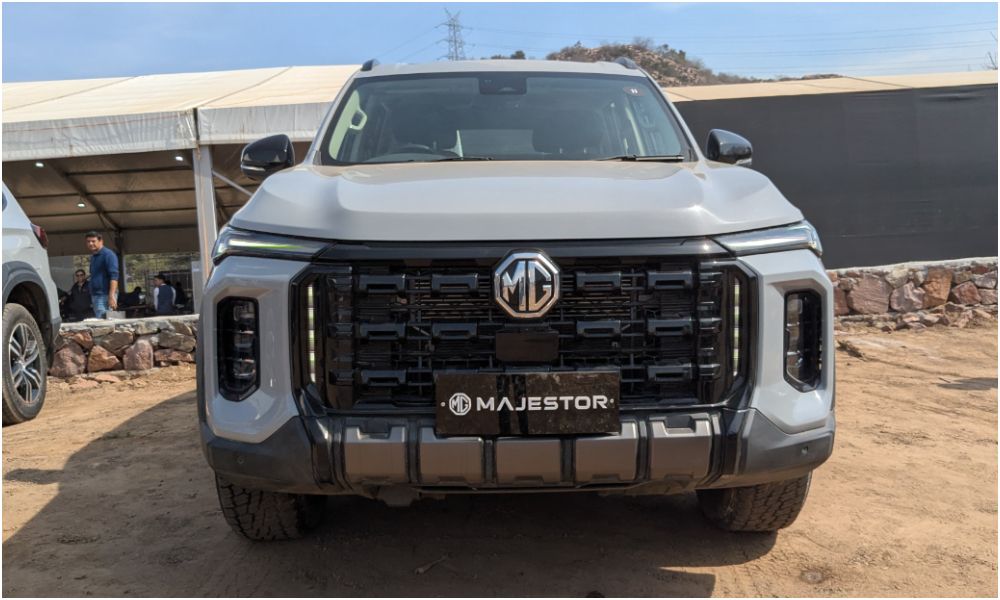
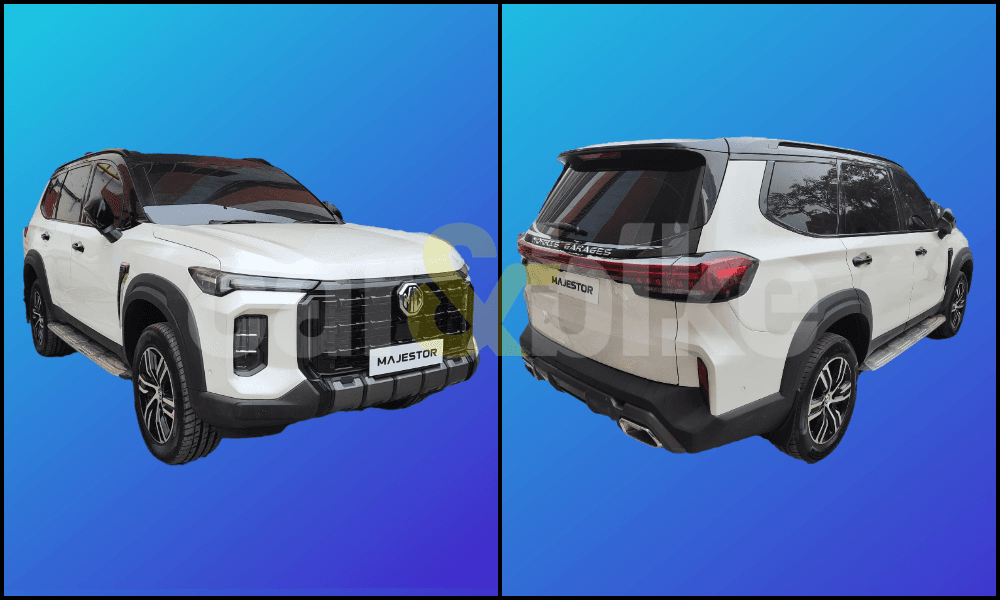
In essence, the Majestor is an extensive upgrade for the slow-selling MG Gloster. It is based on the same architecture, but the Majestor has a new front-end, accentuated by a ‘Mosaic Matrix’ grille, redesigned LED daytime running lights and tri-beam LED projector headlights mounted low in the front bumper.


mg majestor suv unveiled ahead of april 2026 launch carandbike 3


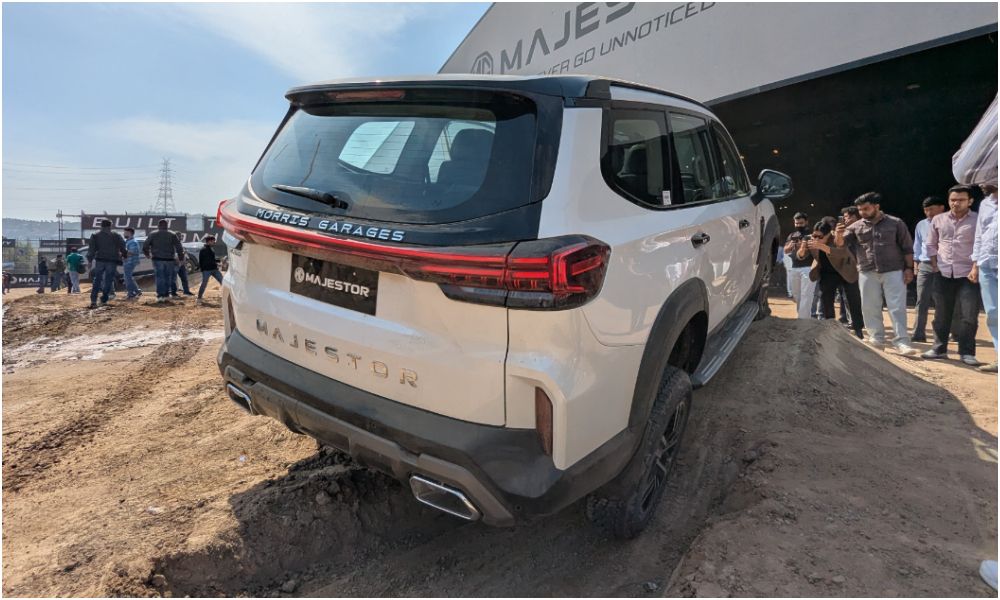
The Majestor rides on 19-inch dual-tone alloy wheels, and in profile, is more or less identical to the Gloster. At the back, you'll see new LED tail-lights, which are now linked by an LED light bar. MG has chosen to spell out the name of the SUV in bold across the tailgate. 


mg majestor suv unveiled ahead of april 2026 launch carandbike 7


MG claims this is the longest, tallest and widest SUV in its segment, but has not shared any specifications at this time. However, it's likely to mirror the dimensions of the Gloster. The company did confirm boot space of 343 litres with all three rows of seats up, and 1,350 litres with the third row folded.


MG Majestor: Interior and features


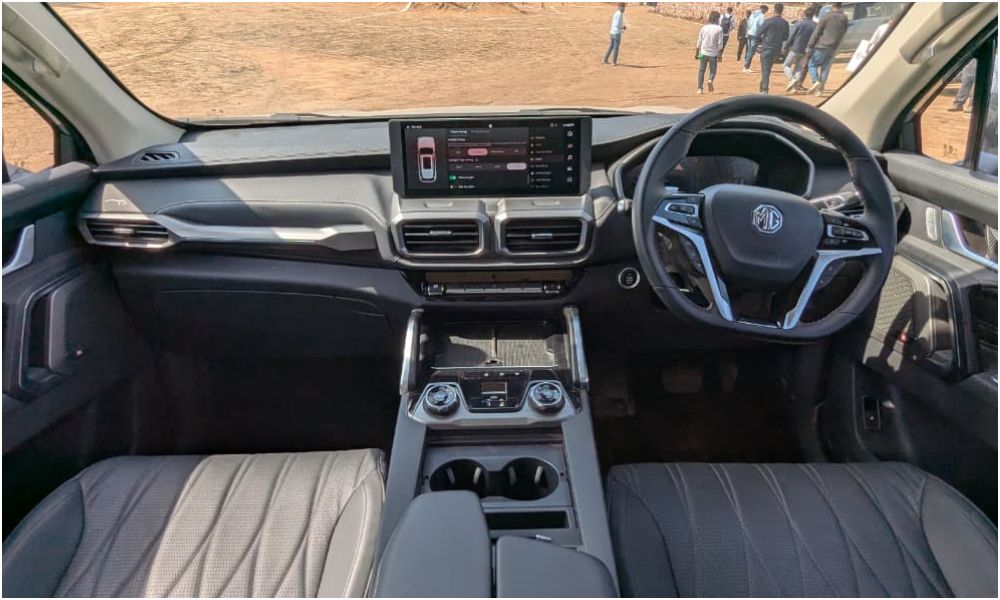
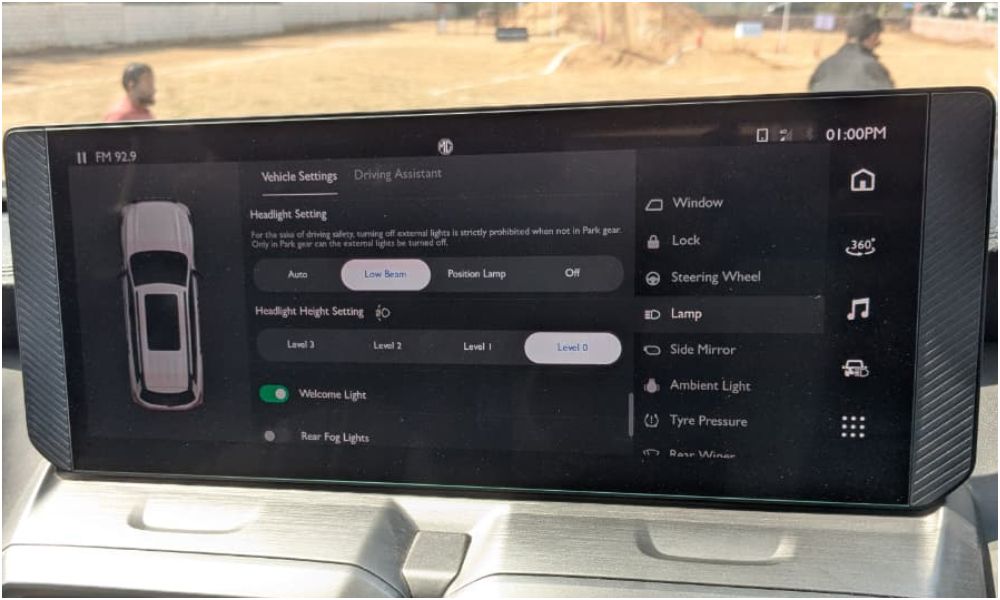
Compared to the Gloster, the Majestor has a redesigned dashboard, with a freestanding 12.3-inch touchscreen infotainment system taking pride of place. The Majestor also has a full digital instruments display, and a new centre console that houses twin wireless phone charging pads. 


mg majestor suv unveiled ahead of april 2026 launch carandbike 4


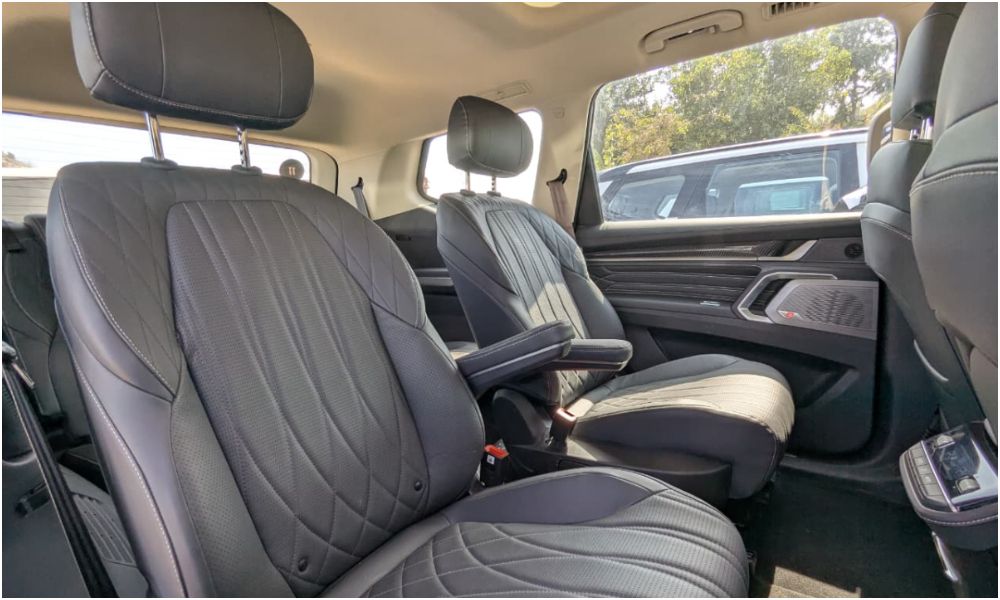
Like the Gloster, the Majestor, too, comes with powered front seats, with 12-way adjustment for the driver's seat. The front seats also feature ventilation and multi-mode massage functions. The interior colour scheme is now ‘smoked ebony’, and the Majestor will be available with 7 seats as well as 6 seats, with the second row featuring captain chairs.


Also included are three-zone automatic climate control, leather upholstery, a panoramic sunroof, 12-speaker JBL sound system, 64-colour ambient lighting, powered tailgate, 75 connected car features, wireless Apple CarPlay and Android Auto connectivity, to name the highlights. 


mg majestor suv unveiled ahead of april 2026 launch carandbike 5


Safety equipment includes six airbags as standard, and Level 2 advanced driver assistance systems (ADAS), including functions such as autonomous emergency braking, lane keep assist, intelligent headlamp control, among others.


MG Majestor: Engine and transmission


MG has confirmed the Majestor carries over the Gloster's 2.0-litre, twin-turbo diesel engine, but is yet to share power output figures. It is also likely to retain the Gloster's 8-speed automatic transmission, operated via a column-mounted shift lever. 


mg majestor suv unveiled ahead of april 2026 launch carandbike 6


Just like the Gloster, the Majestor, too, will be available in both two-wheel and four-wheel drive variants. The Majestor 4x4 has 10 off-road modes, including Sand, Snow, Rock and Mud modes, and also has a triple differential lock, 810 mm water wading depth and low-speed crawl control mode.


MG Majestor: Expected pricing


The Majestor will be available in two main trims – Sharp and Savvy – with the former available only with two-wheel drive. We expect prices for the Majestor to range between Rs 38-45 lakh (ex-showroom). 


from carandbike - News https://ift.tt/OijQrgs
via IFTTT

MG Majestor India Launch Today: What To Expect?

JSW MG Motor India will be launching the company’s newest flagship SUV, the MG Majestor, tomorrow, about a year after it was first showcased at the 2024 Bharat Mobility Expo. Essentially an updated version of the MG Gloster, the new Majestor will be positioned as a more premium derivative, taking on rivals like the Toyota Fortuner. So, it will be interesting to see how the company prices the new MG Majestor. And while that will be revealed tomorrow, for now, here’s everything else you can expect from the SUV.


Also Read: MG Majestor India Launch On February 12


Exterior


The MG Majestor looks bigger, bolder and more premium than the Gloster for sure. The edges are more squared off with sharper lines, and the chrome chunks on the grille make them look flashier than ever. Expect all-LED lighting. The cladding on the bumper and wheel arches gives it a beefy look, including the skid plate. The sidestep and dual-tone alloy wheels add to its rugged look, while the rear section offers connected LED taillights and a beefy rear bumper with chrome tips and a rear skid plate. 


MG Gloster Facelift Spied Ahead Of Debut Likely To Be Called Majestor


Interior


Now, the cabin of the India-spec Majestor is yet to be revealed; however, since it’s the same SUV that’s sold globally as Maxus D90, we can guess as to what we’ll get. The dashboard has been designed with horizontal lines, large air con vents, and a large flat-bottom steering wheel. The dash will also come with a lot of chrome or brushed silver elements, a wide touchscreen display and a digital cluster. You can expect a more premium fit and finish with soft-touch material and leatherette upholstery. The Majestor is also expected to offer three rows of seating, as with the Gloster.


Also read: Bharat Mobility Global Expo 2025: MG Majestor Unveiled In India


Bharat Mobility Global Expo 2025 MG Majestor Unveiled In India


Features


MG was one of the first brands to offer connected car tech and Advanced Driver Assistance Systems (ADAS) in India, and we are bound to see these in the new MG Majestor as well. Wireless Android Auto and Apple CarPlay aside, MG is likely to offer an in-built navigation system, e-SIM support, remote access functions and more. Creature comforts like ventilated seats, multi-zone climate control, a panoramic sunroof and more are also likely to be on offer. 


Also Read: MG Majestor Previewed Ahead Of February 12 Launch


Engine


Moving to the powertrain, the Majestor is expected to share its running gear with the Gloster, a 2.0-litre diesel engine offered in single turbo and twin-turbo guise paired with an 8-speed automatic gearbox. Expect the SUV to get the option for 4X2 and 4x4 drivetrains, depending on the variant.


MG Gloster Facelift Spied Ahead Of Debut Likely To Be Called Majestor


Expected Price


The new MG Majestor is expected to be priced in India between Rs. 40 lakh and Rs. 50 lakh (ex-showroom).


from carandbike - News https://ift.tt/dqsmOgu
via IFTTT

Wednesday, 11 February 2026

End Of The Road For Diesel Vehicles? Niti Aayog Pushes For Adoption Of Cleaner Fuels

Is this the beginning of the end of Diesel vehicles in our country? A Niti Aayog report released on Tuesday advocated gradual removal of Diesel vehicles from the roads while making a gradual shift towards cleaner fuels and technologies like CNG, hybrids and electric vehicles. The report says the ultimate aim is fully shift to zero emission vehicles.

Diesel cars

Diesel cars still account for fair share of sales in some popular segments.


The roadmap for net zero pathway also includes tightening of Corporate Average Fuel Efficiency (CAFE) norms and the aim according to the report is to achieve net zero transport emissions by 2070. The report says that fossil fuels still account for energy needs of 80% transport vehicles, a number which needs to come down. It talks about adopting flex fuel vehicles and increased Bio-CNG blending.


Also Read: Zero Emission Drive 2.0: A Real-World Test of Clean Mobility


The report states, “The transition strategy should begin with the phased elimination of polluting diesel vehicles and the adoption of lower-emissions technologies such as CNG, hybrids, and electric vehicles.” Increased adoption of electric vehicles will go a long way in achieving the goals while usage of fossil fuels will need to reduce at the same time. 


from carandbike - News https://ift.tt/7YxaDiH
via IFTTT

MIDC to WLTP: Why It Matters And How It Impacts You

Come 1st April 2027, the emission standards for BS6 vehicles will be shifted from MIDC (Modified Indian Driving Cycle) to WLTP (or Worldwide Harmonised Light Vehicle Testing Procedure). This change will happen at the vehicle testing level, where manufacturers test the emission standards of their powertrains. But how will this change affect you, the end consumers (i.e. car buyers)? Let’s find out. 

Panoramic sunroof cars

Also Read: January 2026 Auto Retail Up 17.61% YoY At 27.22 Lakh Units: FADA Report
 

What Is It and What has changed?

The Ministry of Road Transport and Highways (MoRTH) has issued that the emission standards for the M1 and M2 vehicle categories will be tested under the WLTP cycle. M1 category includes all the passenger vehicles (up to nine-seater), while the M2 includes commercial passenger buses and vans (nine+ seater) with a gross weight of under 5 tonnes. It needs to be noted here that the statement only mentions BS6 ICE cars, and there’s no mention of the EVs yet. 

vmun2fr8 cars 625x300 11 November 19

While both the MIDC and WLTP are laboratory tests for fuel efficiency and powertrain emissions, the MIDC follows a fixed speed-distance-time pattern, which is less dynamic and not as accurate as the real-world condition. On the other hand, the WLTP cycle is more stringent, has higher testing speeds, harder acceleration, shorter idling periods, and varied driving phases. This makes the WLTP more matched to the realistic conditions the vehicles are subjected to and hence produces results which are more accurate. The WLTP was adopted by the European Union back in 2018. 

Maruti Suzuki Nexa Cars Discounts

Also Read: Tata Motors Inaugurates New Tamil Nadu Plant; Range Rover Evoque First Vehicle To Roll Out


Also, the regulation levels remain the same as set by BS6 (Bharat Stage VI) norms in 2020. Even the safety regulation rules will remain unchanged. However, the inclusion of ethanol blending will be more noticeable. The new change also instructs the testing to be conducted on a chassis dynamometer, or more commonly called as ‘rolling road’. There will be frequent testing throughout the lifecycle as well to monitor stricter numbers and provide better precision. 

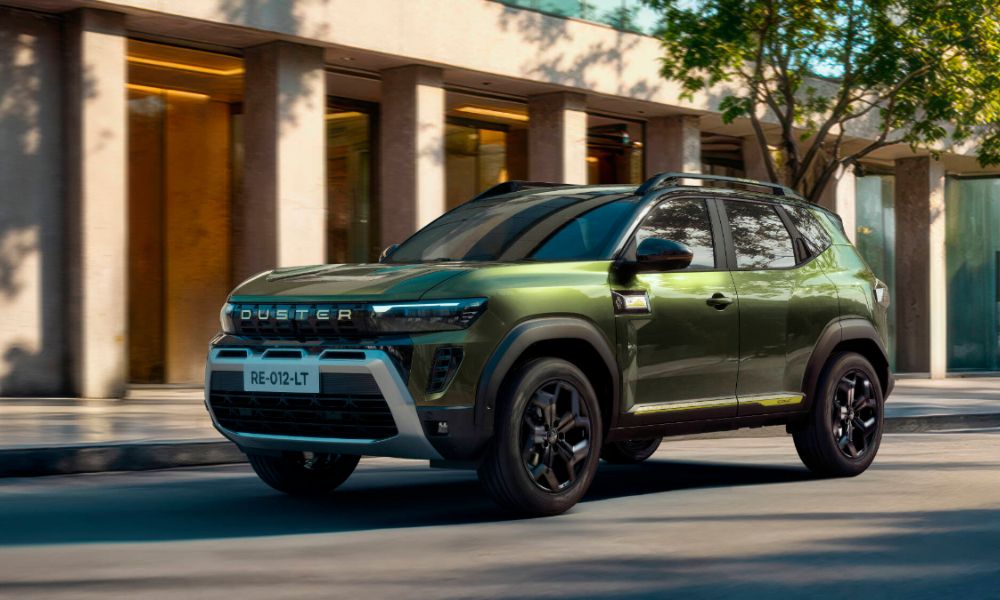
Renault Duster 1

Not only will the newer cars post April 2027 have to comply with the newer WLTP, but the existing models produced from that date forward will also be subjected to the newer test cycles. And the Corporate Average Fuel Efficiency (CAFE) norms, which are under MIDC right now, will also move to WLTP. 
 

How It Impact Car Buyers?

TATA Sierra 15

Firstly, since the WLTP is more closely matched to real-world conditions, the fuel efficiency figures that manufacturers advertise will be slightly lower. Or better put, more evenly matched to what the owner could expect in the day-to-day driving. It is essential to understand that the vehicle's efficiency won’t decrease; only the advertised claimed figures will be more closely matched to the real-world performance. 

Sonet fuel run

Secondly, the emissions figure will be closer to the real-world condition. But as a buyer, this won’t affect you in any other way than getting a regular PUC for your car.


Also read: Mahindra To Set Up Its Biggest Automobile Plant In Nagpur; Production To Begin In 2028


Lastly, it’s the pricing. While the testing applies to manufacturers and not to the end consumers in any way, the pricing of the vehicles sold – theoretically – shouldn’t change in any way. However, since the OEMs might have to recalibrate the powertrains – including but not limited to the engines, transmissions, running gear, and even the exhaust systems – for the newer testing equipment, they may or may not pass on the added expenses down to the customer. 

Maruti Cars BNCAP

It needs to be seen when the EVs will be subjected to the WLTP cycles. Since the WLTP is more accurate for the real-world range achieved by the EVs, it will be helpful for buyers to make a more informed decision with their newer EVs when it comes to range. 


from carandbike - News https://ift.tt/NbuqW4r
via IFTTT

New Audi RS5 Debuts With 630 bhp V6 PHEV Powertrain

Audi has unveiled the all-new RS5, Audi Sport’s first-ever high-performance plug-in hybrid. The successor to the defunct RS4 - a result of A...