Welcome to Gulf News, your premier destination for comprehensive coverage and insights into the dynamic landscape of the Gulf region and beyond. As a trusted source of news and information, we pride ourselves on delivering timely updates, in-depth analysis, and compelling stories that resonate with our diverse audience.
From breaking news to in-depth features, business trends to cultural happenings, sports highlights to technological advancements, Gulf News covers it all with accuracy, integrit
Mahindra has started testing what looks to be the new-gen Bolero on public roads in India. Images of the test mule have surfaced online, revealing an SUV that blends a retro-inspired boxy design with more contemporary design elements. The new Bolero is expected to be underpinned by an all-new platform, details of which are expected to be revealed on August 15, following Mahindra's confirmation of a new platform's debut.
Speaking of the design, while the test mule wore heavy camouflage, some design elements can still be made out. Up front, the SUV gets the new design Mahindra grille with vertical slats flanked by headlamps. The headlamps themselves are expected to continue to be rectangular units despite the camouflage featuring circular cutouts. Other notable design elements visible are a flat bonnet and a slightly squared-up front bumper.
Down the sides, the design appears to be a lot cleaner than the current Bolero and Bolero Neo, with squared-off, flared wheel arches, flush-sitting door handles, and a prominent rear haunch. Around the back, the side-opening tailgate looks to be retained, as does the provision for a tailgate-mounted fifth wheel, though the test mule looked to have a sensor module mounted in its place.
Speaking of the underpinnings, details remain scarce on the new-gen platform, though some reports suggest that it could be a new modular monocoque chassis that could be adapted to fit a range of vehicles. The new platform is also expected to be capable of supporting hybrid technology, with Mahindra reportedly interested in using the tech in future models.
Coming to the positioning, Mahindra could follow a similar product strategy as it did with the Scorpio Classic and Scorpio-N. The carmaker could look to retain the services of the ageing diesel Bolero as a cost-effective model targeted at rural markets, with the new model replacing the Bolero Neo as a more upmarket alternative. We could get our first glimpse at the new-gen SUV as a near-production concept on August 15.
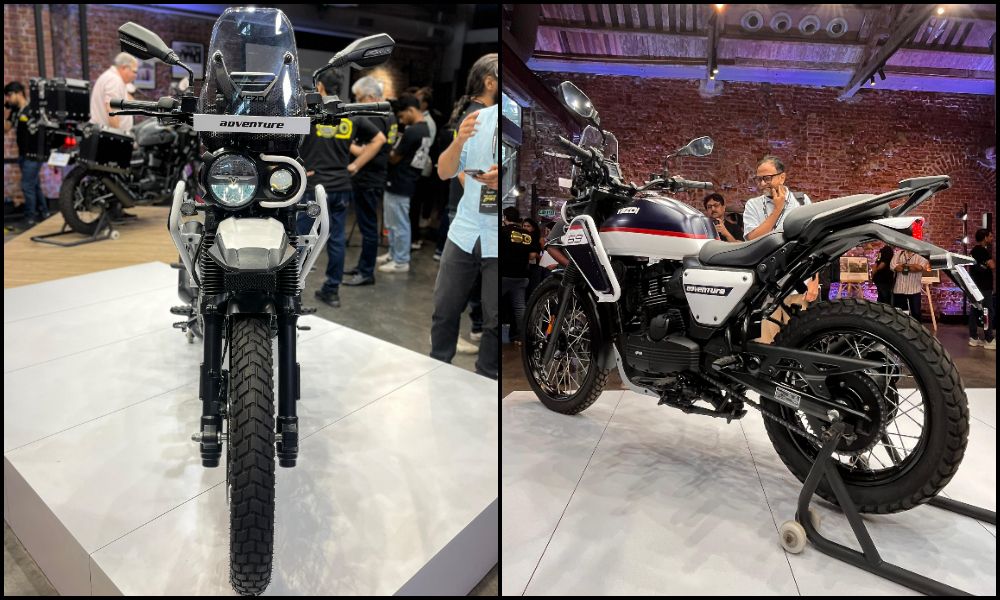
Following its update less than a year ago, the Yezdi Adventure has now been refreshed once again. Jawa-Yezdi Motorcycles has launched the 2025 Yezdi Adventure at an ex-showroom price of Rs 2.15 lakh, which is roughly Rs 5,000 higher than last year’s model. The 2025 edition features refreshed styling, additional features, and a brand-new colour palette. Bookings for the updated motorcycle are now open at authorised dealerships across the country.
Prices for the 2025 Yezdi Adventure range between Rs 2.15 lakh and Rs 2.27 lakh (ex-showroom).
2025 Yezdi Adventure Colours/Variants
Ex-showroom Prices
Forest Green (Matte)
Rs 2,14,900
Ocean Blue (Matte)
Rs 2,17,900
Desert Khaki (Matte)
Rs 2,17,900
Tornado Black (Matte)
Rs 2,21,900
Wolf Grey (Gloss)
Rs 2,26,900
Glacier White (Gloss)
Rs 2,26,900
The 2025 model gets a new asymmetric LED headlight and redesigned twin tail lights.
The most noticeable update on the new model is at the front. Out goes the round headlamp and in comes a new asymmetric LED headlight setup, commonly seen on larger adventure bikes. Additional changes include a taller, rally-style front beak, redesigned tail lamps, a standard bash plate, and a newly adjustable windscreen. The seat cushioning has also been revised, with the brand claiming improved comfort for the rider.
Now gets traction control while ABS modes remain the same.
On the feature front, the Yezdi Adventure now gets traction control along with three ABS modes – Road, Rain, and Off-Road – which were there in the previous model too. Apart from this, the rest of the motorcycle remains the same. It continues with the rectangular instrument console comprising two circular LCD screens for essential readouts. The cluster also offers Bluetooth connectivity, which further enables turn-by-turn navigation. There is also a USB charging port.
Continues with the same 29.2 bhp 334cc liquid-cooled single-cylinder engine.
There are no changes to the engine or core mechanical components. The motorcycle continues to use the same 334cc, single-cylinder, liquid-cooled engine, producing 29.2 bhp and 29.8 Nm of torque. The gear-based Alpha2 engine mapping system, introduced in the previous version for improved heat management, has been carried over.
Suspension is handled by a telescopic front fork and a rear monoshock, while braking is managed by a 320 mm front disc and 240 mm rear disc. The bike maintains its 21-inch front and 17-inch rear wheels, 220 mm ground clearance, 815 mm seat height, and unchanged 15.5-litre fuel tank capacity.
Six new colour options have been introduced in this update.
The updated model is included in the brand’s recently launched ‘Jawa-Yezdi BSA Ownership Assurance Programme’. This includes a standard warranty of 4 years or 50,000 km, optional extended warranty packages of up to six years, one year of complimentary roadside assistance and more.
from carandbike - News https://ift.tt/orDOJav
via IFTTT
The new EV policy guidelines issued by the Indian government aim to attract foreign carmakers to invest in India in order to be eligible for lower tax rates. Import duties, which stand at over 100 per cent presently, will be brought down to 15 per cent if the manufacturers meet certain conditions. These include setting an EV manufacturing facility in India by investing at least USD 500 (Approx Rs. 4,150 crore) million over the next 3 years.
Vinfast will begin its India journey later this year with the VF6 and VF7.
According to the Minister of Heavy Industries, HD Kumaraswamy, many carmakers have shown interest in investing under the policy, including Skoda-Volkswagen, Hyundai-Kia as well as Mercedes-Benz. However, since the manufacturers will need to first register for the policy and then start investing, brands such as Vinfast, who have already invested in a vehicle manufacturing facility, are likely to miss out on benefiting from lower duties while importing cars in the country, unless they commit to investing the specified amount again.
As per the new guidelines, EVs imported by foreign carmakers with a cost insurance and freight valuation of USD 35,000 (about Rs 30 lakh) and over will attract a lower excise duty of 15 per cent – down from the current 110 per cent. Carmakers will only be allowed to import up to 8,000 units a year for a 5-year period at the reduced import duty or until a predetermined monetary cap is met, whichever is earlier. The monetary cap is the lesser amount of either the amount invested in to commencing local operations (a minimum Rs 4,150 crore) or a maximum foregone duty of Rs 6,484 crore, whichever is lesser.
Vinfast VF8 is likely to be imported to India at a later stage.
In 2024, reacting to the then proposed new EV policy, Pham Sanh Chau, CEO of VinFast India had said, “We highly value the Indian government’s new EV scheme as it aims to drive large investments in manufacturing, create competencies and upskilling, set up a robust supply chain and offer consumers world-class, zero tailpipe emission vehicles. With a long-term growth commitment in India, we have pledged an expenditure of $500 million, which includes the electric vehicle manufacturing facility in Tamil Nadu.”
The brand has set up its India manufacturing facility in Tamil Nadu.
In 2024, the Vietnamese electric car brand broke ground for a new electric vehicle factory in Tamil Nadu. The company has planned to invest Rs. 4,000 crore for its manufacturing operations in India in the next few years. The brand will kickstart sales in India with the VF6 & VF7 mid-sized SUVs later this year and is likely to start importing its flagship products into the country post that.
from carandbike - News https://ift.tt/r2cNLI4
via IFTTT
Tata Motors has finally launched the all-electric Harrier in the Indian market, with prices starting at Rs 21.49 lakh (ex-showroom, excluding charger). The Harrier EV holds the top spot in Tata's electric vehicle lineup and comes equipped with a host of features never seen in any previous Tata vehicle. The Harrier EV gets into the ring with Mahindra’s new contender, the XEV 9e, so let’s see how these two electric SUVs in their top-spec variant stack up against each other on paper.
The Mahindra XEV 9e is the longer of the two SUVs, measuring 182 mm more in length. However, the Harrier EV is both wider and taller, by 225 mm and 46mm, respectively. The wheelbase of the Mahindra SUV is slightly longer at 2,775 mm, versus 2,741 mm for the Harrier. In terms of storage, Mahindra also leads with 663 litres of boot space and 150 litres of frunk space, significantly more than the Harrier EV’s 502-litre boot and 35-litre frunk.
Tata Harrier EV vs Mahindra XEV 9e: Battery, Motor, Charging
Tata Harrier EV
Mahindra XEV 9e
Motor
Dual motor (AWD)
Single motor (RWD)
Battery Capacity
75 kWh
79 kWh
Power
235 + 156 bhp
281.61 bhp
Torque
504 Nm
380 Nm
Claimed Range
622 km
656 km
AC Charging Time (10-100%)
10.7 hrs/7.2 kW
11.7 hrs/7.2 kW
DC Fast Charging (20-80%)
25 mins/120 kW
20 mins/180 kW
The Tata Harrier EV features a dual-motor all-wheel-drive setup with a 235 bhp rear electric motor and 156 bhp front, and 504 Nm of torque in its fully loaded avatar. On the other hand, the Mahindra XEV 9e uses a single rear-mounted motor putting out 281.61 bhp and 380 Nm across its variant lineup. The Harrier EV is the first Tata EV vehicle to feature an all-wheel drive setup, while neither of the Mahindra Born electric duo comes equipped with it.
The XEV 9e comes with a slightly larger 79 kWh battery pack compared to Tata’s 75 kWh unit. This results in a higher claimed range for the XEV 9e at 656 km, whereas the Harrier EV offers a slightly lower range of 622 km. Both the electric SUVs offer the same set of regen levels (L0, L1, L2, L3), where L0 is with no regen at all and maximum regen is achieved at L3 setting.
Both vehicles support AC charging via a 7.2 kW charger, with the Harrier EV taking approximately 10.7 hours to go from 10 per cent to 100 per cent, slightly faster than the XEV 9e’s 11.7 hours. As for DC fast charging, the XEV 9e can be juiced up in 20 minutes from 20-80 per cent using a 180 kW charger, while the Harrier EV takes about 25 minutes to do the same using a 120 kW DC fast charger.
Both the Harrier EV and the XEV 9e are loaded with features, but each takes a different approach. The Harrier EV comes with a larger 14.53-inch touchscreen infotainment system, which Tata claims is a first in the automotive space. On the other hand, the XEV 9e offers a three 12.3-inch Super Screens setup stretching across the width of the dashboard.
Common to both SUVs are features like an autonomous parking system that can park the car without the driver inside, and a summon function that moves the vehicle out of a parking spot using the remote key of the vehicle, respectively. Both models also share features like a panoramic sunroof, multi-zone climate control, Level 2 ADAS and six airbags.
Where the Harrier EV stands out is with its Vehicle-to-Vehicle (V2V) and Vehicle-to-Load (V2L) capabilities, allowing it to charge other EVs or power external appliances, features not available on the XEV 9e. It also gets a transparent view mode through its 360-degree cameras, letting the driver see underneath the vehicle, another feature the XEV 9e lacks.
When it comes to driving modes, the Harrier EV QWD (Quad Wheel Drive) variants offer six terrain modes: Rock Crawl, Snow, Gravel, Sand, Normal, and a customisable sixth mode, along with four standard drive modes. In comparison, the XEV 9e provides five driving modes: Default, Range, Everyday, Race, and Snow.
Tata Harrier EV vs Mahindra XEV 9e: Prices
Tata Motors has revealed only the starting price of the Harrier EV, which begins at Rs 21.49 lakh, while the Mahindra XEV 9e starts slightly higher at Rs 21.90 lakh. The top-spec XEV 9e is priced at Rs 30.50 lakh. Although the fully loaded Harrier EV will feature a dual-motor all-wheel-drive setup – unlike Mahindra’s single-motor rear-wheel-drive configuration – Tata is expected to price it competitively. Bookings for the Harrier EV will open on July 2, with the full price list likely to be announced around that time.
(All prices ex-showroom and excluding charger.)
from carandbike - News https://ift.tt/lOgI12q
via IFTTT
In January 2025, we first broke the story of how Norton Motorcycles is readying its India strategy with a two-pronged platform strategy – a single-cylinder 300-450 cc platform, as well as a 650 cc platform. Recently, TVS Motor Company, which owns Norton Motorcycles, has confirmed that the Norton brand will be launched in India later in 2025. Brand-building will only be part of the strategy required to establish Norton in India.
The Norton Motorcycles brand has tremendous opportunity, not just in India, but around the world
Without doubt, there’s tremendous opportunity for a storied brand like Norton, not just in the world’s largest motorcycle market, but around the world. But will TVS be able to get its Norton strategy right, from the get-go? More importantly, will TVS be able to disrupt Royal Enfield’s market dominance with Norton? It's early days yet, but establishing the Norton brand won't be easy, more so, when there's hardly any brand recall in India, outside of a few enthusiasts.
Norton Motorcycles is relatively unknown in India, outside of motorcycle enthusiasts. Creating brand equity will require a solid strategy.
Brand War
For decades, Royal Enfield has enjoyed an almost unshakable dominance in India’s mid-size “modern classic” motorcycle segment. Royal Enfield’s leadership position is fuelled by strong brand loyalty and a classic, rugged appeal that its models are easily identified with. Will Norton be able to reshape consumer perception and take on Royal Enfield head-on?
Creating brand recall similar to what Royal Enfield enjoys will be difficult for Norton
When TVS acquired the iconic British motorcycle brand in 2020, one thing was clear from the beginning. TVS is setting the stage for a major shake-up in the mid-size modern classic motorcycle market. The Indian two-wheeler giant will look to position Norton as a premium, aspirational brand rooted in British engineering excellence and heritage.
One of the few motorcycle brands to use a V4 engine platform will help Norton create its premium brand positioning.
Premium Product Play
Part of the strategy will be to blend Norton’s premium heritage with TVS’s manufacturing scale and global reach. And the goal will be to attract a new wave of performance-conscious riders – and potentially, loyal Royal Enfield enthusiasts. The question now is whether this bold strategy can translate into meaningful market disruption.
Brand-building will be as important for Norton as product positioning and pricing
There are, however, several challenges for the Norton brand, as it prepares for a launch in India. Despite the brand’s iconic British legacy, Norton is relatively unknown to the average Indian consumer. Building brand awareness and trust will require significant marketing investment, and it’s not going to be an easy task. Brand-building will be as important for Norton Motorcycles, as product positioning, quality and engineering as well as pricing of products.
The Norton V4S is based on the brand's 1,200 cc V4 engine platform
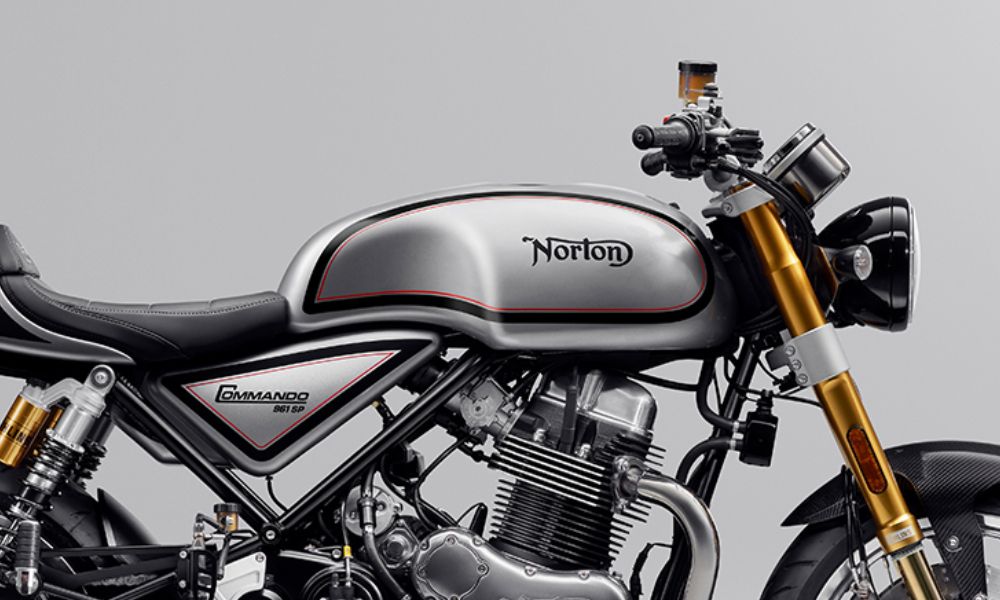
Initially, Norton is expected to introduce its flagship superbike, the 1,200 cc Norton V4S in India, by the end of 2025, along with the Norton Commando, based on the company's 961 cc parallel-twin platform. That two-pronged initial product strategy should give the brand enough ammunition to position itself as premium and aspirational. And that's not all, six more models are being planned over a three-year period, across two engine platforms - a 650 cc and the entry-level 350-450 cc platform.
After TVS acquired the brand, Norton Motorcycles has established new headquarters in the UK
Product, Price & Promotion
Along with the products, what will be interesting to see is how the retail network and product line-up pans out. More importantly, along with the network, what will be interesting to see is how aspirational brand Norton is made out to be. Norton’s current V4 superbikes will be launched, at least to create an initial buzz to establish the brand. But eventually, Norton will need to target the volumes that Royal Enfield currently commands, right from the 350 cc segment to the 650 cc segments it operates in.
The Norton Commando 961 is based on the brand's 960 cc, parallel-twin engine
At the same time, at least the entry-level Norton models will need to be reasonably affordable, to get the proverbial foot in the door of the world’s largest motorcycle market. Solid engineering and product quality is only part of the game for brand-building. An entry-level 350-450 cc Norton will appeal to the price-conscious modern classic afficionados, but a more “premium” pricing strategy may actually end up slowing down opportunities for Norton.
The Norton V4CR is based on the 1,200 cc V4 engine
Even with the bigger 650s and V4 models creating the aspiration for Norton that TVS will be seeking to create, a price-sensitive market, as well as competitive products from others like Royal Enfield, will need to be kept in mind. In the end, timing is everything. For Norton to create reasonable impact and eventually take the fight to Royal Enfield, not just in India, but around the world, TVS will need to have the right strategy - focussing on the right products, at the right time, and at the right price point.
from carandbike - News https://ift.tt/3xPltj5
via IFTTT
Bentley has unveiled the latest iteration of the Bentayga Speed for global markets. Essentially the performance-focused iteration of the luxury SUV, the newest version of the SUV ditches Bentley’s renowned 6.0-litre W12 mill for a downsized twin-turbocharged V8 engine, much like the Continental GT. However, unlike its grand tourer sibling, the Bentayga Speed’s powertrain is not hybridised and does not come mated to an electric motor. Bentley further states that the new V8 makes more power and is even faster than the W12-engined model.
The new Bentayga Speed can go from 0 to 100 kmph in 3.4 seconds, 0.5 seconds faster than its predecessor
The 4.0-litre twin-turbocharged engine in the new Bentayga Speed churns out 641 bhp and 850 Nm of torque. For reference, the power figures of the W12 were 635 bhp and 900 Nm. The new model is also 43 kg lighter than its predecessor, courtesy of the smaller engine. Naturally, the latest model can also do the 0 to 100 kmph sprint at a faster pace, in 3.4 seconds, 0.5 seconds faster than its predecessor. The top speed of the performance SUV is rated at 310 kmph, when fitted with optional carbon ceramic brakes. The SUV is also fitted with a sports exhaust as standard, although a titanium Akrapovic exhaust is also offered as an option.
When Sport mode is activated, there is a 15 per cent increase in the Bentayga's suspension-damping stiffness
The Bentayga Speed will be offered with three drive modes- Comfort, Bentley, and Sport. Sport mode leads to a 15 per cent increase in suspension damping stiffness, in addition to improved steering responses. The latest model also features all-wheel steering.
On the cosmetic front, the design of the latest model remains largely the same as before. The headlamps feature dark bezels and internals. The SUV can be had with a black roof in either a gloss or satin finish as an option. When it comes to the wheels, it is offered with either 22-inch wheels in either a silver or dark shade, or 23-inch units which can be had in grey satin, black or black and bright machined finishes. The interior, meanwhile, features embroidered ‘Speed’ emblems on the seat headrests.
from carandbike - News https://ift.tt/UpGbcEm
via IFTTT
Tata is all set to launch the Harrier EV in India today. The Harrier EV is the largest all-electric vehicle from the manufacturer to date, and the only one to be equipped with a dual-motor setup. While showcased at Bharat Mobility Global Expo 2025, much of the SUV’s specifications still remain under wraps, and will be revealed at its launch event today. The Harrier EV will be based on the company’s Acti.ev platform, building upon the OMEGA architecture.
Visually, the Harrier EV retains a lot of its original styling cues, and is quite similar to the Harrier EV concept that was previously showcased in 2023. The front end of the SUV gets a full-width lightbar, which sits above a new enclosed panel grille. The vertically stacked headlights have been retained from the Harrier ICE. The front bumper meanwhile, has been revised, and now features a metallic finish and multiple vertical slats. The Harrier EV will also get aero-style alloy wheels, EV badging on both front doors, connected LED taillamps, and dual-tone body colour options.
The interior layout of the Harrier EV will also be identical to the ICE model. The list of features on the SUV will include a 12.3-inch display, a 10.25-inch digital instruments display, ventilated seats with power adjustability, electronic parking brake with auto hold, panoramic sunroof, JBL surround sound system, and more. Level 2 ADAS will also be part of the features list, in addition to cloud-connected telematics, over-the-air update support, vehicle-to-vehicle (V2V) and vehicle-to-load (V2L) charging capabilities. A recent video from Tata has also confirmed the presence of off-road cruise control, 360-degree cameras, and an array of driving modes that include a Rock Crawl mode, Road, Snow and Sand.
Tata is yet to reveal the specifications of the powertrain although, Tata has stated that the SUV will be offered in both single-motor and dual-motor guises, with the latter featuring all-wheel drive. The company also went on to claim that it will put out 500 Nm of peak torque, and 500 km of real-world range, although it didn’t specify for which variants of the SUV.
from carandbike - News https://ift.tt/J5oPL7Q
via IFTTT
Tata Motors is all set to launch the all-electric iteration of the Harrier today, on June 3. First showcased in its final production form at Bharat Mobility Global Expo 2025, the Harrier EV will be the largest EV from Tata to go on sale upon its launch, and the only vehicle to feature a dual-motor powertrain. The electric SUV will be based on the company’s Acti.ev platform, building upon the OMEGA architecture.
The Harrier EV's design is quite similar to the ICE version
Visually, the Harrier EV retains a lot of its original styling cues, and is quite similar to the Harrier EV concept that was previously showcased in 2023. The front end of the SUV gets a full-width lightbar, which sits above a new enclosed panel grille. The vertically stacked headlights have been retained from the Harrier ICE. The front bumper meanwhile, has been revised, and now features a metallic finish and multiple vertical slats. The Harrier EV will also get aero-style alloy wheels, EV badging on both front doors, connected LED taillamps, and dual-tone body colour options.
The interior layout of the Harrier EV appears to be similar to the Harrier ICE
The interior layout of the Harrier EV will also be identical to the ICE model, sporting a floating touchscreen display and touch capacitive controls. The central touchscreen looks to be the same 12.3-inch display as in the standard Harrier although it comes with EV-specific graphics. Same is the case with the 10.25-inch digital instruments display.
The list of features offered in the EV will include off-road cruise control, 360-degree cameras, and an array of driving modes that include a Rock Crawl mode, road, snow and sand. The Harrier EV also gets a shift-by-wire gear selector.
Tata is yet to reveal the specifications of the powertrain although, Tata has stated that the dual-motor, all-wheel-drive model will have a peak torque figure of 500 Nm and a claimed range in excess of 500 km.
Being an electric SUV, the Harrier EV will almost certainly warrant a substantial premium over the combustion Harrier. Considering that the the latter's prices range from Rs 15 lakh to Rs 26.50 lakh (ex-showroom), one can expect the Harrier EV to be priced from Rs 21 lakh to Rs 31 lakh.
Union Minister for Heavy Industries, H D Kumaraswamy has added a new perspective to the long-lasting ‘Tesla in India’ saga by stating that the American electric vehicle giant is not interested in making vehicles in India and is just keen on opening showrooms instead. He said this while notifying the guidelines for the scheme to promote manufacturing of EVs in India.
The new EV policy includes a major duty cut for imported EVs in India
Kumaraswamy said, “Tesla, they only want to start showroom, they’re not interested in manufacturing in India.” He added that brands like Volkswagen, Skoda, Mercedes-Benz, Hyundai and Kia have already shown interest in manufacturing in India under the new EV policy.
Just a few weeks back, Tesla’s CFO, Vaibhav Taneja had called India a very hard market adding that 100% tariff created anxiety among buyers. However the new EV policy announced by the Government has brought that duty down to a mere 15%, provided the brand agrees to invest a minimum of Rs 4,150 crore (USD 500 million) in manufacturing operations in the country.
The new EV policy is being seen as a major catalyst to much awaited entry of Tesla In Indian market. In the recent times, the brand has announced job openings in India while also finalising a retail space in Mumbai.
from carandbike - News https://ift.tt/W2SGFT4
via IFTTT
Toyota Kirloskar Motor has launched the Fortuner NeoDrive mild-hybrid in India. Priced at Rs 44.72 lakh (Rs 50.09 lakh for the Legender, ex-showroom), the Fortuner NeoDrive is equipped with a 48-volt mild-hybrid system, paired with the ubiquitous 2.8-litre, four-cylinder diesel engine. This system, Toyota claims, will enhance the Fortuner’s fuel efficiency figure, thanks to the presence of an idle stop-start function, and will also benefit performance. It’s worth noting the Fortuner NeoDrive is available only with the four-wheel drive automatic variant of the SUV, and costs Rs 2 lakh more than the equivalent standard Fortuner diesel. Deliveries of the Neo Drive models will begin in the third week of June.
The 48-volt mild-hybrid system features a belt-integrated starter generator and a lithium-ion battery of unspecified capacity. The battery recharges when the SUV decelerates, recouping braking energy which would otherwise be lost, whilst also boosting braking performance. A ‘Boost Assist’ function will aid low-speed acceleration, offering some additional torque at city speeds. The idle start-stop function cuts emissions and fuel consumption by switching off the engine when the SUV is stationary for a prolonged duration.
Neo Drive variants will offer enhanced fuel efficiency and low-speed acceleration, claims Toyota.
Other new features for the Fortuner NeoDrive include wireless phone charging and Multi-Terrain Select drive and traction modes. Toyota will also offer 360-degree cameras on the Fortuner NeoDrive, but as an optional accessory available at its dealerships.
No other mechanical or design changes have been made to the Fortuner with the launch of the Neo Drive variants. The SUV continues with its 201 bhp, 500 Nm diesel engine, paired with a six-speed automatic transmission.
from carandbike - News https://ift.tt/P8s1HUl
via IFTTT
Tata Motors has revealed some of the Harrier EV’s features ahead of its imminent launch on June 3. While having showcased the near-production vehicle at the Bharat Mobility Global Expo 2025 and confirming that it will feature dual-motor all-wheel drive (quad wheel drive in Tata terminology), the carmaker has now provided a glimpse at some of the Harrier EV’s features – particularly those geared for off-roading.
A video published by the company shows the SUV climbing a hill in Kerala. The video provides a glimpse of features such as off-road cruise control or off-road assist as Tata calls it. Also showcased is a transparent mode for the 360-degree camera, providing a view of the terrain surface under the vehicle to aid in navigating obstacles while minimising the risk of scraping the bottom. The central touchscreen looks to be the same 12.3-inch display as in the standard Harrier and Safari, while the 10.25-inch digital instrument cluster too looks to be shared – just running EV-specific graphics.
Performance that doesn't just overcome the impossible, it deletes it all.
Harrier.ev presents the Elephant Rock Challenge.
An impossible incline. An impossible terrain.
All made possible with one powerful SUV.
The drive mode selector continues to be a circular dial with an inbuilt display, though there appear to be a lot more modes to pick from. Aside from a confirmed Rock Crawl mode, other visible modes look to include road, snow and sand. The internal combustion Harrier only offers Normal, Wet and Rough modes. Rock Crawl mode could also include a pseudo low-range setting as seen on many other four-wheel drive SUVs.
Also visible are the boost mode and eco mode buttons on the left of the drive mode selector dial. As with other Tata EVs, the Harrier EV also gets a shift-by-wire gear selector.
The video also shows the Harrier EV negotiating a 34-degree incline.
Speaking of the powertrain, Tata has still to share full details, though it has previously said that the Harrier EV QWD will develop 500 Nm of peak torque.